Maker FaireMaker Faire is the Greatest Show (and Tell) on Earth-a family-friendly festival of invention, creativity and resourcefulness, and a celebration of the Maker movement.Part science fair, part county fair, and part something entirely new, Maker Faire is an all-ages gathering of tech enthusiasts, crafters, educators, tinkerers, hobbyists, engineers, science clubs, ...
Where: San MateoCost: $32.50 Adult, $22.50 Student, $17.50 4-12
Seals and sea lions have the most highly specialized whiskers in the animal world. They use these highly sensitive whiskers to detect small disturbances in the water, helping them to find food and to navigate their fluid environment. They can detect the trails left by moving prey from 150 feet ...
Where: Santa CruzCost: Free with admission
Junior Academy: Naturalist Know-howCalifornia Academy of SciencesSundays at 2pm – 2:45pm (sign-up at 1:30pm) Naturalist Center / Lab (Level 3 across from the Planetarium exit)This program is designed for youth ages 8 to 11. Youth must be accompanied by an adult. Space is limited to 20 youth with attending adults. Onsite registration is ...
Where: San FranciscoCost: Free with Academy admission
Monday, 05/19/14
The Cluster Lensing and Supernova Survey with Hubble (CLASH) The Cluster Lensing And Supernova survey with Hubble (CLASH) combines the gravitational lensing power of 25 massive clusters with the panchromatic imaging power of HST. It's four primary scientific objectives are 1) map, with unprecedented accuracy, the distribution of dark matter in galaxy clusters and place constraints on the nature ...
Where: StanfordCost: Free
Can Fusion Step Up? Encouraging Developments in Laser Fusion Research and Prospects for a Future Energy SourceOne of the great challenges of this century is to determine if nuclear fusion of hydrogen isotopes can be demonstrated in the laboratory and developed into an unlimited carbon-free energy source. Recently, experiments on laser-driven targets have begun on the National Ignition Facility to reach temperatures and densities more extreme than the center of ...
Where: StanfordCost: Free
Tuesday, 05/20/14
Microgravity, the future of innovationThe International Space Station is a US taxpayers investment estimated at about $70 billion spent over 30 years (with an overall price tag of $100 billion by all member nations), thus it is natural to ask about the ISS's Return on Investment to justify its continuous operation and existence its scientific ...
Where: Mountain ViewCost: Free
Molecular Dynamics Simulations and the Mechanisms of Protein ComplexesIn honor of its 40th Anniversary, NERSC is sponsoring a series of lectures describing the research behind four Nobel Prizes. The Laureates are also long-time users of NERSC's supercomputing resources.Speaker: John Kuriyan, UC BerkeleyBuilding 66
Where: BerkeleyCost: Free
Ultracold Polar MoleculesProf. Debbie Jin (JILA, Univ. of Chicago) will give the May 20, 2014 Applied Physics/Physics colloquium describing experiments that produce and explore an ultracold gas of polar molecules
Where: StanfordCost: Free
Adventures in the TrenchesWe share our adventures in the pursuit of Fungi. Maybe even end with a sing-along. (This is also the annual meeting of the society and election of officers).
The Golden Shore has also been named one of the '10 Best Literary Travel Books of 2013′ by Booklist, the magazine of the American Library Association.The Pacific Ocean significantly defined California's storied history, from the San FranciscoBay to Monterrey to San Diego. Helvarg will discuss how Californians have related to ...
Where: SausalitoCost: $5
Sylvia Earle & Tierney Thys present 'Oceanic'Land animals on an ocean planet, we have a lot to learn about how the world works. The microbes of the sea are Earth's dominant life form. Ocean currents and temperatures drive climate and weather. Come ride a current to view bad news (dead zones, rising sea levels, melting sea ...
Where: San FranciscoCost: $15, free to Long Now members
Numerous seafloor emissions of methane have been identified spanning a wide range of oceanographic conditions. A fundamental question when assessing the transport and fate of this released greenhouse gas is "how much is biodegraded vs. dispersed and diluted in ocean waters?" For decades, measurements of natural stable isotopes have been ...
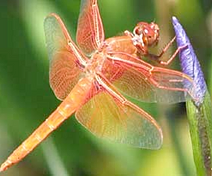
Dragonfly expert Kathy Biggs will mesmerize you with details on these colorful insects and their fascinating lives. Learn how you can support their life cycle by creating habitat for them. This meeting will open with a brief presentation from the Joaquin Miller Elementary Ocean Guardians on their work at Beaconsfield ...
Where: OaklandCost: Free
Monster Black Holes: What Lurks at the Center of GalaxiesBlack holes are among the most fascinating objects in the cosmos and have long entranced the public as well as astronomers. Today we understand that black holes can grow to monstrous size, swallowing the mass of millions or billions of suns. New telescopes and techniques in the past decade have ...
Where: Los Altos HillsCost: Free ($3 parking)
Conversations on Science: The Nueroscience of Music & Creativity A cognitive neuroscientist with UCSF and member of the faculty at the San Franciso Conservatory of Music, Indre Viskontas studies how memories, creativity and other cognitive processes are supported by neural networks using the latest techniques including direct recordings from neurons in the human brain and high-resolution functional MRIs. She ...
Where: San FranciscoCost: $27 General, $25 Members
The Dusty DozenAmerica and NASA did the impossible. We met JFK's challenge to explore Earth's moon in an up-close and personal way. A dozen American astronauts would become humanity's first ambassadors to visit our companion world, Luna. In this presentation, we will be introduced to the "Dusty Dozen" lucky men who risked ...
Shall we put some stupid, bizarre, and even foreign ideas into your heads? Yes, yes, and yes! Make the merriest month the smartest one with an evolutionary biologist turning dumb ideas into smart research, an engineer teaching us the steps to the bioelectric slide, and a communications pro delving into ...
Where: San FranciscoCost:
Thursday, 05/22/14
To Build an Eliptical GalaxyI discuss two essential aspects of elliptical galaxy formation: how they get their stars, and how they lose their gas. For the former, I use integral-field observations of local massive galaxies to study the stellar populations and kinematics of stars at large radius, to understand the origin of the size ...
Where: StanfordCost: Free
Long Term CareAs aging adults look to the future, questions regarding long term care abound. Long term care provides assistance with activities of daily living, such as bathing, dressing, and eating. It is neither medical nor is it independent living. This talk will address long term care options, including the types of plans available, payment options, ...
Where: Palo AltoCost: Free
OCEAN ACIDIFICATION (THE MOST DANGEROUS SECRET) AND ITS REMEDIATIONOcean acidification is a consequence of the Industrial Age's emissions of CO2, which gradually dissolves in seas, forming carbonic acid. Sea life performs the net carbon sequestration for the planet via calcifying organisms that build shells or skeletons from the calcium carbonate ions in seawater. When these organisms die, they ...
Dr. Steven Chu is the William R. Kenan, Jr. Professor of Physics and Professor of Molecular and Cellular Physiology at Stanford University. Prior to his role at Stanford, Dr. Chu served as the 12th U.S. Secretary of Energy under President Barack Obama from January 2009 until April 2013. As the longest serving Energy ...
Where: StanfordCost: Free
Leonard Susskind & Art Friedman: Quantum Mechanics - The Theoretical Minimum Come hear physicist Susskind and data engineer Friedman present a lively and accessible introduction to a famously difficult field, the theory and associated mathematics of quantum mechanics, which attempts to understand the behavior of sub-atomic objects through mathematical abstractions. Susskind and Friedman offer crystal-clear explanations of the principles of quantum ...
Where: San FranciscoCost: $20 non-members, $8 members, $7 students
Full-Spectrum Science with Ron Hipschman: The Last DoublingIs growth always good? The biggest threat to our existence on planet Earth isn't asteroids-it's us. Why can't our population continue to grow? Learn about the exponential function and the conclusions we can draw from it.18 and over only.
Meteor ShowerHang out on the hill with us as we watch the Camelopardalids light up the night sky. Astronomers were taken by surprise with this meteor shower as there is little evidence that it has ever been visible! Conversation with scientists, hot drinks for sale, the night sky ablaze-what a great ...
Where: OaklandCost: $5
Seals and Slippers: Sleep under the stars at The Marine Mammal CenterLast fall we piloted our first ever sleepover at The Marine Mammal Center. Five lucky families camped out under the stars accompanied by the sounds of barking sea lions. Parents and children took part in a variety of educational programs including fish dissections in the Necropsy Lab, they watched a ...
Where: SausalitoCost: $85 each (parent and child)
Saturday, 05/24/14
Trekking the ModelJoin a ranger guided tour of the Bay Model, a 1.5 acre hydraulic model of San Francisco Bay and Delta. Discover the stories of the two major operations that took place at this location between 1942 – 2000.
Where: SausalitoCost: Free
Saturn V - The First 700 SecondsWatching the launch of the Apollo missions, who can forget the countdown, ignition sequence, and images of furious gas at blastoff? What we saw - the extent of what was broadcast on the daily news - is a very small fraction of all that led to NASA's greatest achievements. Engage ...