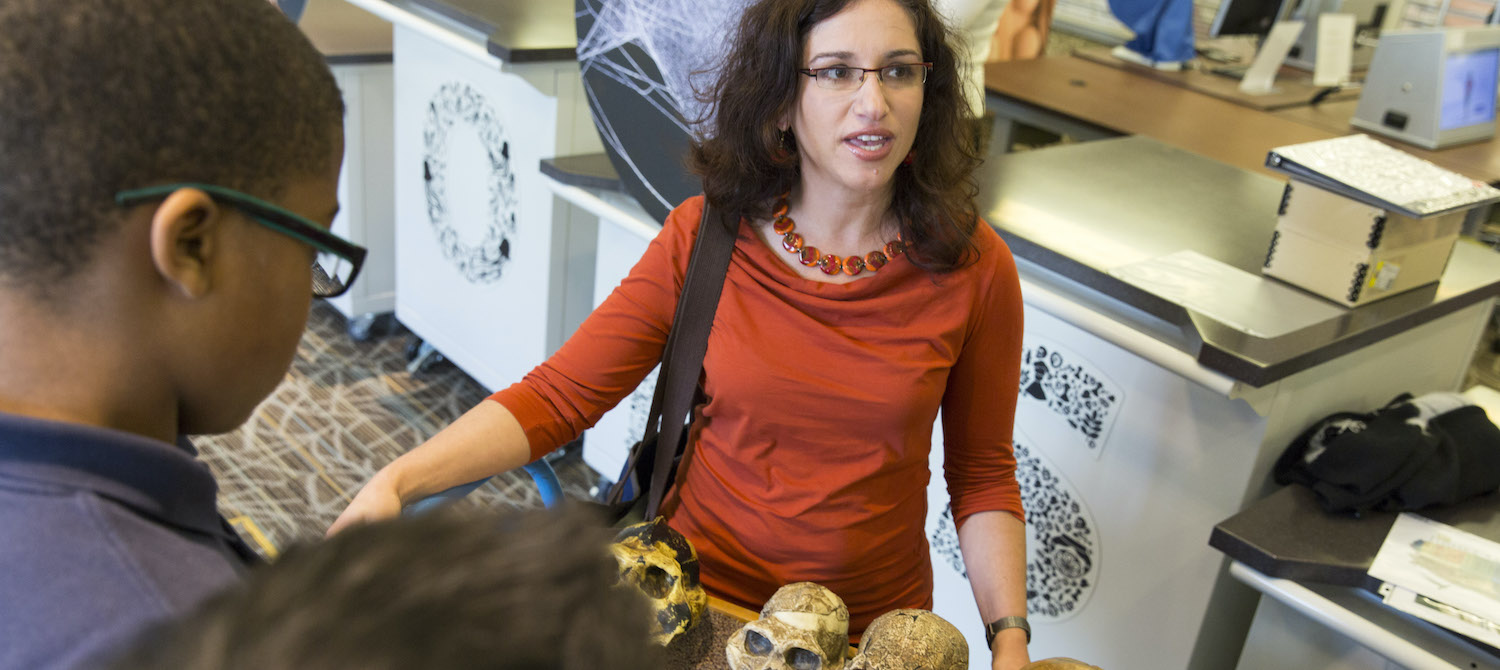
Circus of Science (Home Edition) - LivestreamA variety of fun, hands-on science (magic?) activities that can be done at home with materials you already have, meant to help you look at the world around you a little bit differently. The suggested list of materials will be sent before the session.Speaker: Alauna Wheeler, UC MercedRegister at weblink ...
 Climate-related disasters have astronomical economic impacts that are felt from Main St. to Wall St. With the globe continuing to warm, we are certain to experience a greater annual concentration of these calamities - as well as ballooning price tags associated with them. How can we integrate climate science and ...
Where: Cost: $10 General, Free for Members.
Tour of a Cell and Molecular Biology Lab - LivestreamThe session will consist of a tour of the Woo lab. We will start with a brief description of our research on embryonic development before walking through our lab space. Participants will see work benches typical of most cell and molecular labs as well as more specialized equipment such as ...
Where: Cost: Free
The Next Act for Cap and Trade - LivestreamCalifornia’s flagship program to reduce carbon pollution, cap and trade, has been successful at reducing greenhouse gas emissions, but it hasn’t reduced dangerous air pollution equally in all communities across the state. Can the cap and trade program become as equitable as it is efficient and be the tool that ...
Join Dr. Peter T. Oboyski for a behind-the-scenes look into UC Berkeley's Essig Museum of Entomology. Insects are the most diverse animals on the planet as a result of 400 million years of evolution and adaptation. From bugs to beetles to bees to butterflies, we will look at insects under ...
Why are we interested in learning about our evolution? What is the importance of communicating human evolution research?Join The Leakey Foundation and paleoanthropologist Dr. Briana Pobiner for a discussion on the importance of communicating human evolution science. Briana Pobiner discusses her outreach activities and research in science education, which are ...
Where: Cost: Free
San Francisco Bay and Increased Use by Cetaceans: Conservation Success Stories and Challenges - LivestreamJoin us for an engaging evening with Dr. Tim Markowitz, Field Research Coordinator at The Marine Mammal Center. In this webinar, Dr. Markowitz will share his experience as Field Research Coordinator and provide the latest findings of cetacean activity in San Francisco Bay: what the data tells us, implications, challenges, ...
 Until recently, the idea of pulling carbon directly from the air seemed to be a pipe dream, but new technologies and legislation are bringing it to reality. Can advances in carbon capture prove it to be a lynchpin in a framework for our cleaner future, or is it more prudent ...
Have you ever wondered where dragonflies come from? Before they take to the air, these and other aquatic insects spend months or even years living secretive lives underwater in the pools and streams of the Garden. How did they get there, how do they breathe underwater, and what do they ...
Many gardeners plant milkweed to attract and provide larval food for the iconic and endangered monarch butterfly, only to find their plants rapidly covered with large populations of oleander aphids! Documented through her photographs in an Oakland pollinator garden, May Chen has followed the fate of these aphids over the ...
Where: Cost: Free
Ideas + Action 2021 - Workshop: Using Climate Data to Plan for California’s Future - LivestreamWhile it is impossible to predict when and where the next wildfire might spark, climate data will make it easier to understand projected climate risk and identify climate adaptation needs. Cal-Adapt, a new online climate database developed by the State of California, offers tools, data and other resources to help ...
Where: Cost: $35
Building a Bacterial Carousel - LivestreamWhether a microbe can be "tamed" to perform desired tasks for humans seems not to have an obvious answer. Here, we will explore a few preliminary steps toward taming a bacterium, including using carefully built microstructures to turn freely swimming bacteria into micro carousels. We will also join together for ...
 Whether you envision the streets of our future cities as teeming with autonomous vehicles, electric cars, zero-emission transit, micro-mobility or a combination of all of the above, it’s become obvious that implementing affordable, accessible and clean transportation options for the first mile, last mile and everything in between is crucial ...
 More than thirty years ago, Bill McKibben released The End of Nature, widely regarded as the first book on climate change written for a general audience. In the decades since, humanity has taken bold steps forward in shaping a more sustainable future - as well as some regretful steps backward. ...
Where: Cost: $10 General, Free for Members.
June LASER EventAnastasia Raina and the Posthuman Mobility team (Rhode Island School of Design) on "Posthuman Polymythology"Cindy Cohn (Executive Director at the Electronic Frontier Foundation) on "Imagining A Future with Real Digital Privacy"Elizabeth Currid-Halkett (University of Southern California's Price School of Public Policy) on "Inconspicuous Consumption and Cultural Capital: the New Inequality"Register ...
SETI Talks: Is Oxygen Really a Biosignature? - LivestreamBiosignatures, the footprint of life on other planets, or exoplanets, could be the easiest way for astronomers to prove that we are not alone, and oxygen has been for decades the top contenders in proving that life exists elsewhere. But how truly useful is oxygen as a biosignature?In Earth’s history, ...
Where: Cost: Free
Thursday, 06/24/21
Ethics in Research: How Far is Too Far? - LivestreamIn this session, we will grapple with some of the most pressing ethical issues facing researchers today. Through a series of case studies, we will examine the foundations of ethical research and discuss some of the thorniest topics that students and researchers may encounter. At the end of the session, ...
Where: Cost: Free
How Would You Build a Machine that Sorts Cells? - LivestreamThe session will begin with a discussion of why investigators need to characterize the properties of cells and sort them and how this is relevant to treating disease. We will then look at a Lego model of a “cell sorter†that utilizes motors and sensors to sort colored marbles. Lastly, ...
Empowering Humanity Through Technology - LivestreamCan you speak to your phone or computer? Do you use Wikipedia? Did you know the family car was built by dozens of robots, with not a human in sight? For over five-decades, Raj Reddy and his students established the foundations for these technologies: speech recognition, analysis of natural scenes, ...
In this darkly comical look at the sinister side of our relationship with the natural world, Stewart has tracked down over one hundred of our worst entomological foes - creatures that infest, infect, and generally wreak havoc on human affairs. From the world’s most painful hornet, to the flies that ...
Calling all creatures of the night: explore the nocturnal side of the Academy at NightLife and see what's revealed. With live DJs, outdoor bars, ambiance lighting, and nearly 40,000 live animals (including familiar faces like Claude the albino alligator), the night is sure to be wild.Reserve your entry to the ...
Where: San FranciscoCost: $17.50 - $20
One Water: A Look at Water Use and Reuse with Rachel GaudoinMonterey County is isolated from State or regional water systems, and therefore must rely solely on local water supplies - primarily groundwater and surface water. While water habits have changed over the years, our need for local, sustainable water resources has not. This talk will feature Monterey One Water, the ...
Where: Pacific GroveCost: $15 in person, Free via Zoom
Exploring Galaxies in Our Cosmic Backyard - LivestreamGalaxies are gravitationally-bound conglomerates of gas and stars with a very wide range of masses. They contain from a few thousand stars in the case of dwarf galaxies, to tens of billions like the Milky Way (our own galaxy), to up to thousand billions of stars in the most massive ...
Where: Cost: Free
After Dark Online: PrideIn honor of Pride month, join us in celebrating LGBTQ+ heritage and culture. Tonight, we’ll hear from artists, historians, and thinkers whose work centers self-affirmation, freedom of expression, and the essential need for representation. And don’t miss learning about San Francisco’s impact on LGBTQ+ culture, history, and liberation.See weblink for YouTube ...
Mount St. Helens' eruptions had a disproportionately large influence on our understanding of volcanoes, hazards, and eruption response. Unique circumstances, both locally and abroad, molded the responses to Mount St. Helens' awakening.The eruptions provoked change not only within volcanology, but within allied professions. A direct line exists between lessons learned at Mount ...
Where: Cost: Free
Nightschool: Queering Science - LivestreamDespite having historically been excluded from the field of science, the LGBTQ+ community has long been making major contributions to and shifting the institution of science as we know it. Celebrate Pride Month with a NightSchool featuring scientists whose queer perspectives and identities help drive new insights, discoveries, and previously ...
Where: Cost: Free
Friday, 06/25/21
Taking Pictures of Molecules: How Do We See the Invisible World? - LivestreamTextbooks in chemistry, biology, and physics are filled with beautiful images depicting molecules with a wide variety of shapes, sizes, and physical properties. Our understanding of chemistry is central to our understanding of ourselves and our surroundings, and as the saying goes "seeing is believing." I will explain how we ...
Honeybees are regarded as one of the most important insects on our planet. Did you ever wonder about what really goes on inside a hive? Did you know that the colony is a finely tuned machine where every bee has a job and that these jobs are strictly divided by ...
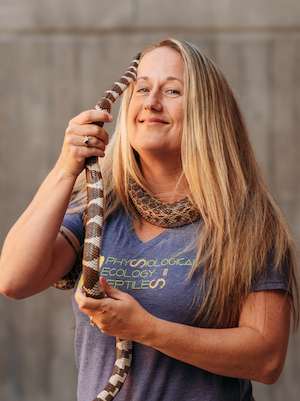
As the summer heats up it will become more common to see rattlesnakes out on the trails here in the Bay Area. And you might be one of the people who get scared about the potential to encounter one, but the good news is that it’s easy to avoid conflict ...
Where: Cost: Free
How Would You Build a Machine that Sorts Cells? - LivestreamThe session will begin with a discussion of why investigators need to characterize the properties of cells and sort them and how this is relevant to treating disease. We will then look at a Lego model of a “cell sorter†that utilizes motors and sensors to sort colored marbles. Lastly, ...
Learn how to set up and run a worm bin to compost your kitchen scraps. After wriggling through this 45 minute kid-friendly, hands-on virtual course, you will know how to select and set-up a worm bin; find the right worms, feed them, and harvest their rich vermicompost (with a focus ...
Where: Cost: Free
Shocking Origin: Meteor Impacts and the Chemistry of Life - LivestreamWhen and where life originated on Earth, and if, or where, life exists elsewhere in the cosmos are some of the biggest unanswered scientific questions of our time. Simple organic materials in meteorites and comets are often cited as potential sources for the initial organics which seeded prebiotic evolution on ...
Where: Cost: Free
Galactic Archeology: Uncovering the construction of the Milky Way - LivestreamThe goal of Galactic Archeology is to reveal how galaxies are built by looking at the current visible evidence and inferring the past. This requires knowledge of some of the most difficult aspects of Astronomy: determining ages, distances for individual stars. Using the APOGEE survey and augmenting with the GAIA ...
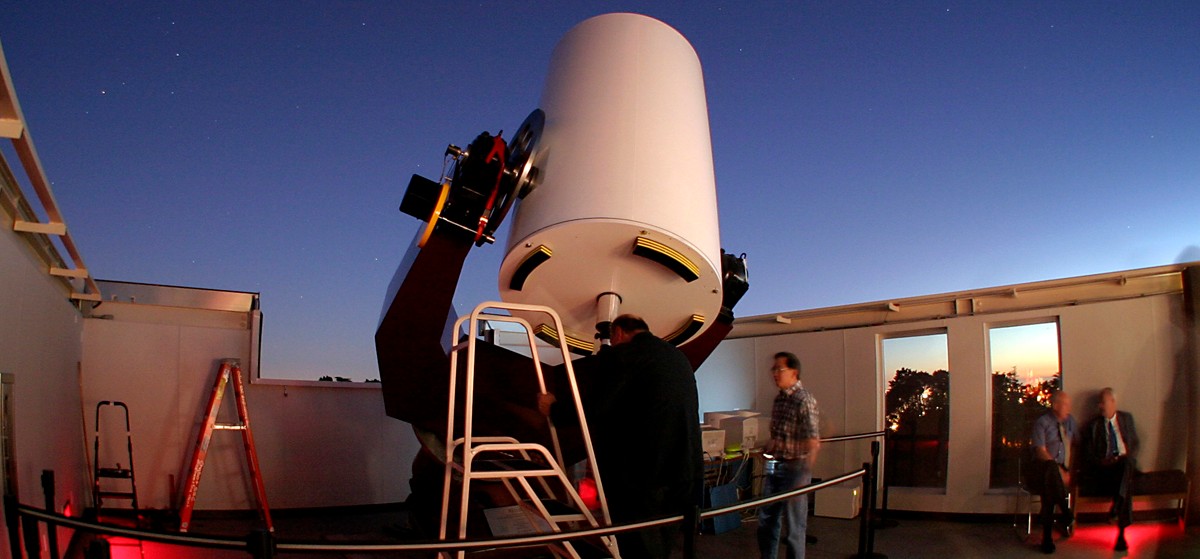
Join our resident astronomers on Facebook Live every Saturday evening live from Chabot’s Observation deck!Each week, our astronomers will guide us through spectacular night sky viewing through Nellie, Chabot‘s most powerful telescope. Weather permitting we will be able to view objects live through the telescopes and our astronomers will be ...
Where: Cost: Free
Sunday, 06/27/21
Low Tide Ecology ProgramEvery day, the tides come in and out at the Baylands Nature Preserve. Today, we will explore what amazing things you can find when the water goes back out to the ocean! Join us exploring the tidal ecology of the Baylands, and discovering how fascinating low tide can be!See weblink ...
Join our resident caterpillar lady Sal Levinson and butterfly guy Sarab Seth for an illustrated slideshow of butterflies found in the Garden at this time of year. We'll learn about their life cycle, host plants, and more! Our fun Zoom event is suitable for all ages and includes a live ...