In the nearly two decades of research conducted since the first diatom full genome sequence was published, several key insights into the strategies diatom use to outcompete other phytoplankton taxa have been made. This research has furthered our knowledge on the function of the diatom urea cycle, and how this ...
In Pursuit of the Organic Archaeological Record: Micromorphology Meets Lipid AnalysisIn recent years, "bioarchaeology" has become a prominent term in archaeological research worldwide. Invisible genetic, protein and lipid residues are increasingly being recovered from artifacts and sediments and have become an integral part of the empirical archaeological record. Their identification in archaeological contexts from different time periods is allowing us ...
Where: BerkeleyCost: Free
Shedding light on symbiosis: lessons from a bioluminescent coral reef fishVirtually all organisms depend on symbiotic interactions with bacteria for their success. Most bacterial symbionts are acquired horizontally from the environment, including those in highly dynamic marine environments.Despite the diverse pool of bacteria in the environment,hosts typically associate with only a select subset of symbiont species.The mechanisms that promote host-symbiont ...
 Sometimes, bigger is better. The Thirty Meter Telescope (TMT) will collect 9 times more light than the largest currently existing telescope and, with adaptive optics, make images 9 times sharper. Overall, that’s 81 times better! The TMT International Observatory (with members from the US, Japan, China, India, & Canada), together ...
Where: Cost: Free
Thursday, 11/03/22
The Milky Way's Dynamic AtmosphereThe Galactic atmosphere is as essential to setting the global conditions in the Milky Way as our planet's atmosphere is for sustaining life on Earth. Dramatic, multiphase gas flows course through the disk-halo interface and into the more extended circumgalactic medium (CGM), redistributing the materials generated over billions of years ...
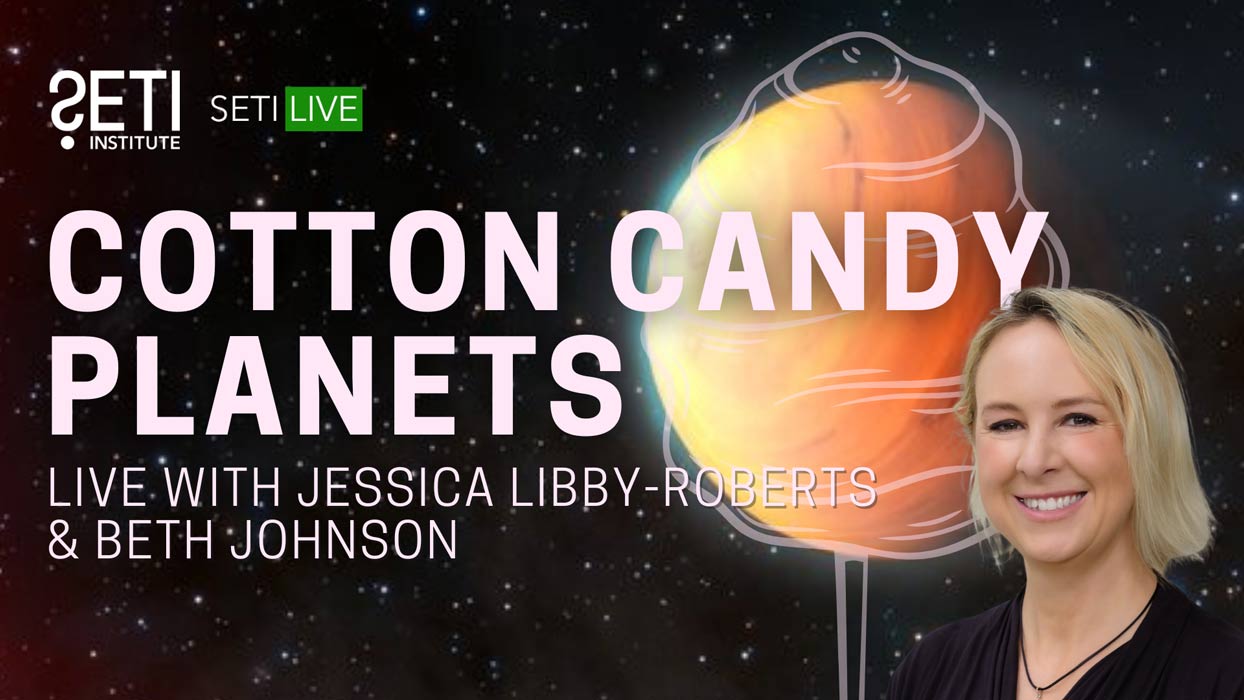
The search for extrasolar planets has yielded a bounty of results, with over 5,000 confirmed planets catalogued so far. Among those planets are a strange and as-yet-not-well-understood type of low density gas giant often referred to as 'cotton candy' planets or 'Super-Puffs'. While that's not a breakfast cereal coming to ...
In human-robot interaction or more generally multi-agent systems, we often have decentralized agents that need to perform a task together. In such settings, it is crucial to have the ability to anticipate the actions of other agents. Without this ability, the agents are often doomed to perform very poorly. Humans ...
Where: Cost: Free
After Dark: Poetic MachinesWith inspiration and ingenuity, even the most functional machines can be used to express creativity. Tonight, unlock the aesthetic potential of pre-digital machines. Explore a collection of analog exhibits that are more than the sum of their parts. Let artist PNosa translate your words into imaginative imagery using a sewing ...
Where: San FranciscoCost: $19.95 General, Free for members
Lil’ NightLife, big vibes. Join us for an evening devoted to all the little (but important) things.Tiny & Shiny Science Today8:00 PMCatch a live talk from Dr. Alison Gould to hear how bioluminescent bacteria team up with other animals to help them shine bright.Humble Abode East Garden6 - 10 PMBigger ...
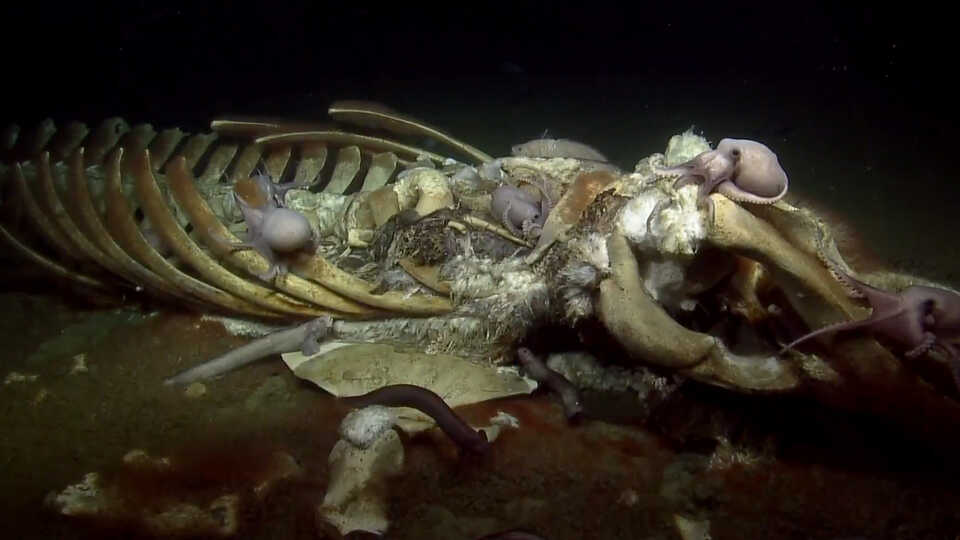
For some environments, “here today, gone tomorrow†is the MO. From flooded flyways to the bottom of the sea, temporary ecosystems pop up (or sink down) all over the world, supplying numerous species with abundant, although momentary, habitats. We’re looking at the organisms that rely on these ephemeral ecosystems, and ...
Alexa Zytnick, a PhD candidate at UC Berkeley, will be giving a CLEAR PubScience talk about using microbes to recycle metals! Â
Where: AlbanyCost: Free
The Milky Way in X-rays: Searching for extreme objects in our own backyardAstronomers estimate that there are nearly 100 million black holes in our galaxy, the Milky Way. So where are they? And what other extreme objects exist within our stellar metropolis? We typically see black holes when they're eating material from a partner star, and that infalling material heats up to ...
Interdisciplinary artist Alicia Eggert and Long Now's Executive Director Alexander Rose will be in conversation for this special evening discussion of time, art and long-term thinking.Eggert's sign work uses sculpture to bring time to the foreground, embodying its passage through carefully chosen quotes. These words, rendered in neon and steel, ...
Where: San FranciscoCost: $25 General
Friday, 11/04/22
Bay Area Robotics Symposium 2022The 2022 Bay Area Robotics Symposium aims to bring together roboticists from the Bay Area. The program will consist of a mix of faculty, student and industry presentations. For more details, see the event schedule.
Where: BerkeleyCost: $80 General, $40 Faculty, $20 Students
Speaker: Sophie Coulson, Los Alamos National Laboratory
Where: Santa CruzCost: Free
Is JWST Already Probing Fundamental Physics With Ancient Galaxies?There has been heated debate in the astronomical community about whether some ancient galaxies observed by JWST are far too large to have formed in our standard cosmology. This seminar --- aimed at an audience with no prior astronomy or cosmology experience --- will outline this debate, focusing on (1) why these ...
Where: StanfordCost: Free
How We Can Live with Fire: Lessons Learned from California’s Investments in Wildfire ResilienceCalifornia is investing $2.8 Billion in wildfire resilience over three years - one of the largest investments to prevent catastrophic wildfire ever. Deputy Secretary More will discuss the current State of California’s wildfire crisis and how this novel investment in wildfire resilience is helping both communities and ecosystems better withstand ...
Where: BerkeleyCost: Free
First Friday - NocturnalHave you ever wondered how bats catch food without using their sight, why fireflies glow or if mountain lions run into things in the dark? Join us at Chabot Space and Science Center for First Fridays, and this month discover all the ways nocturnal animals are adapted to life at ...
Where: OaklandCost: $15 General, $10 Youth/Seniors, $5 Members
Morning Hike at La Honda Open Space PreserveJoin Peninsula Open Space Trust for a beautiful hike at Lower La Honda Creek Open Space Preserve where you’ll experience the area’s sweeping views and gorgeous rolling grasslands! The preserve is over 6,100 acres, of which POST has contributed 5,200 acres. You will be guided by a POST Ambassador on ...
Where: La HondaCost: Free
Planetary Defense from Asteroids and CometsCome join AIAA-SF for food and fun. Your ticket includes lunch, admission to the Chabot Science Center and all of its exhibits, and a presentation from our special guest Dr. Nahum Melamed about planetary defense. (Advance registration required! https://aiaa-sf.org/event/aiaa-banquet-2022/)Near-Earth objects (NEOs) are asteroids and comets that pose a local, regional ...
Where: OaklandCost: $19+
Sunday, 11/06/22
Afternoon Hike at Mindego HillJoin Peninsula Open Space Trust for a beautiful 5-mile hike from the Russian Ridge Open Space Preserve to the top of the POST-protected Mindego Hill. You will be guided by POST ambassadors who will share details about how we protected this beautiful property featuring panoramic views of redwood ridges and ...
Where: Los AltosCost: Free
Monday, 11/07/22
Stellar streams in the deforming dark matter haloes of the Milky Way and the LMCThe ongoing merger of the Milky Way and the Large Magellanic Cloud (LMC) is deforming the dark matter haloes of both galaxies, effectively making these galaxies a local dark matter collider. With stellar streams being sensitive to the gravitational potential, the Orphan-Chenab (OC) stream is particularly insightful as it spans ...
Autonomous Vehicles and the City 2022What are the issues and opportunities for cities as autonomous vehicles hit the road? How can we plan for and accommodate new forms of transport and smart city infrastructure that serves the public good?Join us on November 7 as a part of the 6th international Autonomous Vehicles and the City ...
Where: San FranciscoCost: $25 General, $15 Members in person, $5/Free web
The Dark Energy Spectroscopic Instrument (DESI) is mapping the sky with a 5000-fiber robotic focal plane and 10 optical spectrographs. I will describe the challenges in construction, installation, commissioning, operations, and data reduction. The 13 million galaxies mapped in the first year already promises to improve our understanding of cosmic ...
Where: Menlo ParkCost: Free
Interdisciplinary approaches to reveal parasite vulnerabilitiesWithin the liver a single Plasmodium parasite transforms into tens of thousands of blood infective forms to cause malaria. The Derbyshire lab combines chemical biology, biochemistry and genomics to uncover molecular events that drive this transient developmental stage within the liver. Through an integrative approach, we utilize small molecule probes, ...
Physics Education Research or PER (pronounced P-E-R) was one of the first education research specialties. Physicists have long led the way for high-quality STEM (science, technology, engineering, and mathematics) education. Where did this history come from? And more importantly, why should we care? Spoiler alert, but the one of the ...
Michael Lenox is the Tayloe Murphy Professor in Business Administration at the University of Virginia's Darden School of Business. He helped found and served as the inaugural president of the multiple-university Alliance for Research on Corporate Sustainability. Prior to joining Darden in 2008, Professor Lenox was a professor at Duke ...
Where: Cost: Free
14 billion years on, what can we learn about original imperfection?The conventional wisdom is that if you want to learn more about the early universe, you build a bigger telescope, and that if you want to learn more about subatomic particles, you build a bigger accelerator. I will talk about a third and complementary way to get at both sorts ...
Where: BerkeleyCost: Free
For a Good Night's SleepResearch indicates that all animals sleep. For humans, sleep is essential for physical and mental health - as necessary as food, water, and oxygen. Yet many of us get insufficient and/or low-quality sleep. UCSF's Dr. Aric Prather has just written The Sleep Prescription: Seven Days to Unlocking Your Best Rest. During this online presentation, Dr. Prather will share ...
Where: Cost: Free with discount code
Theoretically Speaking: PACE Tech: Physics and Algorithms Coupled to Enhance TechnologyThe digital revolution affects every aspect of human society and infrastructure - communications channels, medical imaging, and radar systems, to name just a few. This revolution is based on sensing the physical signals around us and representing the acquired signals as digital bits that can be processed by a computer. ...
Where: BerkeleyCost: Free
Compress Deep Learning models 10,000x with Probabilistic Hash Functions - LivestreamNeural Scaling Law informally states that an increase in model size and data automatically improves AI. However, we have reached a point where the growth has reached a tipping end where the cost and energy associated with AI are becoming prohibitive.This talk will demonstrate the algorithmic progress that can exponentially ...
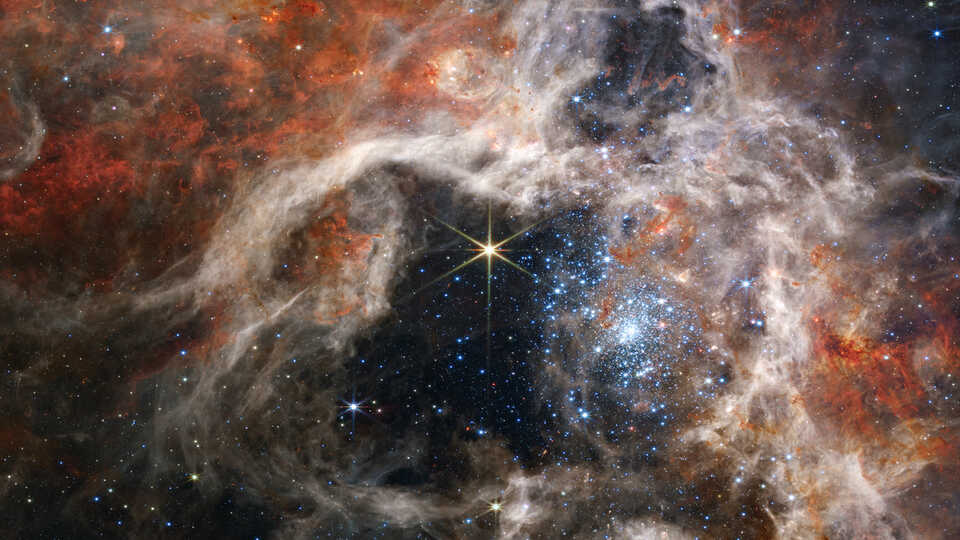
The James Webb Space Telescope (JWST) is the most complex and powerful astronomical space observatory ever built. It launched on Christmas Day in 2021 and has recently been commissioned in its final orbit in the Sun - Earth system. The large 6.5-m diameter JWST primary mirror and its science instruments ...
Where: San FranciscoCost: $15 General, $12 Members & Seniors
Total Lunar EclipseJoin Chabot’s astronomers for a live watch party of one of the two great eclipses of 2022. The moon will pass the earth’s shadow. Once covered, the moon will appear red in color, often referred to as a Blood Moon. Arrive by 11:30pm to learn from our astronomers. Our expert ...
Where: OaklandCost: $15 General, $7 Youth, Free for members