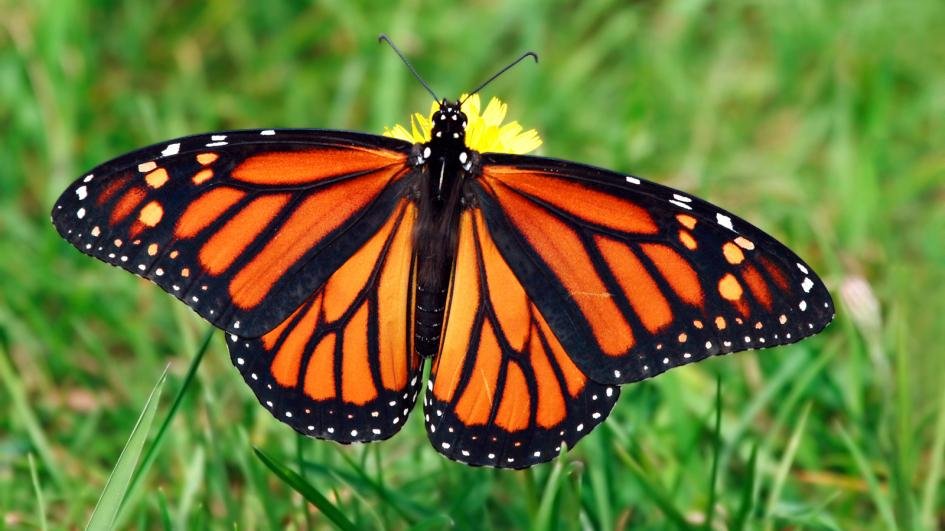
Let’s celebrate the return of Pacific Grove's monarch butterfly population during Science Saturday: Monarch Madness. Get an up-close view of butterflies, follow their migration, and learn about other pollinators. We encourage you to come dressed like your favorite butterfly!
Jack Driscoll-Natale is a 12th-grade student at Pacific Collegiate School. He invented H20 Monitoring For All, an affordable water quality monitoring system that makes continuous water quality monitoring accessible to local communities for environmental stewardship, ecological monitoring, and more! Jack’s invention received international recognition at STEM competitions. Now, he is ...
Where: Santa CruzCost: Free with admission
Family Astronomy: The Moon and TidesKick off the holiday season with a family workshop all about the Moon. Join us on an exciting and educational adventure as we delve into the captivating relationship between the Moon and tides. Discover how these celestial bodies influence the ebb and flow of our planet’s oceans in this interactive ...
Quantum Textures of the Many-Body Wavefunctions in Magic-Angle GrapheneInteractions among electrons create novel many-body quantum phases of matter with wavefunctions that reflect electronic correlation effects, broken symmetries, and collective excitations. Many quantum phases have been discovered in magic-angle twisted bilayer graphene (MATBG), including correlated insulating, unconventional superconducting, and magnetic topological phases. The lack of microscopic information of possible ...
Dr Adrienne Fairhall is a Professor in the Department of Physiology and Biophysics and adjunct in the Departments of Physics and Applied Mathematics at the University of Washington in Seattle. She obtained her Honors degree in theoretical physics from the Australian National University and a PhD in statistical physics from ...
Where: StanfordCost: Free
Swimming Smarter, not Harder: An Exploration of the Relationship between Locomotion and Energetics in FishesFishes exhibit extraordinary locomotor abilities, a key factor in their evolutionary success. My research integrates detailed movement and energetics analyses of swimming with robotics to explore how fishes undertake large-scale migrations, execute rapid maneuvers, and conserve energy by interacting with structures and selecting abiotic gradients in their environment. During my ...
Join us to hear Sally Benson, Professor of Energy Science & Engineering, discuss what she learned about policy making during her time as Deputy Director for Energy and Chief Strategist for the Energy Transition in the White House's Office of Science and Technology Policy.Attend in person or online (see weblink)
Where: StanfordCost: Free
Tuesday, 11/28/23
Devices, DMs and D**k Pics: Youth Experiences of Cyberflashing and Missing Safety Nets - LivestreamAdolescence is a period of increasing autonomy, identity exploration, and desires for physical and emotional intimacy. It is also when almost all youth have access to both a personal mobile device and social media accounts. One way such digital connectivity intersects with adolescent development is the high use of digital ...
Speaker: Katie Cederberg, Stanford UniversitySee weblink for streaming information
Where: Cost: Free
X-ray measurements to understand the science of fire spread by ember transport - LivestreamThe severity and frequency of large wildfires have increased significantly in the past two decades, which is largely attributed to poor forest management and climate change but also to growing population and human activities in the wildland-urban interface. The main mechanisms for the spread of wildfires are direct flame impingement, ...
The characteristic excitation of a metal is its plasmon, which is a quantized sound wave in its valence electron density. In 1965, David Pines predicted that a distinct type of plasmon, which he named a "demon," could exist in multiband metals that contain more than one species of charge carrier. ...
Plan for PlanetThe inaugural Shimizu Distinguished Lecture will be held on November 28th, 4-6pm at Clark Auditorium. We are thrilled to host Bjarke Ingels, founder and creative director of BIG (Bjarke Ingels Group). Bjarke is a visionary leader in architecture, transforming our industry and working toward a better world for current and ...
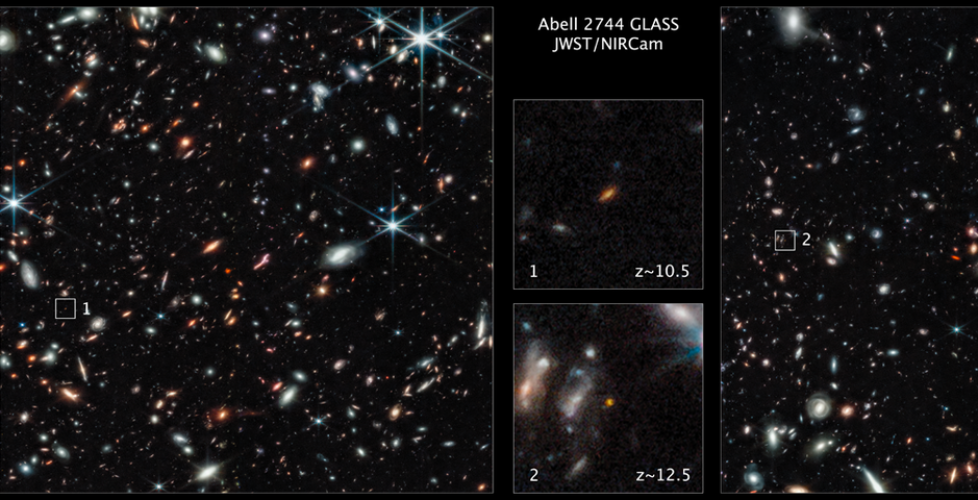
 In astronomy, the redder a galaxy appears, the faster it is fleeing, and the older a tale its light can tell. Such "redshifts" in the spectra of galaxies (symbolized with the letter "z") allow compelling insights. The recently-launched James Webb Space Telescope (JWST) has allowed astronomers to study the properties ...
The whole goal of physics is to explain what we observe. For centuries, physicists believed that observations yielded faithful representations of what is out there. But when they began to study the subatomic realm, they found that observation often interferes with what is being observed―that the act of seeing changes ...
Remarkable recent advances in deep neural networks are rapidly changing science and society. Never before had a technology been deployed so widely and so quickly with so little understanding of its fundamentals. I will argue that developing a fundamental mathematical theory of deep learning is necessary for a successful AI ...
The characteristic excitation of a metal is its plasmon, which is a quantized sound wave in its valence electron density. In 1965, David Pines predicted that a distinct type of plasmon, which he named a "demon," could exist in multiband metals that contain more than one species of charge carrier. ...
Extreme weather in the wake of climate change, causing wildfires, drought and flooding, threatens to turn the American West into a region hostile to human habitation - a “Great American Desert†as early U.S. explorers once mislabeled it. Bruce Cain suggests that the unique complex of politics, technology and logistics ...
Where: San FranciscoCost: $20 General, $10 Members
Science Uncorked: Bodega Head's Northbound Geologic JourneyPairing delicious wines with delicious ideas, this series features talks by scientists from UC Davis' Coastal and Marine Sciences Institute and Bodega Marine LaboratorySpeaker: Nicole Myers
Where: Bodega BayCost: Free
Science on Tap: Fast Radio Bursts: New Transient Mysteries and How We Understand Them Supernovae! Neutron Star Mergers! What do these have in common? They are what’s known as…transients! Short, dramatic, energetic, events that occur on human timescales. Many things in the Universe take millions or billions of years to change and evolve. Transients, however, can change over seconds or years, and illuminate deep ...
Where: Santa CruzCost: Free
51st Annual Fungus FairThe Mycological Society of San Francisco Fungus Fair includes the latest collection of expertly identified fungi collected in various locations in the Bay Area. These annual collections constitute a 50-year record of the early winter fungal diversity in our area. This historical information may become an important contribution to science ...
Where: South San FranciscoCost: Varies, see weblink
The ocean's midwaters below 200 m and above the seafloor, formerly thought to be entirely devoid of life, are now thought to be home to a biomass of animals larger than in the rest of the ocean combined. These organisms, many of which vertically migrate between the twilight or midnight ...
Where: StanfordCost: Free
Can we (yet) predict how fast Greenland is going to melt?The Greenland ice sheet has been losing mass in response to the rapid warming of the Arctic, and is contributing to sea level rise at an increasing rate. Fluctuations in ocean and atmosphere circulations are not only affecting the amount of melting and runoff at the ice sheet surface, they ...
The growing focus on hydrogen as a promising energy carrier has been pivotal in the pursuit of net-zero emissions within integrated energy systems. As part of this endeavor, extensive research has been conducted to delve into the reliability aspects of power-gas integrated energy systems. Additionally, our study looks at optimizing ...
Where: StanfordCost: Free
Doing a lot with a little: The molecular profile of a single sensory neuron links experience with behavioral plasticityThermosensation is a critical sensory modality for all organisms. C. elegans exhibits the remarkable ability to detect temperature changes of as little as 0.01C across a 10C temperature range, and exhibits experience-dependent thermosensory behaviors. Thermosensation in the innocuous temperature range is mediated primarily by the single AFD sensory neuron pair. ...
Where: BerkeleyCost: Free
The Science Behind Science Fiction: To Boldly GoJoin us for an exciting event where we explore the fascinating connection between science and fiction! Dive into the world of sci-fi as we unravel the mysteries behind "To Boldly Go: How Nichelle Nichols and Star Trek Helped Advance Civil Rights." Immerse yourself in a thought-provoking discussion led by renowned ...
Join the NASA Night Sky Network along with Dr. Travis Fischer from Space Science Telescope Institute, where we will explore the nature of active galaxies, including their energetic processes and the role they play in shaping the universe we see today.Active galaxies are some of the most fascinating objects in ...
Where: San FranciscoCost: $19.95 General, Free for members
NightLifeCalling all creatures of the night: explore the nocturnal side of the Academy at NightLife and see what's revealed. With live DJs, outdoor bars, ambiance lighting, and nearly 60,000 live animals (including familiar faces like Claude, our alligator with albinism), the night is sure to be wild.Step inside the iconic ...
Where: San FranciscoCost: Varies
Six Eruptions at Two Volcanoes Over the Past Three Years - LivestreamHow the Hawaiian Volcano Observatory monitors some of Earth’s most active volcanoesby Katie Mulliken, Geologist, Research Corporation of the University of Hawai‘i and USGS Hawaiian Volcano ObservatoryThe Hawaiian Volcano Observatory (HVO) is the oldest volcano observatory in the United States, founded decades before Hawaii became a state!Hawaii’s volcanoes erupt frequently; during the ...
Where: Cost: Free
Faster! Catching up to Electrons on the MoveElectrons are tiny particles that hold together the atoms in molecules. When sunlight interacts with a molecule, it first transfers its energy to the electrons. Then, as the electrons move, the molecule changes form, reshaping itself or even breaking apart. We do not fully understand how electrons affect the molecules ...
The Milky Way’s hot stars generally form in open clusters within the thin disk. However, there are a small number of early-type stars that are observed at high altitudes above the disk and were likely ejected from their birth clusters within the past few million years. My student Brandon Schweers ...