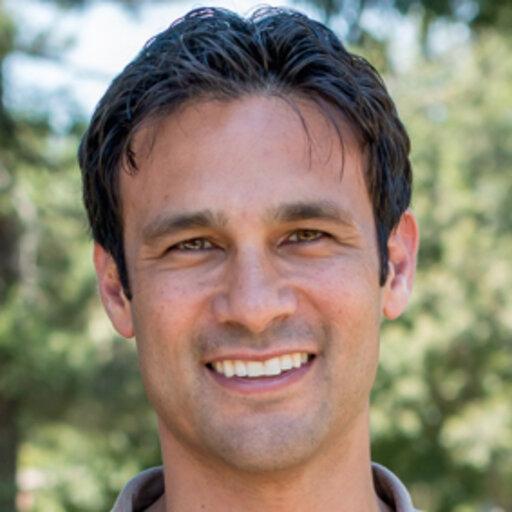
Speaker: Brad Balukjian, California Academy of Sciences
Where: Rohnert ParkCost: Free
What in the Galaxy is Scattering Cosmic Rays?Cosmic rays with energies << TeV affect galaxy evolution on all scales, from ionizing protoplanetary disks and molecular clouds to driving galactic outflows that alter the gas phase hundreds of kiloparsecs from the galactic disk. All models of cosmic-ray physics on "marco" scales (> pc) are sensitive to the assumed ...
The question of fluctuation and population growth at the local level and how that influences global properties has been studied extensively in physical, biological and social sciences. In liquids and colloidal solutions, fluctuations are ubiquitous. In quantum material interplay of fluctuation and phase transitions is an important topic of research.In ...
Most queueing models assume that each job runs on a single server. But this one-server-per-job model is not a good representation of today’s compute jobs, particularly Machine Learning jobs. A typical data center job today occupies multiple cores concurrently, often thousands of cores. We refer to a job that ...
Speaker: Selmann Chettih, Columbia UniversityRoom: Auditorium
Where: StanfordCost: Free
Nucleic acid-driven self-assemblies: from viral RNA sensors to transcription factorsMy laboratory focuses on the molecular mechanisms of self vs. non-self discrimination by the immune system. Our research has uncovered several protein polymerization processes - distinct from phase separation - that are triggered by nucleic acids in various immune functions. Our earlier work centered on the molecular mechanisms of a ...
Where: BerkeleyCost: Free
What are quantum computers good for?Quantum computers - computers which exploit quantum mechanics - are poised to reshape the landscape of computation. But understanding when ‘quantum’ can help speed up algorithmic tasks is tricky, particularly for those tasks which have the greatest potential for real-world impact. In this talk, I will survey my work in ...
Most magnetic materials, phenomena and devices are well described in terms of the magnetic dipoles arising from the spin of their constituent electrons. There is mounting evidence, however, of intriguing magnetic behaviors that can’t be explained in terms of electron spin dipole moments; these behaviors are often attributed to “hidden ...
Award-winning investigative journalist Charles Piller joins us in San Francisco for an in-depth look at what he says is a world of fraud, corruption, deceit, and greed that have set back important work on treating Alzheimer’s disease.Nearly seven million Americans live with Alzheimer’s, a tragedy that is projected to grow ...
Where: San FranciscoCost: $25 General in person, $10 online, member discount