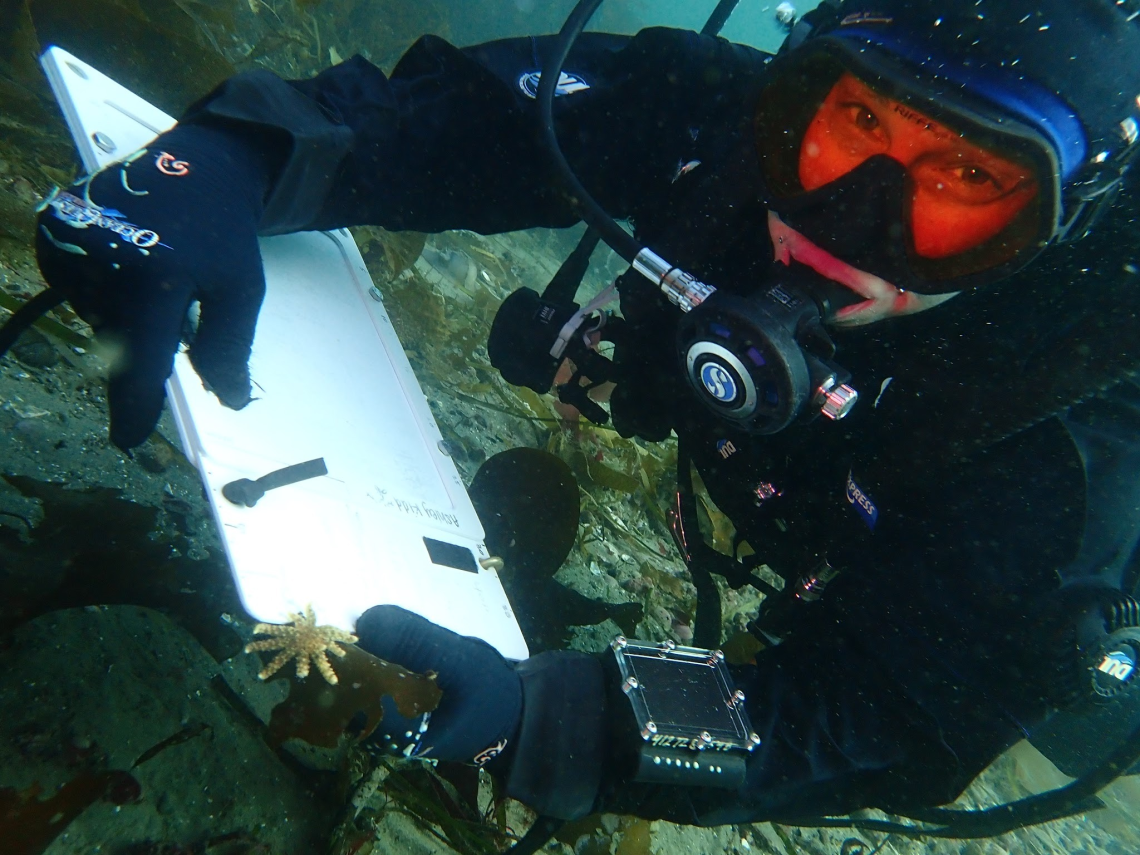
Ashley worked for 12 years as a public aquarium professional, where her passion in aquaculture supporting sustainable exhibits and conservation initiatives began, notably with SECORE coral conservation & the White Abalone Recovery Project. She holds an MS in Fisheries and Aquatic Sciences from the University of Florida, researching sunflower sea ...
The subsurface is indispensable to deep energy decarbonization, with capacity to store energy on scales necessary to balance renewable grid loads and to sequester carbon on scales relevant to emission reduction targets. Sustainably engineering subsurface reservoirs for energy production, energy storage, and dedicated carbon storage requires an integrated understanding of ...
Where: StanfordCost: Free
SETI Live: Back to the Moon - LivestreamHumanity is heading back to the Moon - and Artemis II is the mission that makes it real.In this SETI Live, host Simon Steel is joined by Dr. Caitlin Ahrens, assistant research scientist at NASA Goddard, to explore how Artemis II will prepare the way for future astronaut missions.Artemis II isn’t landing ...
Semiconductor moiré lattices provide a flexible platform to study flat, topological bands with a variety of closely competing ground states. In this talk, I will describe single-electron transistor microscopy of twisted WSe2 which reveals a rich interplay between magnetism, correlations, and topology. At zero magnetic field, we observe quantum anomalous ...
By introducing the concept of fugitive networks, this talk re-thinks Black women’s geographies of mobilization around former plantations on Venezuela’s Caribbean central coast. I show how these mobilizations both engage with and resist the state, as they are shaped by long-standing historical legacies of racialized exclusion and denial of claims ...
In 1964, L.V. Keldysh predicted that excitons - quasiparticles formed by bound electron-hole pairs - could undergo Bose-Einstein condensation (BEC) below a critical temperature. However, realizing this macroscopic quantum state in conventional semiconductors proved difficult due to the ultrashort lifetime of optically excited excitons. While spatially indirect excitons in GaAs ...
Bioorthogonal chemistry enables the performance of chemical reactions in biological, including living, systems. The concept was borne out of an unmet need for molecular imaging technologies focused on cell surface glycans, but quickly expanded to applications across basic and translational life sciences research. Today, bioorthogonal chemistries are enabling the development ...
Climate change isn't just threatening our energy systems, it's already breaking them. Extreme weather and other climate hazards are straining generation, transmission, and supply infrastructure, triggering cascading failures across the grid. This talk reveals the scale of our growing vulnerabilities and explores how they collide with surging energy demand. And ...
Finding new chemistry from natural sources is often described as “finding a needle in a haystack,” where scientists must sift through vast numbers of organisms, extracts, and/or genetic variants before uncovering a molecule that fits their needs. Advances in analytical technology now allow us to search more chemical space than ...