Classical methods for achieving nucleophilic substitution reactions of alkyl electrophiles (SN1 and SN2) have limited scope and are not generally amenable to enantioconvergent variants that employ readily available racemic coupling partners. In this talk, the use of radical chemistry in combination with transition-metal catalysis to address the dual challenges of ...
Speaker: Caleb Luke Mayer, Stanford UniversitySee weblink for connection information
Where: Cost: Free
Out of the ice age: Insights into past sea level and ice sheets from Beringia to AntarcticaAlthough understanding how ice sheets respond to a changing climate is a pressing issue of the century, our current knowledge of past ice-sheet changes remains limited by data sparsity. Over the last deglaciation, we understand global sea-level changes quite well, however, we know little about which ice sheets contributed meltwater ...
Designing, constructing, maintaining, and upgrading civil engineering infrastructure requires fresh thinking to reduce materials, energy, and labor. Meeting this goal depends on a deeper understanding of infrastructure performance - during construction and throughout its service life - enabled by innovative monitoring. The future of infrastructure will rely on smarter information: ...
Extensive attention has been paid to the potential harms of media consumption generally, and social media use in particular, with relatively little consideration given to the potential psychological benefits of media use. This talk will address why this bias exists and its potential for unintended negative consequences. Evidence of how ...
The computational resources required to describe the full state of a quantum many-body system scale exponentially with the number of constituents. This severely limits our ability to explore and understand the fascinating phenomena of quantum systems using classical algorithms. Quantum simulation offers a potential route to overcome these limitations. The ...
Spectroscopy and microscopy have the potential to reveal the structure and dynamics of complex materials, ranging from chromophores in solution to molecular aggregates, nanomaterials, and even quantum sensors. Yet, disentangling these signals and extracting an intuitive picture of how excitations form, move, and transform is one of the most persistent ...
Human manipulation is a dance of contact - carefully choreographed by physics, geometry, perception, and control. Despite extensive theories of contact physics and our advanced learning methods, achieving generalizable robot dexterity in the open world remains elusive. The challenge lies in the “hybrid” nature of contact: interactions are non-smooth and ...
Where: BerkeleyCost: Free
Popping the Science Bubble: Two talksWhat a trip! How psychedelic drugs reopen critical periods of developmentSpeaker: Makenzie Wilkinson, NeroscienceVisual processing and the limits to acuitySpeaker: Lauren Sigda, Vision ScienceAttend in person or click here to watch on Zoom
Where: BerkeleyCost: Free
Finally, something goodStefan Sagmeister has designed for clients as diverse as the Rolling Stones, HBO, and the Guggenheim Museum. He’s a two time Grammy winner and also earned practically every important international design award. Stefan talks about the large subjects of our lives like happiness or beauty, how they connect to design ...
Why do countries rich in oil so often experience political instability and human rights conflict?In this lecture, Mona Shomali explores the idea of the “resource curse” - a theory in international development that helps explain why vast natural wealth can fuel inequality, violence, and environmental harm rather than prosperity.Drawing on ...
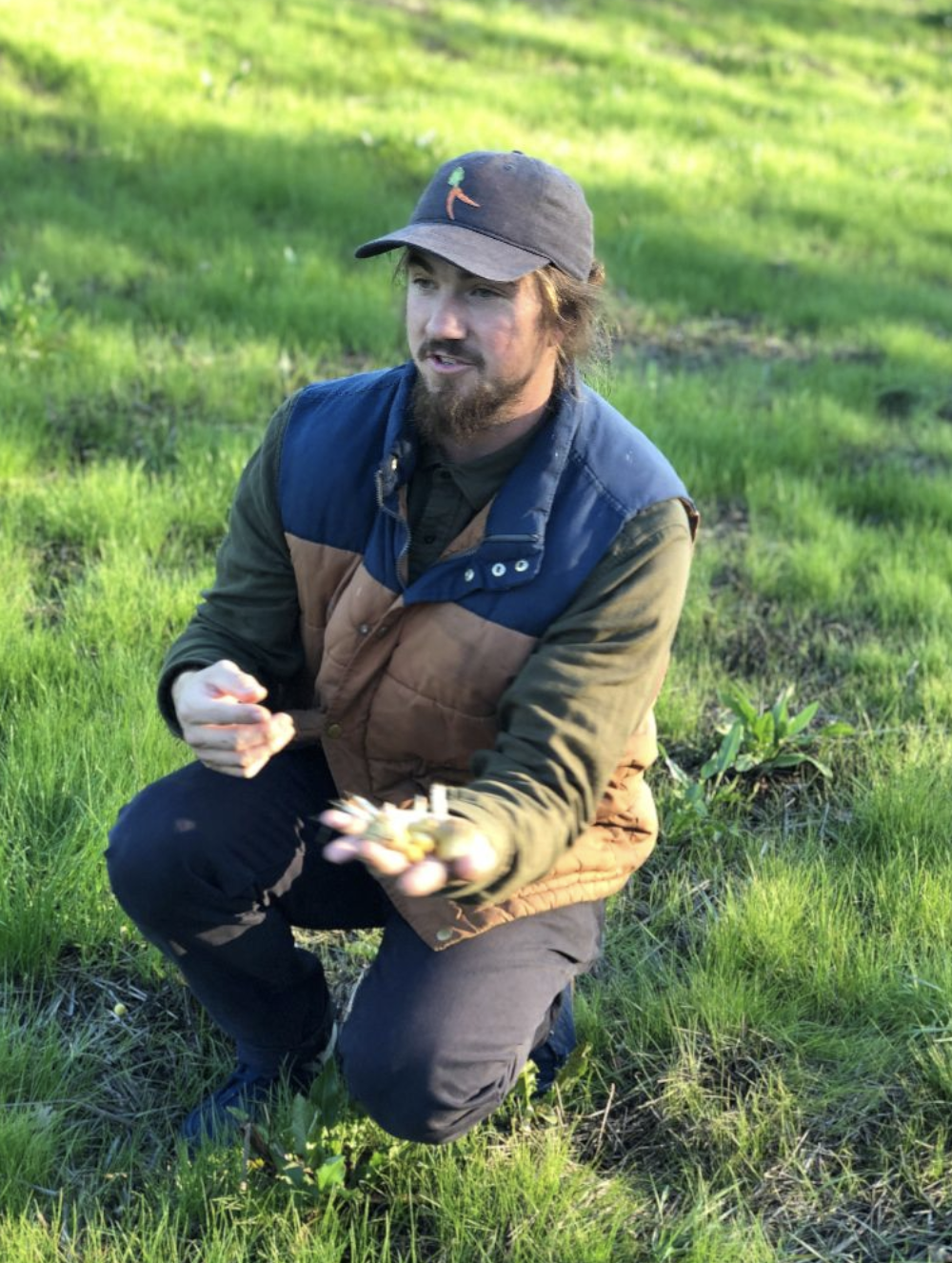
This talk will cover all things Sonoma County fungi: My obsession origin story, where to find mushrooms, important trees to learn, edible mushrooms, weird mushrooms, resources to utilize, mushroom stories, and more.Speaker: David Healy, Teacher