Dr. Mitsunuma has made pioneering contributions to catalytic sp³ C-H activation through his development of a cooperative catalyst system in which distinct catalysts operate synergistically. This strategy enabled mild sp³ C-H functionalization that combines high stereocontrol with high functional group compatibility. In particular, his ternary catalytic platform integrating a hydrogen ...
Disentangling the drivers of past ice sheet vulnerability is key to projecting future ice retreat and sea-level change. In particular, increased attention has focused on the importance of solid Earth-ice sheet interactions in modulating the vulnerability of marine ice sheets. In this talk, I consider how solid Earth feedbacks modulate ...
The emission of high-order harmonics of intense femtosecond lasers has long been understood as a result of a short-lived and rapidly oscillating “quantum antenna”: the result of the dynamical interference of the wavefunctions of an accelerated electron and that of its correlated hole, setup by an intense laser field during ...
Most climate founders know what needs to be built, but fewer understand the ground-level friction that prevents everyday homeowners, renters, and local businesses from adopting it. Acterra sits directly at the intersection of local climate action and regional tech.In this session, Acterra’s Executive Director Lauren Weston highlights how non-profit program design solves adoption bottlenecks. ...
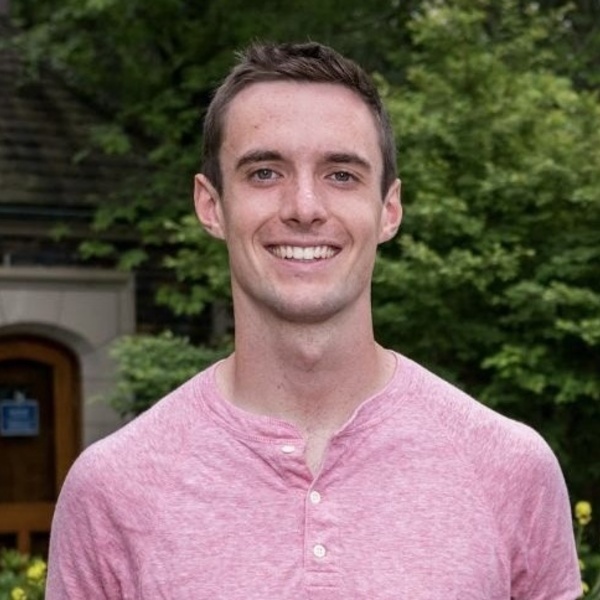
Are cacti ready to face climate change? - Eddy Mendoza-Galindo, Plant and Microbial BiologyPlants are constantly challenged by climate change, and their ability to survive depends on their genetic composition. In this talk, we will explore the genetics of Saguaro cacti living in the Sonoran Desert. We will also look ...
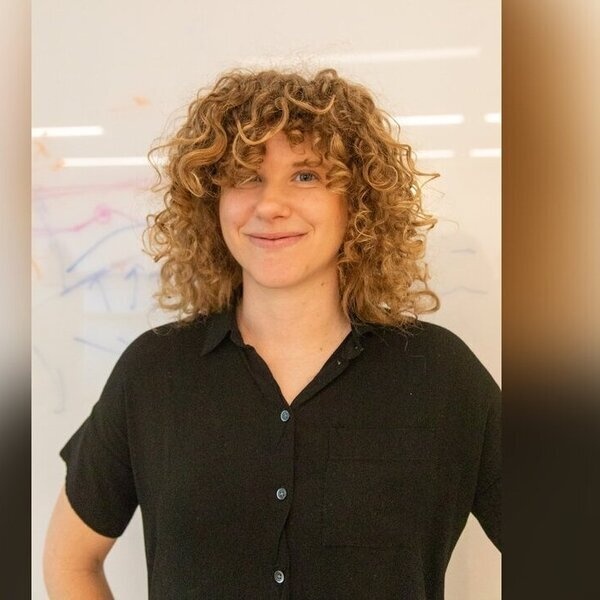
Danny Collins is a third-year PhD student in Stanford University?s Oceans Department whose research focuses on coral recovery in a rapidly changing ocean. Rising ocean temperatures are driving coral bleaching around the world, threatening coral reefs and the ecosystems they support. But bleaching does not always mean the end for ...
In her new book, Why We Ask Why, Lombrozo explores one of our most fundamental human habits: the drive to understand why things happen. From everyday questions about traffic and relationships to deeper questions about meaning and existence, our explanations shape how we learn, connect with others, and make sense ...
For decades, a buzzy branch of science has spread a deeply flawed story about romantic relationships, cloaking itself in the language of incontrovertible Darwinian fact. Evolutionary psychology claims our minds were shaped by primal drives that pit the genders against each other, from the myth that men are wired to ...
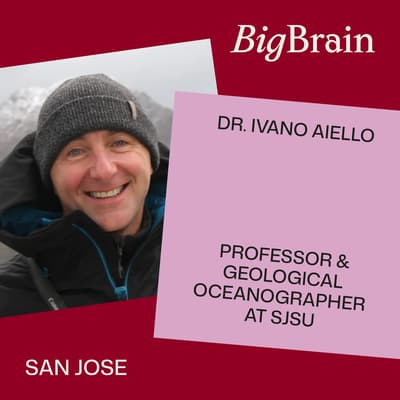
Scientists often divide the natural world into neat categories: ocean and seafloor, land and water, surface and subsurface. But nature rarely follows those boundaries, and the categories we create can shape what we notice, what we miss, and what we choose to protect.Geological oceanographer Ivano Aiello explores this idea through ...
Where: San JoseCost: $27
The Limits of Computer Decision-Making: Where Human Judgment Still MattersIn the 1940s, mathematicians and engineers set out to build machines that could make critical decisions under uncertainty. Within a decade, they had invented tools that not only launched modern computer science but quietly rewrote what it means for a human being to make a "rational" choice.Benjamin Recht, a professor ...
The land down under is quite a stunner when it comes to fungal diversity. A wide array of landscapes coupled by equally fascinating plants and animals has pressured fungi into some unique forms and niches. The talk will focus on fungi found in Western Australia, the Daintree area of Queensland, ...