
Sea cave development in Point Reyes National Seashore - a half century perspective
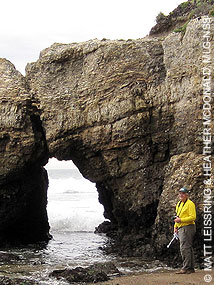
Observation during the past 50 years at Point Reyes have shown that this location is rich in sea caves and associated features. The majority of sea caves have formed in the porcellanite of the Miocene Monterey Formation (~17.5–6 million years old [Ma]) with lesser numbers in the Cretaceous (96–82 Ma) granitic rocks including tonalite, granodiorite, and granite. Faults and major joint sets related to the San Andreas and San Gregorio Faults have guided development of the caves. These sea caves range from shallow grottos to lengthy catacombs and are prime refugia for marine life. Varying beach sand levels both allow and block access to some caves seasonally. In view of the current sea level having stabilized in the Central California coast area at about 7,000 years ago, it is assumed most of the sea caves are younger than that time. In at least one instance, however, the cave may be older and represents a rejuvenated feature perhaps as much as 125,000 years old. Coastal erosion has both been the driving force in the formation of the sea caves and their modification, and eventual destruction. In turn, some of the sea caves appear to be major forces in coastal erosion in the softer Tertiary rocks. In addition to being major littoral marine life sanctuaries, there are sparse, secondary decorations within the caves that are analogous to those in limestone/marble caves. In addition to the sea caves, tafoni shelters are present in the calcareous sandstone of both the Miocene (12–10 Ma) Santa Margarita Sandstone and (~15–11 Ma) Laird Sandstone.
Speaker: Bruce Rogers (USGS ret.), President, Western Cave Conservancy
Thursday, 11/14/13
Contact:
Website: Click to VisitCost:
FreeSave this Event:
iCalendarGoogle Calendar
Yahoo! Calendar
Windows Live Calendar
Point Reyes National Seashore


Point Reyes Station, CA 94956
USA
Website: Click to Visit