
Long-Reach Distributed Fiber-Optic Sensing over Repeated Submarine Cables
Distributed Acoustic Sensing (DAS) has emerged as a versatile tool for seismic and geophysical studies due to its unprecedented sensor density, converting regular telecommunication fibers into distributed 1D strain sensors. DAS can achieve m-level spatial resolution and kHz sampling rates, enabling direct measurement of the coherent wavefield from seismic events. A key application is leveraging existing submarine telecommunication cables to create real-time oceanographic and seismic ocean bottom sensors. However, a major limiting factor of DAS is reach: unamplified links are limited to 100??"200 km, while cables with in-line optical amplifiers are typically restricted to the first repeater (50??"80 km). This fundamental constraint has prevented the use of the global submarine fiber network for deep-ocean sensing.
This presentation details recent progress on long-reach DAS, adapted for active submarine telecommunication cables. We demonstrate that the first-repeater limit is not fundamental and that by utilizing weak monitoring couplers, originally introduced for cable fault localization, distributed sensing over the entire cable length is feasible. A prototype system installed on a domestic telecom cable connecting California and Hawaii has transformed the 4,400 km cable into a distributed strain sensor with 44,000 100-meter-spaced sensor points. We present recent results from the M8.8 earthquake in Kamchatka, which include the first fiber-optic deep-ocean high-resolution seismic arrivals. Furthermore, we show the ability to accurately track the resulting tsunami wave as it passes over the cable, the first demonstration that standard telecom cables can detect and track tsunami waves in the deep ocean. Finally, we discuss recent system upgrades, resulting in a quasi-uniform noise floor of approximately 1 n?/s/?Hz for 50-meter spatial resolution. These results demonstrate the potential to use existing and future submarine cables, without modification and with negligible loss in throughput, to create a global deep-ocean sensing network.
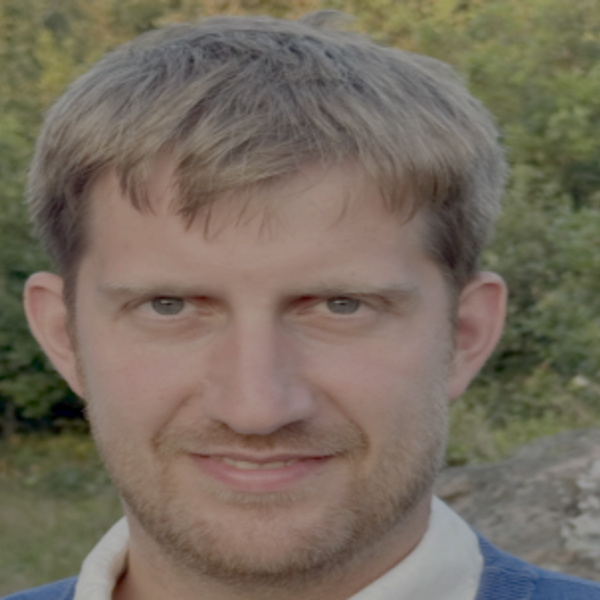
Speaker: Mikael Mazur, Nokia Bell Labs
Attend in person or online (See weblink)
Room: 350/372
Wednesday, 05/13/26
Contact:
Website: Click to VisitCost:
FreeSave this Event:
iCalendarGoogle Calendar
Yahoo! Calendar
Windows Live Calendar
Mitchell Earth Sciences Building (04-560)


Stanford University
Stanford, CA 94305