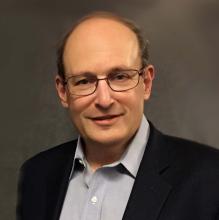
Getting to net zero carbon emissions will require Congress to more aggressively regulate greenhouse gas emissions. If the idea has wide support (and it does), why can't Congress muster the will to do it? David Spence (University of Texas at Austin) tackles this question in his new book Climate of ...
Human activities that emit greenhouse gases are undergoing rapid shifts in response to technological, economic, and regulatory pressures. In this dynamic environment, our knowledge of current emissions is often surprisingly incomplete, and this hinders society’s ability to plan effective mitigation actions. In this talk I will discuss our research focused ...
Strong interactions between particles can lead to emergent collective excitations. In the solid state, these phenomena have been extensively established in electronic systems, but are also expected to occur for gases of neutral particles like spin waves (magnons) in a magnet. In a regime where magnons are strongly interacting, they ...
Quasicrystals are exotic materials with symmetries once thought to be impossible for matter. This talk will describe the decades-long adventures searching for them in nature and other exotic environments that continues to this day, resulting in one of the stranger scientific stories you will ever hear.Speaker: Paul Steinhardt, Princeton UniversityAttend in person or online (see weblink ...
Where: Menlo ParkCost: Free
Mapping the inner world of cellsCellular processes are orchestrated by many biomolecules in a spatially and temporally coordinated manner within a tiny volume. To uncover the underlying organizational principles and their functional relevance, we take microscopy visualization as the primary approach to systematically map their spatial localization, temporal dynamics, and activity profiles. By combining small ...
Where: BerkeleyCost: Free
One Path to an Astronomy Outreach CareerDr. Lauren Corlies, Public Education Manager at Lick observatory will present a talk about navigating a career path in Astronomy Outreach, as well as identifying the skills and experiences that have helped along the way.
In 1976 Kroger and Reich established the existence of a low-lying nuclear excited state in 229Th through the spectroscopy of rays emitted following the decay of 233U. The prospects of a laser-accessible nuclear transition touched off a flurry of proposals to utilize this apparently unique nuclear transition as a sensitive ...