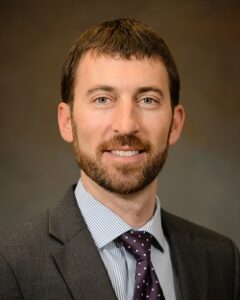
Fall Bird Walk - SOLD OUTin Chris Carmichael in search of both resident and migrant birds in the Garden’s many bird friendly micro habitats. Chris will be joined by Susan Greef, Garden Member and avid birder. Beginning and experienced bird watchers are welcome. Limited to 15 participants.This walk follows uneven terrain, with areas of paved ...
David Sandalow, Inaugural Fellow at Columbia University’s Center on Global Energy Policy, will present insights from the second edition of the Artificial Intelligence for Climate Change Mitigation Roadmap.Expanding on the initial edition, the roadmap explores how AI technologies can help reduce greenhouse gas emissions in nine sectors including power, manufacturing ...
Using a natural experiment from a retail gasoline antitrust case, we study how asymmetric information sharing affects oligopoly pricing. Empirically, price competition softens when, following case settlement, information sharing shifts from symmetric to asymmetric, with one firm losing access to high-frequency, granular rival price data. We provide theory and empirics ...
Our limited understanding of plant systems and the dearth of genetic tools constrain our ability to engineer plants effectively for diverse applications, including agriculture, sustainability, human health, and bioenergy. However, the field of synthetic biology has opened the door to new possibilities, enabling us to introduce heterologous metabolic pathways or ...
Where: BerkeleyCost: Free
Decoding, Modeling, and Reprogramming Cells at Scale in the Era of Digital Biology Decoding the biological “languages” underlying genetic and cellular states remains a major challenge. Single-cell omics measurements are transforming our understanding of biology; however, they are expensive and destructive, posing challenges for monitoring live cells in tissues and humans over time. Although imaging is non-destructive, low-cost, and scalable, it can be ...
Where: BerkeleyCost: Free
On Avoided Emissions - RescheduledThe urgency of climate change mitigation has led to widespread adoption of emissions avoidance projects to both reduce and offset emissions. At the core of offset integrity lie leakage, additionality, and permanence. Leakage and additionality, carbon market shorthand for imprecise measures of the economics concept of elasticities and externalities in ...
Where: StanfordCost: Free
Statistical Foundations of Trustworthy AI EngineeringMy research has been almost entirely devoted to a single question: How can we build trustworthy systems from untrustworthy AI algorithms? Answering this question is difficult because modern AI models can be wrong in unpredictable ways. From data, these models learn biases, spurious associations, and imperfect world-models that are ...
Turing-complete blockchain protocols such as Ethereum approximate the idealized abstraction of a shared “computer in the sky” that is open access (anyone can install software or interact with already-installed software), runs in plain view, and, in effect, has no owner or operator.This technology can, among other things, enable stronger notions ...
Where: BerkeleyCost: Free
AI and Climate Change MitigationHow can artificial intelligence (AI) help respond to the climate crisis? In which sectors can AI make the most difference? Will the potential benefits of using AI to reduce greenhouse gas emissions be outweighed by emissions increases from power demand for AI? The second edition of the Artificial Intelligence for ...
The automotive industry is rapidly electrifying, and electric vehicles (EVs) are becoming mainstream. At the same time, vehicles are getting smarter, with autonomous systems and advanced connectivity transforming how we think about transportation. Similarly, transformational changes are occurring in the electric power sector at an unprecedented rate to balance the ...
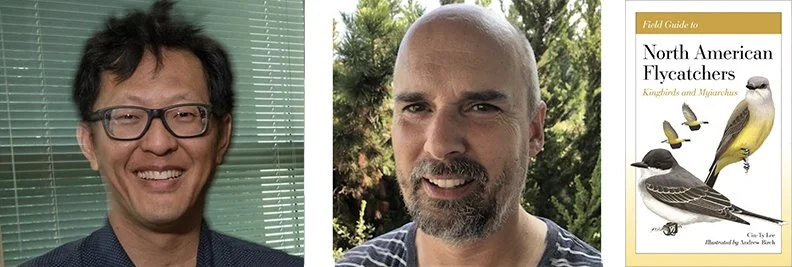
Co-authors of Flycatchers of North America: Empidonax and Pewees return to Speaker Series to discuss their new release. They will present the second installment in their (hopefully continuing) series addressing the complex identification challenges of this group. This time they will talk about Kingbirds and Myiarchus Flycatchers as well as ...
We humans are extraordinarily complex organisms, each of us composed of roughly 30 trillion cells. Our health depends on all of those cells working together in harmony, and just one cell going rogue can potentially spell disaster. In this session, Bradley Stohr of UCSF will share one patient’s story of ...