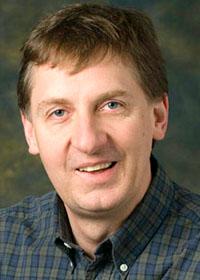
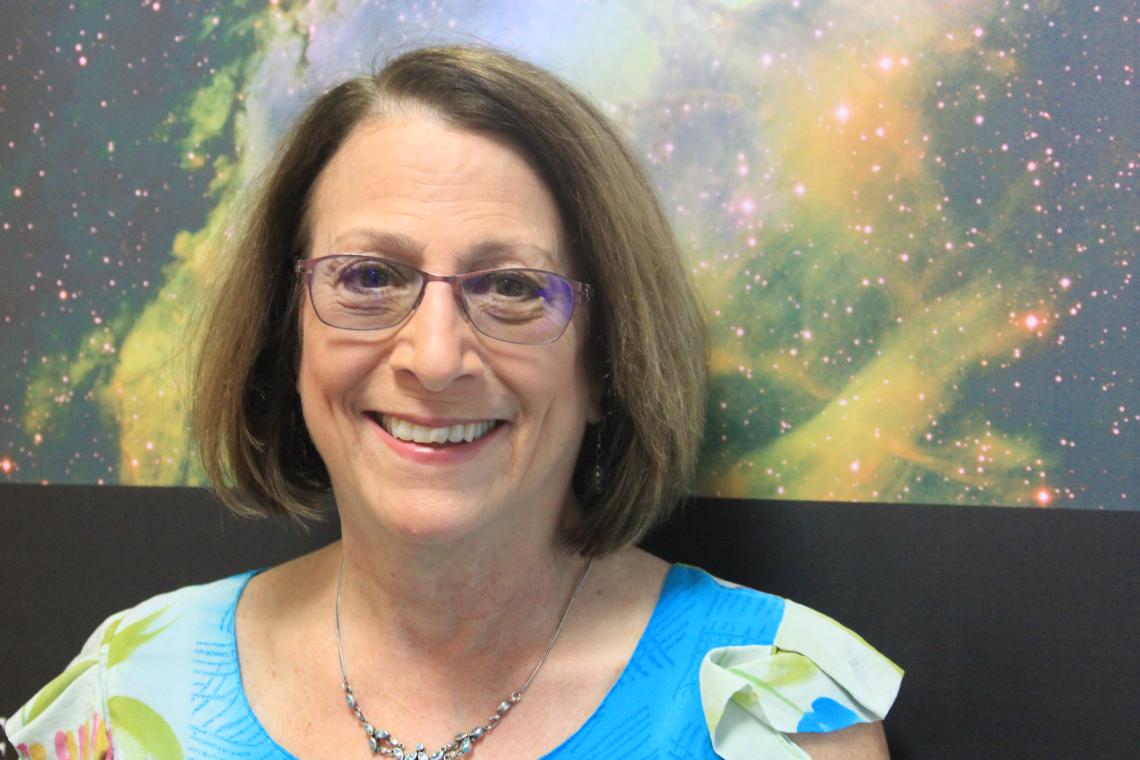
Our lab uses biophysical methods, with particular emphasis on micromanipulation of single DNA molecules and single chromosomes, to study the internal structure of chromosomes in vivo, and to study chromosome-organizing proteins and DNA topoisomerases in vitro. We also develop mathematical models relevant to these types of experiments.Speaker: John Marko, Northwestern ...
Artificial Intelligence (AI) requires intensive optimization calculations, which now demands nuclear power for the data centers. Logic functions, storage, and data communications each consume ~1pJ/bit, about 6 orders of magnitude higher than the Landauer Limit. This gives rise to 25MW in a Data Center versus the 25Watts of the human ...
Where: BerkeleyCost: Free
From Quantum State Preparation to Robust Quantum OrderPreparing complex many-body states is a central task for quantum computers, but noise during preparation can fundamentally limit what can be achieved. I will give a broad overview of quantum state preparation, focusing on the role of circuit depth, locality, measurements, and feedback. I will then discuss sequential circuits for ...
Over the past decade, Sonoma State University’s EdEon STEM Learning group of educators and technologists has developed an integrated ninth-grade physical science curriculum branded as “Learning by Making” (LbyM). LbyM teaches coding, electronics and sensors as tools for students to design and build their own science experiments. LbyM also teaches ...
The LUX-ZEPLIN experiment (LZ) employs the world’s most sensitive detector looking for dark matter in the form of Weakly Interacting Massive Particles (WIMPs). Seven tonnes of ultra-pure liquid xenon (LXe) are instrumented to detect scintillation and ionization signals from incoming particles, along with two veto detectors to tag background signals. ...
Did you know that parasites can have their own parasites? Come join us this Monday for a talk on hyperparasitism and disease control in plants!RSVP at weblinkSpeaker: Edith Lei, UC Santa CruzEditor's note: This event has been canceled and will be rescheduled. The venue is closed.
Where did the building blocks of life come from? The answer lies in the hearts of distant stars and incredibly powerful explosions such as supernovae, which help spread fundamental elements to galaxies far and wide, where they can spark new life. The talk explores how hundreds of millions of celestial ...