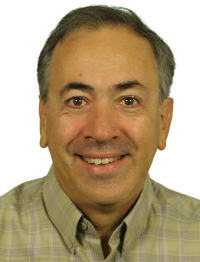
Full-Spectrum Science with Ron Hipschman: Making ColorExplore some of the many ways to make color - from neon signs to oil slicks to rainbows and more. Learn all about light, how it is made and interacts, and take home materials to build your own spectroscope. You’ll see color in a whole new light!Presentations at 1:00 and ...
Where: San FranciscoCost: Free with Admission to the Exploratorium
Methane hydrate is an ice-like substance abundantly present in deep ocean sediments and in the Arctic. Geoscientists recognize the tremendous importance of gas hydrate in the global carbon cycle and climate change, while reservoir engineers evaluate its potential as a possible energy source. For computational science the modeling of hydrate formation and ...
Where: StanfordCost: Free
Overinformativeness? Rationally Redundant ReferenceReferring is one of the most basic and prevalent uses of language. How do speakers choose from the wealth of referring expressions at their disposal?Rational theories of language use have come under attack for decades for not being able to account for the seemingly irrational overinformativeness ubiquitous in referring expressions. ...
People and Robots Seminar - POSTPONEDSpeaker: Brian Gerkey, Open Source Robotics FoundationEditor's Note: This seminar has been postponed and will be rescheduled at a later date.
Where: BerkeleyCost: Free
Clean Energy Finance Panel Panelists: Jeffrey Ball, Scholar-in-Residence, Steyer-Taylor Center for Energy Policy and Finance; Lecturer, Stanford Law SchoolSoh Young In, Doctoral Candidate in Civil and Environmental EngineeringDan Reicher, Executive Director, Steyer-Taylor Center for Energy Policy and Finance; Professor of Practice, Stanford Law SchoolModerator: Alicia Seiger, Deputy Director, Steyer-Taylor Center for Energy Policy and ...
Where: StanfordCost: Free
Nerd Nite East Bay: Pilgrims, Shipping Cranes, Urban WineThanksgiving Sinners: True Stories of the Appalling Pilgrims This November, get your understand of the Pilgrim journey to Plymouth rocked. With a well-known origin story that turns out to be mostly false, the Pilgrims set sail with a cargo hold full of heresy, sedition and hanky panky, took a ...
Where: OaklandCost: $8 Advance, $10 at door
Tuesday, 11/28/17
Nearby Galaxies with the Atacama Large Millimeter ArrayALMA is a revolutionary new telescope that is dramatically expanding our understanding of the high-frequency radio sky. Astronomers are using ALMA to make exciting new discoveries in topics ranging from star and planet formation to galaxies in the distant universe. I will begin by highlighting some of the recent exciting ...
Mathematical method and the metaphysics of Newton's PrincipiaSpeaker: Robert DiSalle, University of Western Ontario, is the author of Understanding Space-Time (Cambridge University Press) and numerous papers on Newton, Einstein and other philosopher-scientists.Room 307
Solar power is a clean and renewable source of energy, but it has struggled to compete with fossil fuels on cost. Most solar cells, which absorb sunlight and produce electrical energy, are built from silicon. SLAC’s Kevin Stone is exploring a new class of materials for solar cells. Like silicon, these materials ...
Dr. Molly Coye served as Chief Executive Officer of the Health Technology Center (non-profit education and research organization), which she founded in December 2000. Before that, Dr. Coye served in both the public and private sectors including Senior Vice President of the West Coast Office of The Lewin Group, Director ...
Where: BerkeleyCost: Free
Net Energy Analysis and Transitions to Low-carbon Energy SystemsAll proposed transitions to more sustainable energy systems require the growth of a variety of different low-carbon technologies. Some of these, such as photovoltaics (PV), contribute with a net energy surplus returned to society. Other technologies, including carbon capture and storage (CCS) and batteries, in some ways act as net ...
Where: StanfordCost: Free
Radar GlaciologyRadio echo sounding is a uniquely powerful geophysical technique for studying the interior of ice sheets, glaciers, and icy planetary bodies. It can provide broad coverage and deep penetration as well as interpretable ice thickness, basal topography, and englacial radio stratigraphy. However, despite the long tradition of glaciological interpretation of ...
Decarbonization of Residential Space and Water Heating in CaliforniaAchieving deep decarbonization goals will require a transition away from fossil fuels for residential space and water heating. While many options are available to decarbonize this sector, electrification appears to be the most promising. In this presentation, Imran Sheikh will share analysis of what widespread electrification of heating would mean ...
While neural networks had been used in speech recognition in the early 1990s, they did not outperform the traditional machine learning approaches until 2010, when Alex's team members at Microsoft Research demonstrated the superiority of Deep Neural Networks (DNN) for large vocabulary speech recognition systems. The speech community rapidly adopted ...
Join us for a conversation with Patrick Brown, the founder and CEO of Impossible Foods, a company that provides nutritious, environmentally friendly alternatives to meat and dairy - directly from plants. Previously, Brown was a world-renowned geneticist, Howard Hughes Medical Institute Investigator, and professor of biochemistry at Stanford University. He ...
Where: OrindaCost: $5 General, $1 Teachers/Students
Aliens in our Rocky ReefsFinding an eel amongst the immense boulder and cobble habitats in southern California may seem like trying to find a needle in a haystack. However, we have discovered that if you bait the traps, morays will come. Since 2010, my lab has been slowly uncovering the natural history of moray ...
Where: Santa CruzCost: Free
SETI Talks: Kepler, K2, and Beyond: The Era of Exoplanets Has Arrived!NASA’s Kepler space telescope was launched in 2009 and measured the brightness of 200,000 stars at unprecedented precision for over four years, with the prime mission goal of detecting Earth-sized exoplanets. Now after another four, Kepler’s final planet catalog is complete --- over 4,000 planet candidates have been found, with ...
Where: Menlo ParkCost: Free
Taste of Science: Vaccines and Artificial BrainHow did we learn to walk?You have over 640 muscles and only 1 brain to control them. Have you ever wondered how you orchestrate this complicated system with such great precision?It's difficult to decompose a brain to single neurons to understand how it works. Instead, we designed a "simplified human" ...
Where: Redwood CityCost: $5
Thursday, 11/30/17
Women in Tech: A Symposium on Innovation & EntrepreneurshipDespite evidence suggesting that diverse leadership teams can benefit workplace culture and the bottom line, female technologists and investors still often struggle to find support for their ideas.This public half-day symposium will highlight the experience of women in the tech industry - from established companies to startups and the venture ...
In recent decades, controversial science, once opposed by industry, has been accpeted on a host of environmental issues. Today, no one disputes evidence that smog, aerosols, and overdrafted groundwater are threats. What lessons do these past debates provide about how scientific arguments about climate change can evolve?
Where: StanfordCost: Free
How PARC Imagined the Future: “Futures Day†40 Years Later Forty years ago this month, Xerox hosted a multi-million dollar event to show its senior executives how PARC imagined the future. One of the people in charge of this "Futures Day" was then PARC Computer Science Lab member, Chuck Geschke, who would go on to co-found Adobe Systems with fellow ...
Food: A Four-Course After Dark ProgramThis November, join us for in-depth explorations of food, served with tastings, talks, and demonstrations designed to whet your curiosity about cooking and eating in a rapidly changing world. Programs take place over four Thursday nights, and cover topics ranging from kitchen innovations to food ...
Where: San FranciscoCost: included with admission
NightLife SpotlightNightLife celebrates the best of the Academy with an evening of after hours science and the premiere of Vortex 2.0, an art and music experience in the planetarium created just for NightLife.------> Featuring new work from artists Bedtimes (with music by Shigeto), Chase Hochstatter, Peter Clark, Tim Digulla, and Can ...
Where: San FranciscoCost: $15 General, $12 Members
Camera as Witness Presents 20th UNAFF film GUARDIANS OF THE EARTHThe Paris Agreement is a milestone in human history and is going to change our life for the next decades. For the first time, 195 nations committed to take action against climate change. The film gives insight behind closed doors of the negotiations and reveals the clash of forces, which ...
Sea otters are perhaps the best-known example of a "keystone predator".Sea otter behavior -- in particular diet specialization and limited mobility -- can mediate their effects on ecosystem dynamics.Other predators, especially large sea stars, can complement and reinforce the keystone role of sea otters: this became apparent with the loss ...
Where: Menlo ParkCost: Free
Friday, 12/01/17
Birds & BotanyHike the forests, meadows and hills around Pine Flat and up Redhill with ACR Volunteer Patrick Woodworth & ACR Resource Ecologist Dave Self. We’ll be watching (and listening) for birds on the hike out. After lunch, we'll botanize as we consider the seasonal interplay between bird foods, habitat history and current activity ...
Where: GeyservilleCost: Free
First Friday Family Night at CuriOdysseyFamilies with small children can swing into the weekend with music, science, food and fun! On the first Friday of every month, from 5 p.m. until 8 p.m., parents and kids celebrate together at CuriOdyssey. Dance to live music including soul, funk and jazz of the 60’s and 70’s. Purchase ...
Where: San MateoCost: $12.50-9.50 / Free with Admission / Members Free
Humans and Bugs Brain Exploration!Fruit flies are highly visual creatures, and their brains are complex enough to support many interesting visually-guided behaviors but also not as complicated to study as the brains of larger lab animals. We are interested in understanding how the fruit fly brain processes visual stimuli to detect useful information, such ...
Where: San JoseCost: Free
Finding New PlanetsThe Museum will host Dr. Pimol Moth for an exciting lecture on the discovery of new planets. It has long been speculated that other stars in our galaxy harbor their own system of planets. However, it wasn’t until 1992 that the existence of exoplanets (planets in orbit around other stars) ...
Where: Pacific GroveCost: $5 General, Free for members
Look for birds, mammals, and animal tracks as we explore along the water’s edge on this 3.7-mile nature walk. Bring binoculars and your favorite field guide to help enjoy the views. Have at least one liter of water, snacks, and appropriate clothing. Rain cancels hike. Led by Steve Stolper. RESERVATIONS ...
Where: AlvisoCost: Free
Nature Walk by the BayTake a gentle walk around the Marina's flat dirt trails and enjoy the local weather and bayside wildlife. We'll keep the pace slow for all ages and abilities. Meet in the parking lot near the restroom. Questions? (408) 355-2240​​​. Editor's note: There appear to be two walks scheduled at Alviso Slough ...
John Reber's plan would have destroyed San Francisco Bay as we know it, turning almost all of the estuary into a fresh-water lake and adding 20,000 acres of bay fill. If the Reber Plan had been adopted in the 1950s, the Save The Bay Movement of the 1960s would have ...
Where: SausalitoCost: Free
Low Tide WalkMSI takes to the tidepools for a treasure hunt of nature's beautiful intertidal secrets. We'll spend our time taking advantage of the low tide to reach the outer edges of Pillar Point, and take in spectacular views as we slowly retreat to shore. Will we find crabs, sea stars, eels ...