Creatures of the NightLifeThe creatures come out at NightLife as the Academy transforms into a spine-tingling and outrageous celebration of supernatural science on the spookiest night of the year.For this special Halloween edition, drag queen extraordinaire Heklina hosts our annual Halloween drag show and costume contest outside on the West Garden stage.Inside, African ...
There’s a terrifying new flu epidemic and your team are the only ones that can prevent a global outbreak. Travel across the globe collecting data, then come back to the lab to race against the clock to build the most effective vaccine. You’ll have to use your investigation and communication ...
Join us at the Exploratorium for a special pop-up Halloween salon, featuring six stories of spooky science, spectral visitations, ghostly encounters, and uncanny experiences.
Where: San FranciscoCost: $19.95 General, $14.95 Daytime Members
Join us at SLAC National Accelerator Laboratory for a 90-minute unique and family friendly tour experience. The tour will begin with a short film, “Making Science Happen,†then visitors will get a peek inside the lab’s facilities. Hear about the ways in which SLAC is a leading force in scientific ...
Where: Menlo ParkCost: Free
Two KIPAC Tea TalksBenefits of sparsity in gravitational lens modelingSpeaker: Aymeric GalanLens monitoring and time-delay measurement for a precise determination of the Hubble constantSpeaker: Martin Millon, EPFL, Switzerland
Have you ever wondered what happens at a government research facility? Are you interested in high energy physics, harnessing light, or nanoparticles? Join us for a tour at Lawrence Berkeley National Laboratory and learn about the Lab’s long history of bringing science solutions to the world. Spend the afternoon getting ...
In embryonic development, cells read the program encoded in their DNA to become cell types such as those found in muscle, liver or brain. The goal of Professor Hernan Garcia’s lab is to uncover the rules behind these decisions to predict and manipulate developmental programs. Find out how the lab ...
Where: BerkeleyCost: Free
A Discovery of Pulsars: A Graduate Student's TaleThis year's Emilio Segrè Lecture will be presented by Jocelyn Bell Burnell. In her presentation she will describe how pulsars were inadvertently discovered, describe some instances where they were 'nearly' discovered, and outline the properties of these amazing objects.
July 2019 was the 50th anniversary of humanity’s first steps on the surface of the Moon. In that time, the Apollo missions, a fleet of robotic probes, and observations from Earth have taught us a lot about Earth’s surprising satellite. In this non-technical talk, Andrew Fraknoi will look at the ...
Where: OaklandCost: $5
First Friday: SleepWhat exactly does sleep do for your body and mind? What do researchers know about the science of sleep, and why do we dream? Learn about all of this and more at our Pajama Party First Friday! Join us for fun party games, hands-on activities and even listen to a ...
Where: OaklandCost: $5
Banning Facial Recognition TechnologyThis year, San Francisco became one of the first major U.S. cities to ban the use of facial recognition software by police and other agencies. But what does the ban really mean for citizens of the Bay Area? How else is this technology being used? What other actions can be ...
In Climate Change Summit, communities work together to weigh different stakeholder positions to solve a relevant problem that requires a nuanced understanding of climate issues. For 2019, our problem is about dam renovation or removal. Participants are randomly assigned into one of eight stakeholder positions and then guided through a ...
Where: BerkeleyCost: Free
Probing Fundamental Physics with Strong Gravitational LensingIn general relativity, the presence of matter can curve spacetime, and the path of a light ray will be deflected as a result. This process is called gravitational lensing, analogous to the deflection of light by (e.g. glass) lenses in optics.In rare and extreme cases, light can take different paths ...
Build your own oragami-based microscope! After we assemble our microscopes we will take to the Bay to collect our own live plankton samples and test our our creations
During the 9th annual Discovery Day at Oracle Park experience hundreds of dynamic demonstrations, engaging experiments, and geeky games led by Bay Area scientists and engineers.Highlights:Discover the mysteries of science with UCSF! Learn how our bodies work: how cells divide, how we hear, how neurons communicate with each other and ...
Where: San FranciscoCost: Free
Storytime Science for Childrenin us the first full weekend of every month for Storytime Science! Enjoy a science-themed storybook read aloud followed by a simple related activity geared toward very young children.Exploring, observing, questioning, and learning are our watchwords here at the Exploratorium. When matched with a story, it’s even more fun! Each ...
Where: San FranciscoCost: Free with Admission
Jazz under the StarsCome peer through our telescopes and see craters on the Moon, the visible planets, star clusters, and more while we listen to CSM's very own KCSM Jazz 91 FM. Dress warmly. Free parking in Marie Curie Lot 5. Directions are available on the Maps, Directions & Parking page.This event is weather dependent. Latest ...
Where: San MateoCost: Free
Sunday, 11/03/19
Storytime Science for Childrenin us the first full weekend of every month for Storytime Science! Enjoy a science-themed storybook read aloud followed by a simple related activity geared toward very young children.Exploring, observing, questioning, and learning are our watchwords here at the Exploratorium. When matched with a story, it’s even more fun! Each ...
Where: San FranciscoCost: Free with Admission
SciComm Studio 019: Poetry in MotionHow can interactive technologies such as VR/AR, AI, and even data visualization bring poetic experiences to life?In this SciComm Studio event we explore how to bring storytelling beyond the book. Antonio Rodriguez and Marie Thorimbert of the University of Lausanne and winner of the Swiss National Science Foundation's Optimus Agora ...
Cheryl Phillips will go through the history of data journalism, briefly touching on its historical roots, its modern inception, early years and then will delve more deeply into a more recent shift toward larger, data-driven collaborative investigative journalism. She will talk about how data journalism has borrowed tools and techniques ...
Utility end-users often run the last mile of energy solutions. The actual impact of an energy solution directly links to the customers’ choices of end-use technologies and their energy use behaviors in daily life. As a current trend, utility providers offer services and programs that engage customers to play a ...
Where: StanfordCost: Free
Ultrafast enhancement of exchange interaction and short range spin correlations probed by magnetoelastic coupling in CrSiTe3Interactions between electrons in solids are responsible for a wide variety of physical phenomena such as magnetism, superconductivity Mott insulators and more. Understanding interactions between electrons, and manipulating them to stabilize desired electronic phases have been the research focus of the strongly correlated electrons community in the past few decades. ...
The dianionic oxo ligand occupies a very special place in coordination chemistry, owing to its ability to donate pi electrons to stabilize high oxidation states of metals. The ligand field theory of multiple bonding in metal-oxos predicts that there must be an “oxo wall†between Fe-Ru-Os and Co-Rh-Ir in the ...
ON SYMMETRY: FROM NOETHER TO THE HIGGS: AKA WHAT (THEORETICAL) PHYSICISTS DOIn this talk, Alex Miller will discuss how discoveries of the early 1900's completely revolutionized the way that theoretical physicists see the world around them. We will explore how theorists today put symmetry at the forefront, defining our theoretical systems primarily by the symmetries that govern them.
Where: Rohnert ParkCost: Free
The Lord of the Rings: structural mechanism of a DNA polymerase sliding clamp loaderThe sliding clamp Proliferating Cell Nuclear Antigen (PCNA) is a central regulator of genomic integrity and cell proliferation pathways in all eukaryotes. PCNA is a ring-shaped complex that encircles and slides along DNA, serving as an essential cofactor of DNA polymerases and scores of other proteins to coordinate DNA replication ...
Where: BerkeleyCost: Free
Driving quantum science and technology with semiconductorsThere is a growing interest in exploiting the quantum nature of individual electronic and nuclear spins in semiconductors for manipulating, storing, and communicating information. We discuss progress in understanding these properties to construct systems that enable new technologies based on the quantum nature of the spin. Challenges include creating and ...
Transience, Replication, and the Paradox of Social RoboticsAs we continue to develop social robots designed for connectedness, we struggle with paradoxes related to authenticity, transience, and replication. In this talk, I will attempt to link together 15 years of experience designing social robots with 100-year-old texts on transience, replication, and the fear of dying. Can there be ...
Join us for a conversation between a Theorist and an Experimentalist, both pursuing the search for Dark Matter.What is dark matter? For decades, firm astronomical evidence from observations of stars and galaxies has indicated that most of the matter in the universe cannot be seen directly in telescopes. Instead, this ...
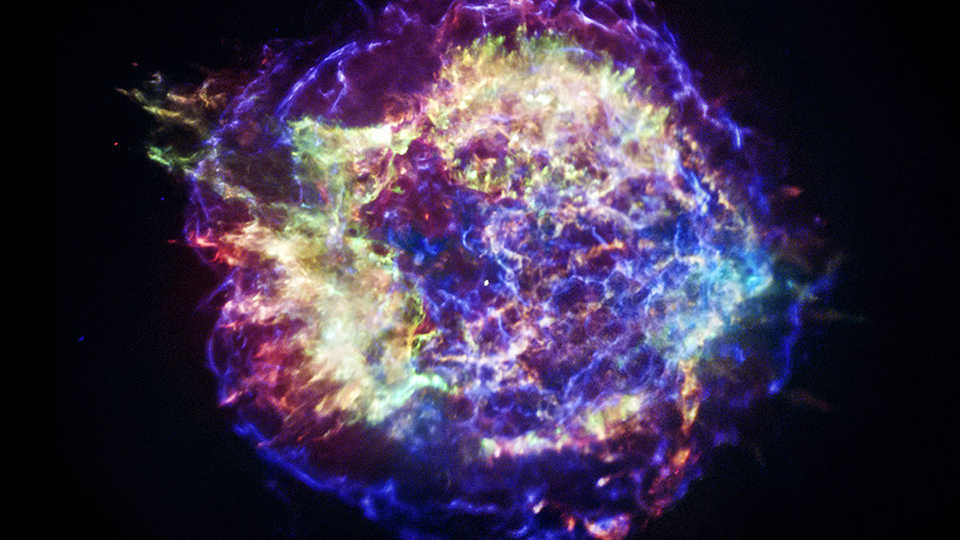
The launch of NASA's Chandra X-ray Observatory in 1999 brought X-ray astronomy into the main stream, with 10 times the resolution and the ability to see objects 100 times fainter than previous x-ray satellites.As Chandra celebrates its 20th year of operations, Dr. Wilkes will review some of the major discoveries ...
Where: San FranciscoCost: $15 General, $12 Members and Seniors
The need for efficient access to molecules of importance to human health drives the development of innovative synthetic methods. Our group has had a long-standing interest in exploring stereochemically complex molecular space not well-represented in typical drug screening libraries. This had led to new methods to transform simple precursors into ...
Where: BerkeleyCost: Free
Two KIPAC Tea TalksDiscussion of the latest Nobel Physics prize award to Jim PeeblesSpeaker: Ari Cukierman, StanfordNew insights into the nature of dark matter with strong gravitational lensesSpeaker: Daniel Gilman, UCLA
Where: StanfordCost: Free
Advising for Biology MajorsSonoma State University Biology ColloquiumSpeaker: Dr. Richard Whitkus, Sonoma State Univ.
Where: Rohnert ParkCost: Free
Understanding cosmological evolution of galaxies with intensity mapping Line-intensity mapping (LIM) is an emerging observational technique to study the large-scale structure of the universe. LIM measurements are sensitive to the aggregate line emission from the entire galaxy population, therefore placing important integral constraints on galaxy evolution in a cosmological context. In the first part of this talk, I ...
Dry deposition is a key process that removes trace gases and particles from the atmosphere, and thus one factor that controls the atmospheric lifetime of pollutants and short-lived climate forcers. In fact, dry deposition is the single largest component of uncertainty in our understanding of aerosol effects on climate. Despite ...
Here Today, Gone Tomorrow? Effects of Climate Change on Bay Area WildlifeHow will changes in our climate affect local animal right here in Bay Area. We'll open the doors at six so you can speak with members of local conservation groups and learn more about what they are doing locally to mitigate the effects of our changing climate. At 6:30 we'll ...