Dr. Ralph Moss details the origin of cancer immunotherapy and how it disappeared for almost 100 years. Recently, it has been rediscovered and has become one of the most widely used cancer treatments. Inducing fever with compounds of killed viruses, immunotherapy triggers the human immune system to identify and destroy ...
Where: Cost: $5 General, Free for members
Nature-Based Sequestration: One Key to Solving our Climate Crisis - LivestreamReducing the carbon that we are putting into the atmosphere is not enough. We must also draw down and sequester hundreds of millions of metric tons of carbon. We will cover natural techniques for carbon sequestration through farming, ranching, and habitat restoration, as well as the prospects for a technological ...
Where: Cost: Free
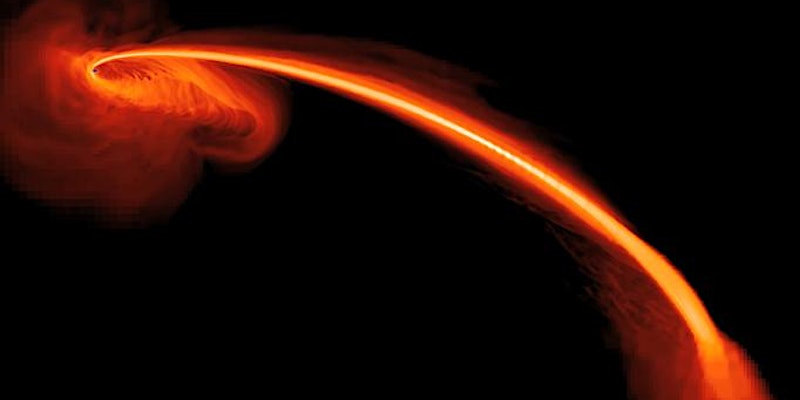
It’s not easy growing a supermassive black hole - LivestreamWhen we think of black holes, we often think of them as endless hoovers, sucking up anything around them. In reality, it’s very difficult to grow a black hole; to get matter close enough to that point of no return. Instead, most matter will happily orbit a black hole. Just ...
Discover the beautiful diversity of the world of succulent plants! Almost every imaginable size, color, texture, and form can be found in these types of plants, representing many different plant families found around the world. We'll explore together some of their amazing features, talk about where and how they grow, ...
Zurite, Perú (3400 m.a.s.l.) derives irrigation water from the 2.12 square kilometer Upper Ramuschaka Watershed (URW) ~ 1000 m above. The URW is part of the puna biome - a seasonally dry grass and shrub ecosystem existing at the altitudinal limits of vegetation and from which non-glacially fed streams originate. ...
Speaker: Neil Degrasse TysonThis was originally scheduled for May 12, 2020 and has now been canceled.
Where: San JoseCost: $46 - $96 and up
Wednesday, 05/26/21
Lunar Eclipse Virtual Watch PartyStay up with Chabot astronomers to virtually watch a total eclipse of the Moon as it passes through the shadow of the Earth. It has been more than two years since we’ve enjoyed a total lunar eclipse, and this one will be extra special: it will happen during a perigean ...
 The COVID-19 global pandemic has shined a bright light on our medical system unlike perhaps any other time in this country's history. For more than a year now, we have seen how the daily work of making important, even life-and-death decisions is frequently made harder by factors and variables outside ...
A tale of hungry black holes and unfortunate stars. At the centre of every galaxy lies a supermassive black hole. Some of these black holes are in an 'active' state, pulling in a steady stream of material from the surrounding area. While in this state these black holes have a ...
Where: Cost: Free
How to Prepare for Climate ChangeWhy did a music major and a surgeon get trained by Vice President Al Gore's Climate Reality Project later in life to press for urgent action on climate? Come hear David Pogue (NYT best-selling author and CBS Sunday Morning correspondent) and Mercy High School sophomore parent Andrea Metkus, M.D. as ...
This lecture will give a brief overview of the SDGs with reference to recent industry specific trends and ESG benchmarks. An important part of the lecture will be about mapping a roadmap of integrating the SDGs in your organization that has been developed by the presenter, Nitesh Dullabh. He will ...
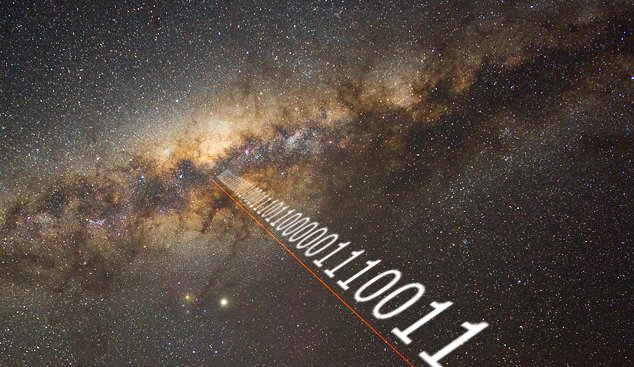
Today, the search for intelligent, civilization-building life in the Universe is undergoing a profound renewal. Thanks to the discovery of thousands of planets orbiting other stars, the introduction of new observing technologies, and increased support from both public and private sectors, a new science of searching for “techno-signatures†is emerging. ...
Where: Cost: Free
Science on Tap - Armed and Dangerous: How octopuses use and lose their arms - LivestreamOctopuses have a fascinating and important place in the marine ecosystem because they connect many different organisms in the food web. They are hunted by fish, marine mammals, and even other octopuses, so they have had to evolve a variety of interesting, well-known strategies they use to live another day. ...
Join us for a virtual discussion, live-streamed direct from Berlin, Germany, with Heino Falcke, the German astrophysicist, about his research into the nature of black holes. His new book A Light in the Darkness is the story of how the first photographic evidence of black holes was achieved by Falcke ...
Where: Cost: Free ($5 without discount code)
Labside Chats: A Conversation with a Scientist, featuring Haley Ohms, Ph.D. - LivestreamTune in for the next Labside Chat with Haley Ohms, assistant project scientist at UC Santa Cruz and researcher with the Fisheries Collaborative Program. Learn more about the ecology and evolutionary biology of steelhead in the Carmel River.Join the conversation! Submit your questions in advance for Haley, then watch the ...
Where: Cost: Free
Counterfactuals: the science of can and can't - LivestreamPhysicist Chiara Marletto proposes a new way of thinking about laws of nature. Thinking about which laws are possible or impossible may generate an alternative way of providing explanations, and therefore new scientific theories.In this talk, Chiara will explain this fascinating, far-reaching approach (known as Constructor Theory) which holds promise ...
What happens when artificial intelligence drives a shift away from democracy, increases inequity, and harms the planet? How is AI shaping our understanding of ourselves and our societies? Drawing on more than a decade of research, AI expert Kate Crawford reveals how AI is a technology of extraction: from the ...
When and where life originated on Earth - and if, or where, life exists elsewhere in the cosmos - are some of the biggest scientific questions of our time. Even the origin of the basic materials needed for life is a mystery. Meteorites and comets are often cited as potential ...
Where: Cost: Free
ANDY WEIR Discusses 'Project Hail Mary' with SETI Scientist Pascal Lee - LivestreamBooks Inc. proudly presents #1 New York Times-bestselling author Andy Weir in celebration of his critically-acclaimed new novel, Project Hail Mary. Andy will be in conversation Pascal Lee, planetary scientist with the SETI Institute.With Starred reviews from Booklist, Publisher's Weekly, Kirkus Reviews, and Library Journal, Project Hail Mary is an ...
Where: Cost: Free
Hardcore Natural History: Regeneración Pajaro Valley Climate Action - LivestreamJoin us as we speak to Natalie Olivas, Community Organizer at Regeneración Pajaro Valley Climate Action where she helps to build community capacity to advocate for equitable climate action. She works across sectors to interweave climate justice into various programs and curriculums. Natalie has experience working with local governments, businesses, ...
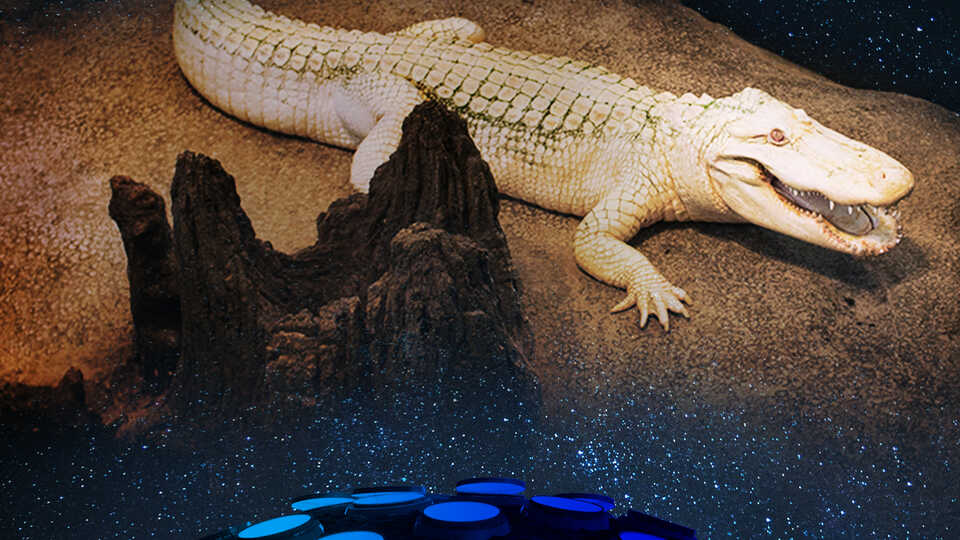
Calling all creatures of the night: explore the nocturnal side of the Academy at NightLife and see what's revealed. With live DJs, outdoor bars, ambiance lighting, and nearly 40,000 live animals (including familiar faces like Claude the albino alligator), the night is sure to be wild.Reserve your entry to the ...
Where: San FranciscoCost: $17.50 - $20
After Dark Online: Transitional LandscapesAs the Bay Area prepares for climate change and the impacts of sea level rise, the development planned for Treasure Island - incorporating innovative strategies for urban agriculture, sustainability, sea level rise, and environmental stewardship - is one forward-looking project.Join us in exploring the participation of artists in developing climate ...
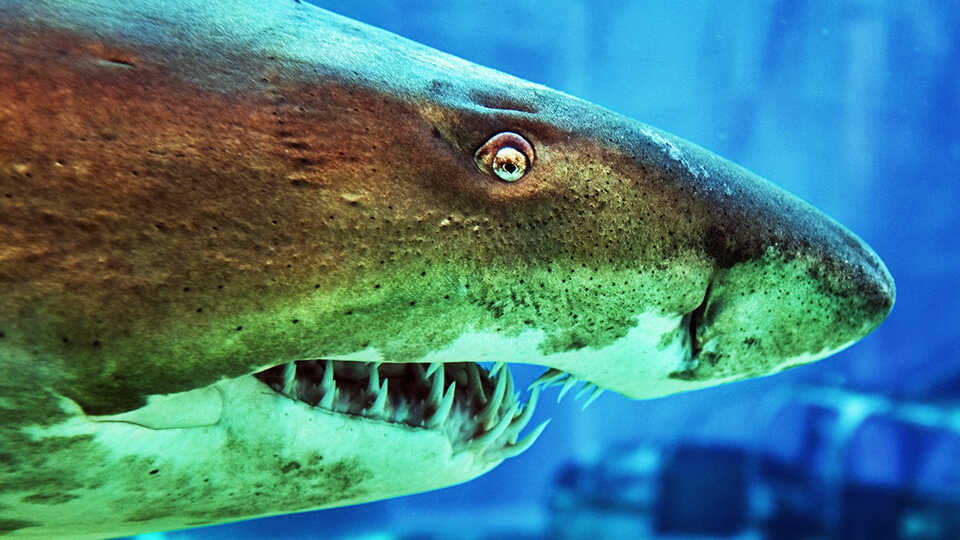
Get a better understanding of shark physiology and peer into some jaws and maws. During this evening highlighting the diversity of sharks, we’re embarking into the wonderful world of filter-feeders, finding out what fossilized shark teeth can tell us about ancient oceans, and getting an up-close look at specimens from ...
 Three large earthquakes since 2019 have ruptured incompletely mapped faults in the western U.S.Both satellite and field measurements give extremely detailed maps of how the ground deformed.Imaging these earthquakes and studying the previously unrecognized connectivity among the causative faults offers a rare window into the types of earthquakes that can ...
Megathrust earthquakes and their associated tsunamis cause some of the worst natural disasters. In addition to earthquakes, a wide range of slip behaviors is present at subduction zones, including slow earthquakes that span multiple orders of spatial and temporal scales. Episodic tremor and slip (ETS) events may provide insights into ...
Where: Cost: Free
Environmental Career Panel DiscussionActerra's Young Professionals, De Anza's Zero Waste & Climate Awareness Club, and DASB Environmental Sustainability Committee are excited to announce an environmental career panel discussion featuring professionals with a diverse range of sustainability backgrounds and professions.This event will feature brief presentations from our career panel, a Q&A session and then ...
Dive in for a refreshing look at rivers, creeks, and streams. We'll focus on freshwater wildlife, watershed science, and the Museum's role in studying the health of these important places.See weblink for connection information
Humankind speculated about the existence of planets orbiting other Suns for hundreds, if not thousands of years before their existence was finally confirmed. During that time we invented and depicted many new and now iconic sci-fi worlds - mysterious planets with exotic landscapes, orbiting alien star systems. When our technology ...
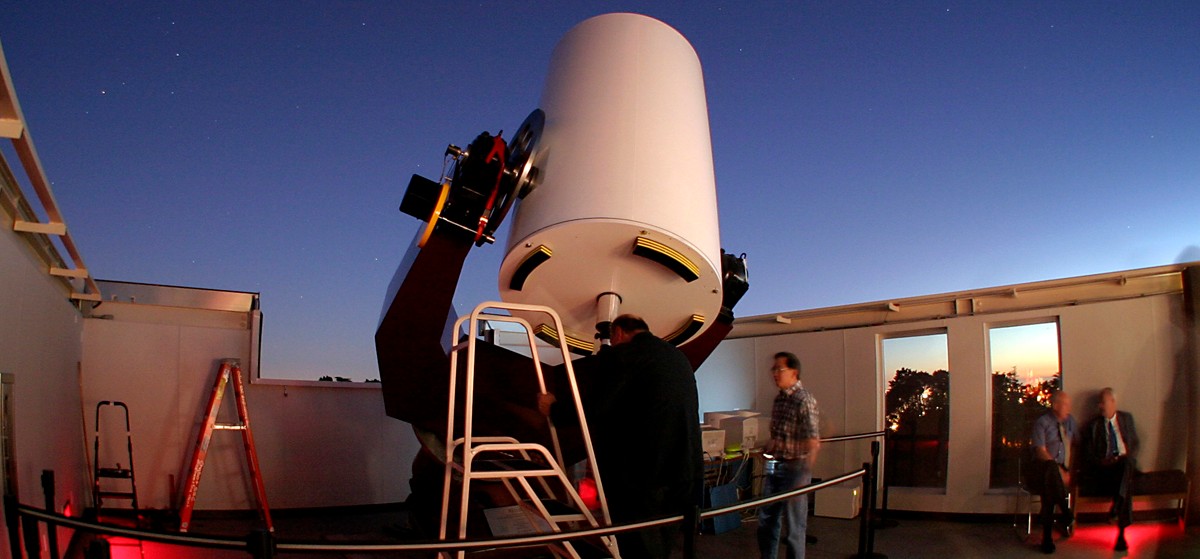
Join our resident astronomers on Facebook Live every Saturday evening live from Chabot’s Observation deck!Each week, our astronomers will guide us through spectacular night sky viewing through Nellie, Chabot‘s most powerful telescope. Weather permitting we will be able to view objects live through the telescopes and our astronomers will be ...
Where: Cost: Free
Tuesday, 06/01/21
Whole Earth Seminars - LivestreamSpeaker: Oscar Branson, University of CambridgeZoom information can be found on the EPS advising Google calendar
Where: Cost: Free
Thursday, 06/03/21
(un)Earthed: Experience the SETI Search Through Sound - LivestreamWhat if you could experience the SETI search through sound?The SETI Institute’s artist in residence Alfred (Daedelus) Darlington is creating (un)Earthed, a sonic experience that immerses the listener in the SETI Institute's iconic search for technosignals. Daedelus is a trailblazing artist, DJ, and producer, who has been active in electronic ...
Where: Cost: Free
SFBBO Birdy Hour Talk: How Song Sparrows Have Adapted to Life in the San Francisco BaySong Sparrows are one of the most widespread bird species across North America - but the Song Sparrows of the San Francisco Bay aren’t just any ordinary backyard bird. These birds are the only Song Sparrows equipped to survive in the harsh, inhospitable environment of the salt marsh. Each arm ...
Where: Cost: Free
After Dark Online: 500 Queer ScientistsRepresentation matters - in science and everywhere. Founded in 2018 by Dr. Lauren Esposito, 500 Queer Scientists is a visibility campaign for LGBTQ+ people and their allies working in STEM and STEM-supporting jobs - collectively, a powerful force of scientific progress and discovery. In this program, Esposito will discuss an exhibit ...
Where: Cost: Free
Micromitigation: Fighting Air Pollution with Activated Carbon - LivestreamWe would like to invite new members to join Counter Culture Labs' Micromitigation Meetup alternate Thursdays. We will be discussing ways to deploy existing adsorption technology using commodity granulated activated carbon for the mitigation of air pollution. We welcome those interested in both the environmental justice and technical engineering aspects of ...
From high-res satellite images to detailed 3D reconstructions to remote-controlled underwater microscopes, coral reef research is at the cutting-edge of technology. Learn about several of these exciting projects and meet scientists and engineers finding new ways to look at these critical and complex ecosystems.Check out a digital reef with Dr. ...
Join us for this illustrated lecture given by Catherine Watters in honor of our bug-themed month of June. The artist and scientist Maria Sibylla Merian (1647-1717) was born in Frankfurt, Germany, into a middle-class family of publishers and artists. At the age of fifty-two, Merian traveled with her ...
Hematite is a ubiquitous secondary phase in fault zones. Iron is the 4th most abundant element in Earth’s crust and hematite grows in a range of shallow fault rocks due to the redox potential of diverse Fe-bearing minerals. Hematite in fault rocks exhibits grain morphologies and nano- to microscale textures ...
Join our resident astronomers on Facebook Live every Saturday evening live from Chabot’s Observation deck!Each week, our astronomers will guide us through spectacular night sky viewing through Nellie, Chabot‘s most powerful telescope. Weather permitting we will be able to view objects live through the telescopes and our astronomers will be ...
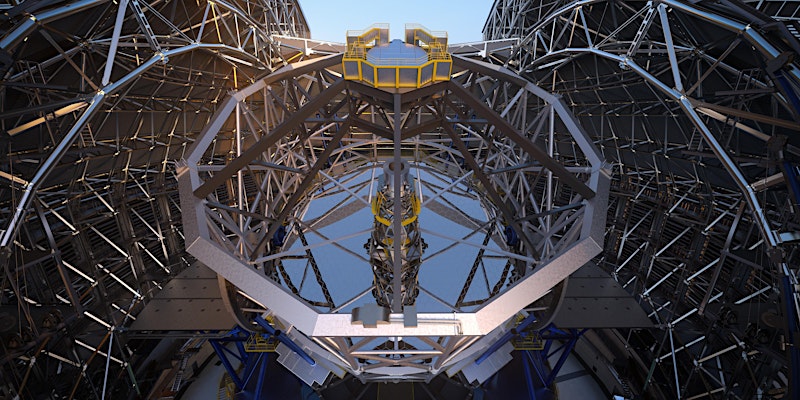
The Extremely Large Telescope is currently under construction high in the Atacama Desert in Chile. This talk will explore the incredible engineering behind the largest optical and infrared telescope in the world, introducing the science instruments we are building for it here at the Royal Observatory Edinburgh.Speaker: Sandi Wilson
Where: Cost: Free
The coming decade in quantum technology - Livestream50 years after applications from nuclear power to the circuits that make mobile phones possible, what lies ahead for the coming decade in quantum technology?Quantum technology, which relies on the principles of quantum physics, is set to usher in a new era of innovation. It will present new possibilities in ...
Where: Cost: Free
Astronomy on Tap: Los Angeles - LivestreamWe’ll hear from Dr. Britt Lundgren: “Using Gorging Supermassive Black Holes to Illuminate Distant Galaxies†and from Dr. Junhan Kim: “Exploring the Universe from the South Poleâ€. In addition, we will host interactive, astronomically-themed pub trivia.See weblink for YouTube connection.
Where: Cost: Free
Tuesday, 06/08/21
The self-assembling brain: how neural networks grow smarter - LivestreamNeurobiologists and computer scientists are trying to discover how neural networks become a brain. Will nature give us the answer, or is it all up to an artificial intelligence to work it out?Join Peter Robin Hiesinger as he explores if the biological brain is just messy hardware which scientists can ...
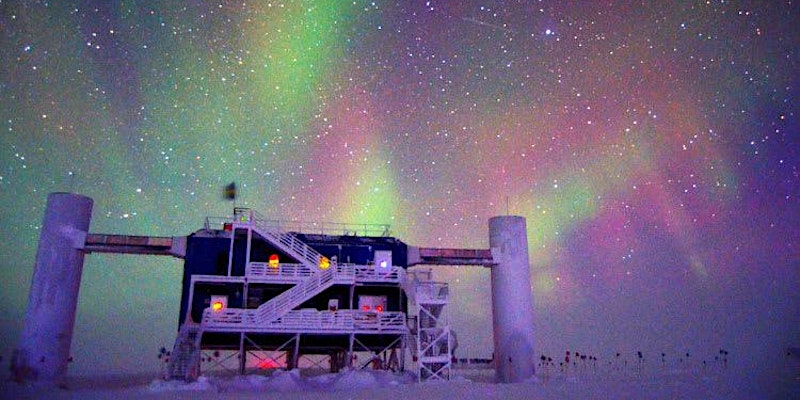
Winter is here!Join us for an extraordinary virtual presentation by scientists at the South Pole who will describe what it is like to live and work where it is dark more than 23 hours every day and where the average temperature is -50â°F.Project IceCube uses a cubic kilometer of ice ...
Where: Cost: Free
SETI Live: FRB Discovered by Allen Telescope Array - LivestreamOn May 18, 2021 the SETI Institute's Allen Telescope Array (ATA) discovered its first FRB emanating from the repeating source FRB20201124A. The detection of this bright double-peaked radio burst marks a milestone for the ATA, confirming that the newly refurbished system is working as it should. Join Simon Steel in conversation ...
Electrification and building decarbonization are key practices to reducing our reliance on fossil fuels and reaching a more sustainable and resilient California. But adopting these practices also means managing a considerably increased load on the electric grid. Can the state meet this increased need with new sources of renewable power, ...
The Deepwater Horizon incident was the first large deep-sea oil spill. Soft-sediment benthos provide key ecosystem services and were an ecological concern following the spill. Recent publications recorded an initial opportunistic response and predicted 50 - 100 years for benthic taxonomic recovery. We present new insights into the timing and ...
Where: Cost: Free
Social Cost of Carbon - LivestreamThe social cost of carbon - an estimate of the economic harm caused by each additional ton of carbon dioxide - allows policy makers to evaluate the economic consequences of emissions and make informed decisions about climate change. Join this discussion between Energy and Resources Group professor David Anthoff, Agriculture ...
How do scientists go from OMG to PhD? How do they turn their passion for science into their profession? What advice do they have for future scientists?If you are a 5th-12th grade student, undergraduate, teacher or parent, join us to ask these questions and more in a Q&A session with ...
Periodical cicadas are known for their unique 17- and 13-year life cycles and mass emergence events. This mystery of why they would have evolved these two prime-numbered life cycles has attracted many biologists and mathematicians. Dr. Yoshimura will explore this phenomenon through a science-fiction story of the prime-numbered life cycles ...
Where: Cost: Free
Thursday, 06/10/21
Nobody's Normal - The History, Culture, Stigma and Future of Mental Health - LivestreamThe way people conceptualize mental illness, and how they talk about it, differs around the world. A new book - Nobody's Normal, by George Washington University Professor of Anthropology Roy Richard Grinker - examines the ways in which culture and historical contexts have shaped our beliefs, stigma and social norms ...
D’Anne Duncan will discuss the critical importance and value of centering graduate student advocacy and activism to create institutional change by fostering relationships between graduate students, faculty, and campus administrators. Learn strategies to engage graduate students in leadership and diversity, equity, and inclusion values and principles to enact sustainable change ...
For more than 80 years, astrophysicists have collected data that suggests 80% of matter in the universe is 'dark'. These observations have led them to believe that it is made up of an as yet unknown substance.In this talk Sabine Hossenfelder will explore the evidence for and against the existence ...
Where: Cost: Free
Science Stories from Palomarin, Episode 4: Crossroads & ConnectionsPlease join us at noon on Thursday, June 10th for Episode 4 of Science Stories from Palomarin: “Crossroads & Connections.†We’ll be chatting with two more scientists who have spent decades chasing and observing migratory birds with advancing technology and on foot. RSVP here to join us via Zoom and we ...
Calling all creatures of the night: explore the nocturnal side of the Academy at NightLife and see what's revealed. With live DJs, outdoor bars, ambiance lighting, and nearly 40,000 live animals (including familiar faces like Claude the albino alligator), the night is sure to be wild.Reserve your entry to the ...
Where: San FranciscoCost: $17.50 - $20
After Dark Online: Queering the FutureWhat will it take for humanity to face the climate crisis and related challenges of the coming decades? Some futurists and activists imagine near-term and long-range futures that center thriving queer lives, build our resilience for disruptive future forces, and radically transform broken systems to work for all. This program ...
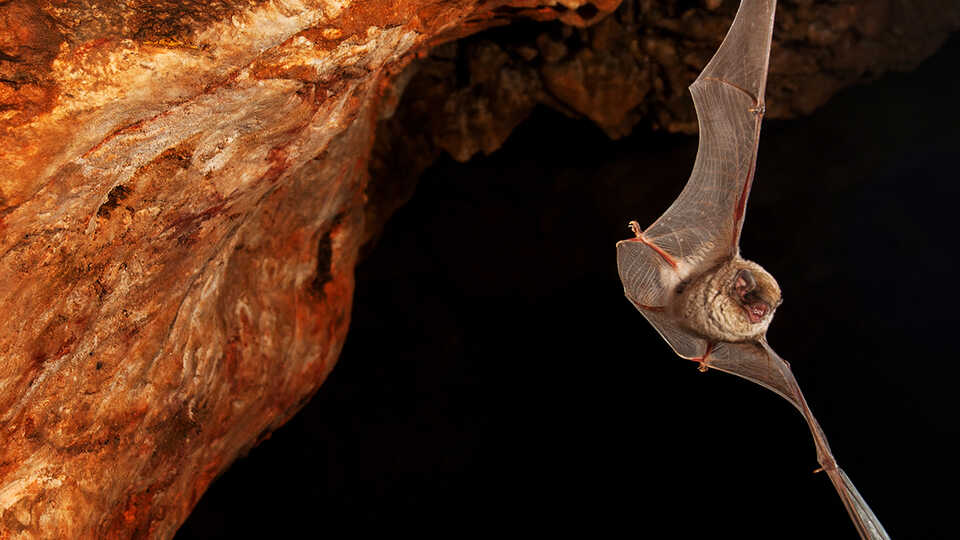
Peek into cave systems that only the most skilled researchers, cave divers, & advanced tech can reach. Learn about bats, blind shrimp, and the fascinating range of life found in caves across the southern United States and Mexico’s Yucatán Peninsula.How do hundreds of thousands of bats exit a cave in ...
A false memory is a memory for something that never happened to you. Memory is easily manipulated and can change without our awareness. In my talk I discuss different ways that false memories are created and how most people do not recognize the difference between an accurate and a false ...
How "future-oriented" are you? In the near term, nearly half of US adults would have trouble finding $400 to cover an emergency expense. Looking further ahead, our collective futures are threatened by global climate change. Meeting such challenges partially depends on the human ability to regard future selves as continuous ...
Where: Cost: Free
Friday, 06/11/21
90 Degrees South: Detecting Invisible Messengers of the Cosmos - LivestreamWe are delighted to announce this fantastic public & alumni event hosted by our department together with the team at IceCube South Pole neutrino Observatory (US & South Pole).Our Head of Particle Physics Professor Daniela Bortoletto will be hosting a live link-up with Josh Veitch-Michaelis and Martin Wolf, IceCube winterovers ...
Where: Cost: Free
Wildlife Tracking: Tracking Basics and a story about Badgers - LivestreamWildlife is all around us in the Bay Area. Diverse species of animals filter through our urban landscapes, crossing the boundaries of our homes, cities and the protected landsthat surround our region. Whether you are visiting your local parks and preserves on the San Francisco Bay, the coast, the Santa ...
Join our resident astronomers on Facebook Live every Saturday evening live from Chabot’s Observation deck!Each week, our astronomers will guide us through spectacular night sky viewing through Nellie, Chabot‘s most powerful telescope. Weather permitting we will be able to view objects live through the telescopes and our astronomers will be ...
The crystallin proteins that make up the refractive medium of the vertebrate eye lens must remain soluble and stable for a lifetime. These proteins maintain their short-range order without strong intermolecular interactions even at concentrations above 400 mg/mL in humans and closer to 1000 mg/mL in fish. Structural and biophysical ...
Where: Cost: Free
Slugs and Steins: Electric Planes, Trucks, and Automobiles: The Promise and Challenges of Energy Delivery - LiveatreamIn consumer applications like electric automobiles, and especially in the astonishing new field of electric aircraft propulsion, high power storage density is essential. High reliability and fault tolerance are also critical attributes. In addition, global energy and environmental concerns call for more efficient and reliable energy conversion systems. This talk ...
Venus today is supremely uninhabitable. Yet it may have been the first planet in our solar system with conditions suitable for life! Just as we can learn about the evolution of civilization from archeological sites, Venus - our twin planet - has deep lessons for what makes our home planet ...
Where: Cost: $15
Tuesday, 06/15/21
AIOps for Intelligent Cloud OperationsProduction computing infrastructures, particularly multi-tenant cloud infrastructures, have become increasingly complex and require constant monitoring and maintenance. Cloud service providers are faced with the challenge of both high operation cost and daunting service downtime penalty. Existing monitoring tools continuously collect a large amount of metric and log data but still ...
Where: Cost: Free
Climate Change Panel Discussion - LivestreamPanelists: Fire Forward director Sasha Berleman, resident biologists and preserve managers Michelle Cooper and Gwen Heistand, resource ecologists Henry Inman and Jennifer Potts, and director of conservation science Nils Warnock.
Forest Ecologist Suzanne Simard reveals that trees are part of a complex, interdependent circle of life; that forests are social, cooperative creatures connected through underground mycorrhizal networks by which trees communicate their vitality and vulnerabilities, and share and exchange resources and support.Simard's extraordinary research and tenacious efforts to raise awareness ...
Where: Cost: Free
Two Talks: Popping the Science Bubble - LivestreamBuilding a stronger postman: Improving the messenger RNAs (mRNAs)Speaker: Teena Bajaj (Comparative Biochemistry)Cat, Dog, or Higgs Boson? Can we train AI to recognize particles and save the future of fundamental physics? Speaker: Daniel Murnane, Ph.D. (Computational Research Division, Lawrence Berkeley National Laboratory)See weblink for Zoom and Facebook links.
Where: Cost: Free
Wednesday, 06/16/21
Breakthroughs - A Refined Laser Method and Faster Matrix Multiplication - LivestreamMatrix multiplication is one of the most basic linear algebraic operations outside elementary arithmetic. The study of matrix multiplication algorithms is very well motivated from practice, as the applications are plentiful. Matrix multiplication is also of great mathematical interest. Since Strassen's discovery in 1969 that n-by-n matrices can be multiplied ...
Where: Cost: Free
Data Science Coast to Coast - Two talksOceanic stirring and Mixing of Passive Scalars: A Novel ClosureMiguel Jimenez-Urias, Postdoctoral Fellow, Earth and Planetary Sciences, Johns Hopkins UniversityBlending Machine Learning and Physics to Improve Climate ModelsLaure Zanna, Professor of Mathematics & Atmosphere/Ocean Science, New York UniversitySee weblink for Zoom link.
Where: Cost: Free
June LASER Event - CanceledMany-headed: Co-creating with the CollectiveSpeaker: Heather Barnett, University of the Arts LondonAdditional topics and speakers TBARegister at weblink to receive connection information
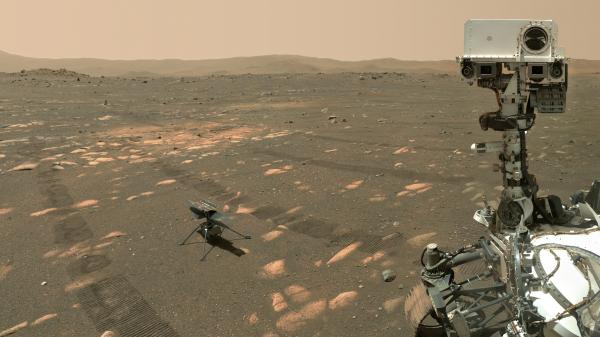
With three countries sending missions to Mars in 2021, including the first Mars helicopter, there is new interest in the red planet. What do we know, and what do we hope to learn, about this alien world next-door?In this free, on-line program, Andrew Fraknoi will discuss the discoveries that revealed ...
I will begin by sharing some results from my research on Globular Clusters, following a brief introduction to these fascinating and ancient structures. In particular I will focus on the role that Binary Stars play in cluster dynamics and show some examples of how my students and I have been searching for these ...
Where: Cost: Free
Thursday, 06/17/21
Everything in motion: How our brains learn to control our bodies - LivestreamThe effortless ease with which we move our arms, our eyes, even our lips when we speak masks the true complexity of the control processes involved. This is evident when we try to build machines to perform human control tasks. What sets us apart is our ability to learn new ...
How do plants attract insects or keep them away? What composes the colors of insects or of plants, or how do insects communicate with each other?Specific organic compounds determine whether insects are keen on feeding on plants or avoid them altogether. Some insects have learned to use plant compounds as ...
The livestock industry is responsible for 55% of anthropogenic methane emissions and about 4% of total greenhouse gas emissions in the state. California is committed to reducing methane emissions by 40% by 2030 (Senate Bill 1383) and achieving carbon neutrality by 2045. In his talk, Dr. Kebreab will discuss the ...
Eric Schroeder will take you on a tour of this amazing island, home to 308 species of birds, 108 of which are endemic. Endemism isn’t limited to individual species but, remarkably, extends to the family level; Madagascar has six endemic avian families: the mesites, the asities, the vangas, the tetras, ...
Where: Cost: Free
After Dark Online: Get Up, Stand Up: Organizing for Environmental Justice in RichmondCurious how long you’ll live? Studies suggest that the most accurate predictor is your zip code. Richmond, California has more asthma-related emergency room visits and hospitalizations than anywhere else in its county. These hospital visits are not equal between demographics: time and again, data shows that Black, Indigenous, Latinx, Asian American ...
Where: Cost: Free
Micromitigation: Fighting Air Pollution with Activated Carbon - LivestreamWe would like to invite new members to join Counter Culture Labs' Micromitigation Meetup alternate Thursdays. We will be discussing ways to deploy existing adsorption technology using commodity granulated activated carbon for the mitigation of air pollution. We welcome those interested in both the environmental justice and technical engineering aspects of ...
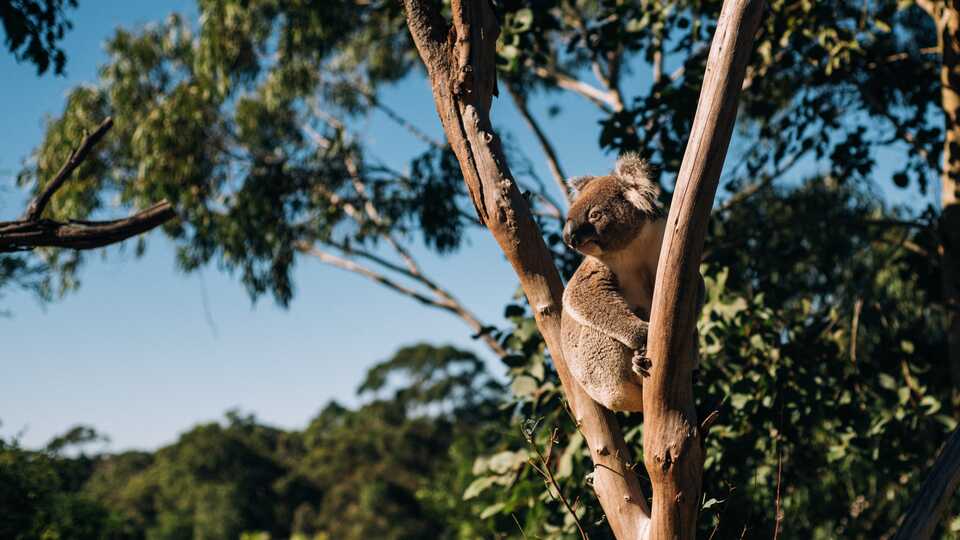
Join us for a session dedicated to the unique wildlife and ecosystems of Australia. Tune in for stories about platypuses, flying-foxes, koalas, and wombats, and how these populations are faring while facing climate change, wildfires, and urban development. Also: Find out how wombats produce cube-shaped poop.Wildlife photographer Doug Gimesy doesn’t ...
Join Professor of Entomology at UC Riverside, Chow-Yang Lee for a presentation on the many ways and reasons humans eat insects. He'll cover the beneficial roles of insects, why they make a good choice for food, where and which insects are eaten, how they taste, challenges, economic and ecological benefits ...
Where: Cost: Free
Power for Astronomy Away from Home - LivestreamTraveling to a secluded dark site gives us access to skies that we can only dream about at home. In addition to having to pack up and transport all of our equipment, we have to have a plan to provide the power needed to operate our mounts, cameras, computers, etc. ...
Scientific forecasts span a staggering breadth of time scales, and they range in precision from vague & qualitative to exact & quantitative. This presentation will provide an overview of predictability. We’ll look at examples drawn from trading, meteorology, celestial mechanics, and cosmology. Finally, we'll end with the latest research-based forecasts ...
Join our resident astronomers on Facebook Live every Saturday evening live from Chabot’s Observation deck!Each week, our astronomers will guide us through spectacular night sky viewing through Nellie, Chabot‘s most powerful telescope. Weather permitting we will be able to view objects live through the telescopes and our astronomers will be ...
Where: Cost: Free
Sunday, 06/20/21
Science Sundays: Marine Mammals and Seabirds of the Southern Ocean - LivestreamThe Southern Ocean surrounding Antarctica is home to a unique array of marine mammal and seabird species. Because the Southern Ocean is big, remote, and inhospitable to humans, we often rely on “biologging†technologies, such as satellite tracking, to learn about the ecology of these marine predators. Despite its remoteness, ...
Where: Cost: $10 General, Free for Members.
Monday, 06/21/21
Ideas + Action 2021 - Opening Keynote with Dr. Robert Bullard - LivestreamClimate change is very real. In 2020, the United State alone faced 22 climate-driven disasters that each caused more than $1 billion in damages. California saw its worst fire season in modern history. The arctic experienced an unprecedented low in total sea ice. And the year capped off the hottest ...
Do you think spiders are creepy? Most people do, even though the vast majority of spiders (and their relatives like scorpions and mites) are actually beneficial; only a few of these creatures are harmful to humans. Spiders, for example, are the most abundant terrestrial predators on earth and help control ...
 From Miami to Lagos and London to Shanghai, some of the world’s most vibrant cities are situated on coastlines in jeopardy of being lost to sea level rise in the coming decades, putting hundreds of millions of people - many of whom live in vulnerable communities - at risk. What ...
Where: Cost: $10 General, Free for Members.
Ocean Trailblazers: Explorations, Discoveries, and Technologies of the Deep - LivestreamThe World Ocean is essential to life on Earth. It produces about half of the oxygen that sustains the planet, feeds and employs millions of people, and is pivotal to regulating the climate as it absorbs massive amounts of carbon dioxide. As important as the ocean is, much of it ...
Where: Cost: Free
Tuesday, 06/22/21
Circus of Science (Home Edition) - LivestreamA variety of fun, hands-on science (magic?) activities that can be done at home with materials you already have, meant to help you look at the world around you a little bit differently. The suggested list of materials will be sent before the session.Speaker: Alauna Wheeler, UC MercedRegister at weblink ...
 Climate-related disasters have astronomical economic impacts that are felt from Main St. to Wall St. With the globe continuing to warm, we are certain to experience a greater annual concentration of these calamities - as well as ballooning price tags associated with them. How can we integrate climate science and ...
Where: Cost: $10 General, Free for Members.
Tour of a Cell and Molecular Biology Lab - LivestreamThe session will consist of a tour of the Woo lab. We will start with a brief description of our research on embryonic development before walking through our lab space. Participants will see work benches typical of most cell and molecular labs as well as more specialized equipment such as ...
Where: Cost: Free
The Next Act for Cap and Trade - LivestreamCalifornia’s flagship program to reduce carbon pollution, cap and trade, has been successful at reducing greenhouse gas emissions, but it hasn’t reduced dangerous air pollution equally in all communities across the state. Can the cap and trade program become as equitable as it is efficient and be the tool that ...
Join Dr. Peter T. Oboyski for a behind-the-scenes look into UC Berkeley's Essig Museum of Entomology. Insects are the most diverse animals on the planet as a result of 400 million years of evolution and adaptation. From bugs to beetles to bees to butterflies, we will look at insects under ...
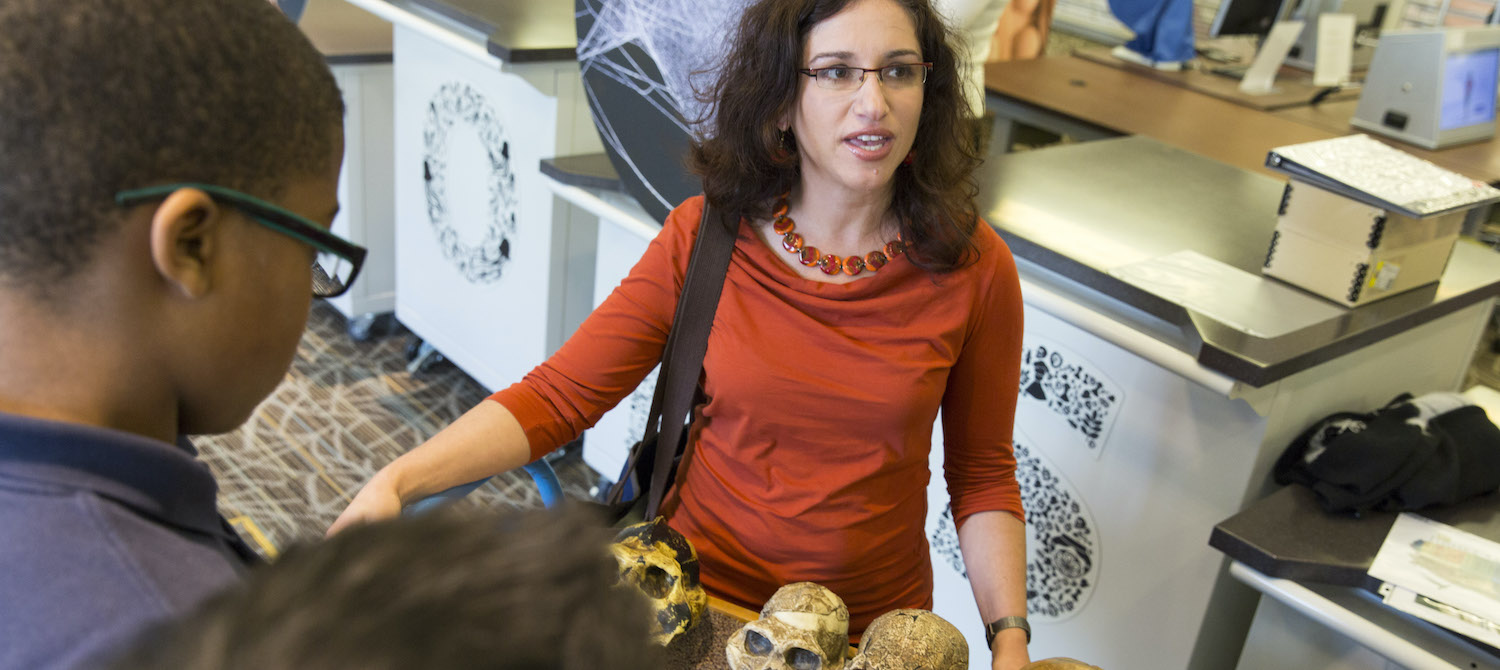
Why are we interested in learning about our evolution? What is the importance of communicating human evolution research?Join The Leakey Foundation and paleoanthropologist Dr. Briana Pobiner for a discussion on the importance of communicating human evolution science. Briana Pobiner discusses her outreach activities and research in science education, which are ...
Where: Cost: Free
San Francisco Bay and Increased Use by Cetaceans: Conservation Success Stories and Challenges - LivestreamJoin us for an engaging evening with Dr. Tim Markowitz, Field Research Coordinator at The Marine Mammal Center. In this webinar, Dr. Markowitz will share his experience as Field Research Coordinator and provide the latest findings of cetacean activity in San Francisco Bay: what the data tells us, implications, challenges, ...
 Until recently, the idea of pulling carbon directly from the air seemed to be a pipe dream, but new technologies and legislation are bringing it to reality. Can advances in carbon capture prove it to be a lynchpin in a framework for our cleaner future, or is it more prudent ...
Have you ever wondered where dragonflies come from? Before they take to the air, these and other aquatic insects spend months or even years living secretive lives underwater in the pools and streams of the Garden. How did they get there, how do they breathe underwater, and what do they ...
Many gardeners plant milkweed to attract and provide larval food for the iconic and endangered monarch butterfly, only to find their plants rapidly covered with large populations of oleander aphids! Documented through her photographs in an Oakland pollinator garden, May Chen has followed the fate of these aphids over the ...
Where: Cost: Free
Ideas + Action 2021 - Workshop: Using Climate Data to Plan for California’s Future - LivestreamWhile it is impossible to predict when and where the next wildfire might spark, climate data will make it easier to understand projected climate risk and identify climate adaptation needs. Cal-Adapt, a new online climate database developed by the State of California, offers tools, data and other resources to help ...
Where: Cost: $35
Building a Bacterial Carousel - LivestreamWhether a microbe can be "tamed" to perform desired tasks for humans seems not to have an obvious answer. Here, we will explore a few preliminary steps toward taming a bacterium, including using carefully built microstructures to turn freely swimming bacteria into micro carousels. We will also join together for ...
 Whether you envision the streets of our future cities as teeming with autonomous vehicles, electric cars, zero-emission transit, micro-mobility or a combination of all of the above, it’s become obvious that implementing affordable, accessible and clean transportation options for the first mile, last mile and everything in between is crucial ...
 More than thirty years ago, Bill McKibben released The End of Nature, widely regarded as the first book on climate change written for a general audience. In the decades since, humanity has taken bold steps forward in shaping a more sustainable future - as well as some regretful steps backward. ...
Where: Cost: $10 General, Free for Members.
June LASER EventAnastasia Raina and the Posthuman Mobility team (Rhode Island School of Design) on "Posthuman Polymythology"Cindy Cohn (Executive Director at the Electronic Frontier Foundation) on "Imagining A Future with Real Digital Privacy"Elizabeth Currid-Halkett (University of Southern California's Price School of Public Policy) on "Inconspicuous Consumption and Cultural Capital: the New Inequality"Register ...
SETI Talks: Is Oxygen Really a Biosignature? - LivestreamBiosignatures, the footprint of life on other planets, or exoplanets, could be the easiest way for astronomers to prove that we are not alone, and oxygen has been for decades the top contenders in proving that life exists elsewhere. But how truly useful is oxygen as a biosignature?In Earth’s history, ...
Where: Cost: Free
Thursday, 06/24/21
Ethics in Research: How Far is Too Far? - LivestreamIn this session, we will grapple with some of the most pressing ethical issues facing researchers today. Through a series of case studies, we will examine the foundations of ethical research and discuss some of the thorniest topics that students and researchers may encounter. At the end of the session, ...
Where: Cost: Free
How Would You Build a Machine that Sorts Cells? - LivestreamThe session will begin with a discussion of why investigators need to characterize the properties of cells and sort them and how this is relevant to treating disease. We will then look at a Lego model of a “cell sorter†that utilizes motors and sensors to sort colored marbles. Lastly, ...
Empowering Humanity Through Technology - LivestreamCan you speak to your phone or computer? Do you use Wikipedia? Did you know the family car was built by dozens of robots, with not a human in sight? For over five-decades, Raj Reddy and his students established the foundations for these technologies: speech recognition, analysis of natural scenes, ...
In this darkly comical look at the sinister side of our relationship with the natural world, Stewart has tracked down over one hundred of our worst entomological foes - creatures that infest, infect, and generally wreak havoc on human affairs. From the world’s most painful hornet, to the flies that ...
Calling all creatures of the night: explore the nocturnal side of the Academy at NightLife and see what's revealed. With live DJs, outdoor bars, ambiance lighting, and nearly 40,000 live animals (including familiar faces like Claude the albino alligator), the night is sure to be wild.Reserve your entry to the ...
Where: San FranciscoCost: $17.50 - $20
One Water: A Look at Water Use and Reuse with Rachel GaudoinMonterey County is isolated from State or regional water systems, and therefore must rely solely on local water supplies - primarily groundwater and surface water. While water habits have changed over the years, our need for local, sustainable water resources has not. This talk will feature Monterey One Water, the ...
Where: Pacific GroveCost: $15 in person, Free via Zoom
Exploring Galaxies in Our Cosmic Backyard - LivestreamGalaxies are gravitationally-bound conglomerates of gas and stars with a very wide range of masses. They contain from a few thousand stars in the case of dwarf galaxies, to tens of billions like the Milky Way (our own galaxy), to up to thousand billions of stars in the most massive ...
Where: Cost: Free
After Dark Online: PrideIn honor of Pride month, join us in celebrating LGBTQ+ heritage and culture. Tonight, we’ll hear from artists, historians, and thinkers whose work centers self-affirmation, freedom of expression, and the essential need for representation. And don’t miss learning about San Francisco’s impact on LGBTQ+ culture, history, and liberation.See weblink for YouTube ...
Mount St. Helens' eruptions had a disproportionately large influence on our understanding of volcanoes, hazards, and eruption response. Unique circumstances, both locally and abroad, molded the responses to Mount St. Helens' awakening.The eruptions provoked change not only within volcanology, but within allied professions. A direct line exists between lessons learned at Mount ...
Where: Cost: Free
Nightschool: Queering Science - LivestreamDespite having historically been excluded from the field of science, the LGBTQ+ community has long been making major contributions to and shifting the institution of science as we know it. Celebrate Pride Month with a NightSchool featuring scientists whose queer perspectives and identities help drive new insights, discoveries, and previously ...