It happens around 15 times a minute, regularly and rhythmically. You may not even notice it - but if it stopped, you definitely would. Tonight, we turn our attention to human breath. Find out how respiration regulates our systems and, with the right kind of practice, can allow for extraordinary ...
Where: San FranciscoCost: $19.95, Free for members
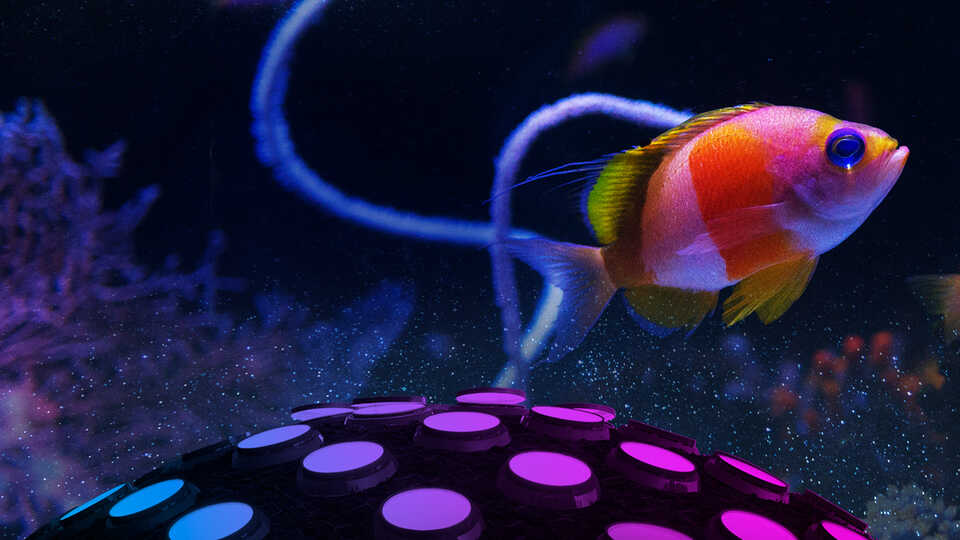
Calling all creatures of the night: explore the nocturnal side of the Academy at NightLife and see what's revealed. With live DJs, outdoor bars, ambiance lighting, and nearly 40,000 live animals (including familiar faces like Claude the albino alligator), the night is sure to be wild.Step inside the iconic Shake ...
Where: San FranciscoCost: $15.50 - $18.50
NightSchool: Nature is Nurture - LivestreamHow does nature nurture human health? Join scientists as they share the surprising ways poison birds and biodiversity can impact medicine and public health.Ages 21+See weblink for YouTube and Facebook links.
Where: Cost: Free
Friday, 09/03/21
The effect of stellar activity on the detection of terrestrial planets - LivestreamStars undergo activity cycles often lasting many years. During these periods surface phenomena on their surfaces may not only make exoplanet planet detection and characterisation difficult but, in some cases, may produce spurious signals that mimic those expected from exoplanet mass companions. Here we look at the menagerie of processes ...
Where: Cost: Free
Saturday, 09/04/21
'The Illusion of Knowledge' book launch with Dr. Harold KatcherHarold Katcher, the scientist whose treatment of rats led to a 54% reduction in their epigenetic age, will launch the book “The Illusion of Knowledgeâ€, in which he explains his theory of aging, gives details about the experiment of rejuvenation of rats with the plasma fraction called E5, and explains ...
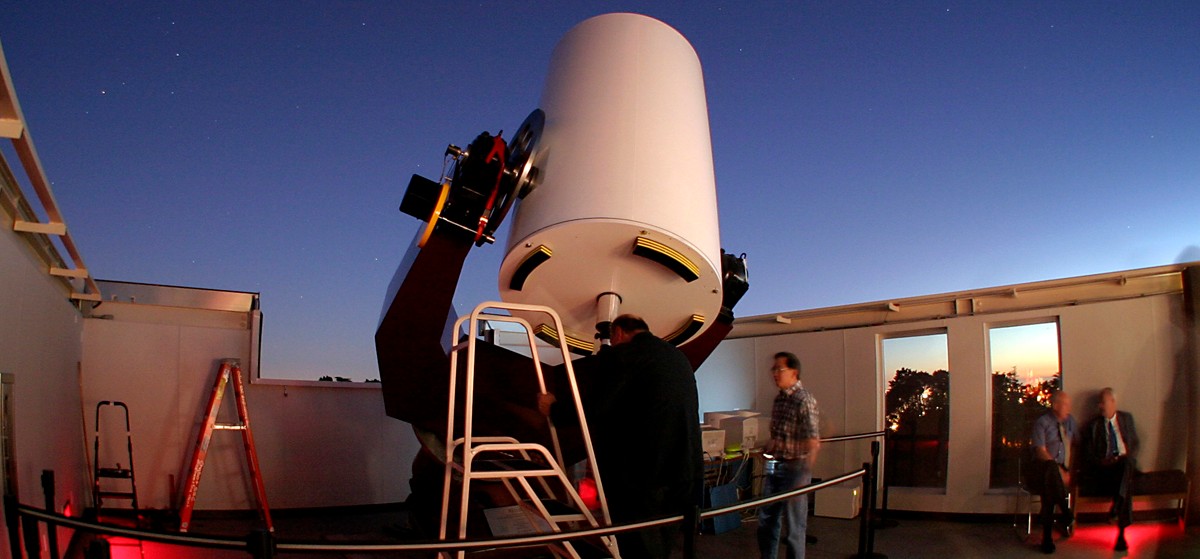
Join our resident astronomers on Facebook Live every Saturday evening live from Chabot’s Observation deck!Each week, our astronomers will guide us through spectacular night sky viewing through Nellie, Chabot‘s most powerful telescope. Weather permitting we will be able to view objects live through the telescopes and our astronomers will be ...
Where: Cost: Free
Tuesday, 09/07/21
Elucidating reaction mechanisms by imaging ion-neutral collisionsTo understand the dynamics of chemical reactions has driven research for more than a century. A powerful approach to this goal are molecular scattering experiments under single-collision conditions. In the last years, we have developed techniques to investigate ion-molecule reactions, which are important in various branches of science from chemical ...
How do scientists go from OMG to PhD? How do they turn their passion for science into their profession? What advice do they have for future scientists?If you are a 5th-12th grade student, undergraduate, teacher or parent, join us to ask these questions and more in a Q&A session with ...
In his latest book, Fear of a Black Universe: An Outsider's Guide to the Future of Physics, Brown University's Dr. Stephon Alexander explores some of nature's deepest questions. He uses the principles of invariance, quantization, and emergence to address ideas at the outer limits of physics, including even what happened ...
Small Island Developing States (SIDS) often fall into a classification of being Ocean States, where their Exclusive Economic Zone (EEZ) is much larger than the size of their land. This underscores the importance of marine protected areas (MPAs) in these countries many of which depend primarily on coastal tourism and ...
This three-part series on progress toward electrifying the Bay Area’s transportation system will cover key issues including equitable access to clean technologies, expanding charging infrastructure, and scaling up to meet mass mobility needs through transit, fleets, and innovative business models. Lectures will be presented by leaders in the field representing ...
System Error: Rebooting our Tech FutureBig tech's relentless focus on optimization is driving a future that reinforces discrimination, erodes privacy, displaces workers, and pollutes the information we get.It doesn't need to be this way.Armed with an understanding of how technologists think and exercise their power, three Stanford professors--a philosopher, a political scientist, and a computer ...