Marine Science Sunday: Animals of the ArcticThis month we celebrate the animals that are the champions of the cold: Animals of the Arctic. We recommend teaming our free classroom program with a Docent-led tour at 11am, 1pm or 3pm for a truly immersive marine mammal experience.Presented at 12:00 and 2:00.
Do you know a young person interested in nature? Take them to Junior Academy: Naturalist Know-how!January's skill is Puzzling Out the Past: Learn what archaeologists and paleontologists do on a dig.Sign-up at 1:30pm) Naturalist Center / Lab (Level 3 across from the Planetarium exit)This program is designed for youth ...
The Science of Making ColorJoin Exploratorium scientist Ron Hipschman for colorful explorations of the physical world.Explore some of the many ways to make color-from neon signs to oil slicks to rainbows and more. Learn all about light, how it is made and interacts, and take home materials to build your own spectroscope. You'll see ...
Where: San FranciscoCost: Free with admission
Monday, 01/27/14
From Retinal Processing to Retinal Image Processing and BackImproved understanding of how visual information is processed in the retina and early visual cortex is helping the development of improved algorithms for image processing in two and three-dimensions. I will discuss example of this back and forth, starting at neural encoding by ganglion cells of complex visual scenes, over ...
Where: BerkeleyCost: Free
Art and Science as Parallel and Divergent Ways of KnowingIn the first of two Avenali lectures, Lawrence Weschler will examine the current divide in the way artists and scientists believe they conceive the world to illustrate that the distinction is only a few centuries old and the differences they perceive may not be all that distinct or real. Weschler ...
Where: BerkeleyCost: Free
Sonoma State University's First Satellite: T-LogoQubeSSU physics major Kevin Zack ('14) will discuss the design, development, operation and data analysis for T-LogoQube, SSU's first Earth orbiting satellite, and one of the smallest satellites ever launched. You may have seen the recent article in the Press Democrat about this unique accomplishment - it is linked from ...
Optofluidics results from the integration of optics, microfluidics, micromechanics, and microelectronics, and has achieved new levels of functionality for both free-space and guided-wave optical systems. We will present some recent work on novel optofluidic components and hybrid systems, in particular tunable fluidic lenses, apertures and irises, and show how these ...
Increase in supply side variability due to increases in renewable generation require demand side management strategies to reduce electricity delivery costs. Smart grid technologies provide opportunities for measuring and controlling loads at an unprecedented scale. Yet, understanding their performance requires accurately capturing how loads respond to specific technologies and how consumer behavior affects ...
Where: StanfordCost: Free
Nerd Nite East Bay #15 - Data, Exoplanets, and Affordable CareNerd Nite East Bay is back from our short hibernation for our first show of 2014! We'll announce a new field trip opportunity at this show, which features three great talks. First, Nerd Nite San Francisco alum Bradley Voytek will guide you through how scientists properly (and, sometimes, improperly) leverage ...
Where: OaklandCost: $8
Tuesday, 01/28/14
How to search for life in the solar system The search for life on Mars is a priority for NASA's Science Mission Directorate, a pivotal question of the Astrobiology Program, and the ultimate goal of the Mars Exploration Program (MEPAG, 2008). Also, assessment of the presence or absence of life on Mars is a prerequisite for human exploration in ...
Where: Mountain ViewCost: Free
Carbon-water interactions of negative emission scenariosSpeaker: Robert Jackson, Kevin and Michelle Douglas Professor of Environment and Energy; Senior Fellow in the Woods Institute for the Environment;Senior Fellow in the Precourt Institute for Energy - Stanford University
Where: StanfordCost: Free
Erik Brynjolfsson and Andrew McAfee: The Second Machine AgeWelcome to the modern age, where computers diagnose diseases, drive cars and write clean prose. Advances like these have created unprecedented economic bounty. Meanwhile, median income has stagnated and unemployment has risen. Erik Brynjolfsson and Andrew McAfee reveal the technological forces behind this economic sea change. As business researchers at ...
Where: San FranciscoCost: $20 non-members, $12 members, $7 students
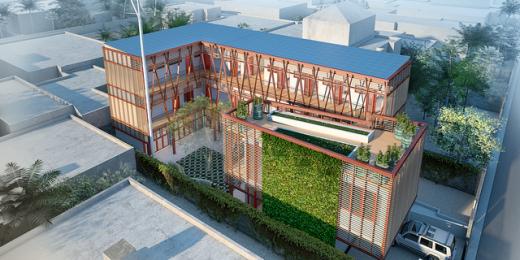
Even if every new building were to obtain LEED Platinum certification, it wouldn't reduce our current carbon emissions. In truth, we need to focus on making all buildings net zero energy, net zero water and net zero carbon, including our existing ones. Join a discussion about learning the lessons of ...
Where: San FranciscoCost: $10 General, Free for members
January LASER Santa CruzJeanne C. Finley, "On-Site: The Locus Between Public and Private"Rita Mehta, "When Life Imitates Science Fiction"Warren Sack, "Using Software (Art) to See the World"Erika Zavaleta, "Conserving Nature's Services in An Age of Extinction"See weblink for bios.
Where: Santa CruzCost: Free
Annual CES DownloadThis is one of our more popular meeting topics - a look at some of the latest and greatest, and sometimes weirdest new products shown at the Consumer Electronics Show. Additionally, there are a number of related events that are held just before and after CES ...
Where: Santa ClaraCost: $10 General, members free in advance, $5 at door
Synthetic BiologySyn·the·tic Bi·ol·o·gy noun ˈ [sin-thet-ik bahy-ol-uh-jee] : design or modification of biological systems for useful applications using engineering principles.What does synthetic biology promise for the future? How is it currently being utilized? What are the risks? The Synthetic Biology Engineering Research Center (Synberc) is a collaboration between UC Berkeley, ...
Where: LafayetteCost: $5
The Shape of the Sounds - SF Bay ACS PresentationsThe work I have done with the sounds of birds, whales, and dolphins, and the difference between the ways we normally see those sounds represented { spectrograms }, and this other way of seeing the same sounds {wavelets}... and why those differences could matter to studies that concern the sounds ...
Where: SausalitoCost: $5 donation goes toward Student Research Grants
Kepler's Laws: What makes the worlds go 'round?Kepler's laws. How to draw an ellipse. How to interpret the 3 laws formally and informally with activities. How to plan a space mission.Speaker: Jeff Adkins
Improving the efficiency with which we use energy is often said to be the most cost-effective way to reduce energy use and greenhouse gas emissions. Yet, such improvements usually lower the cost of using energy-intensive goods and may create wealth from the energy savings, both of which lead to increased ...
Even if every new building were to obtain LEED Platinum certification, it wouldn't reduce our current carbon emissions. In truth, we need to focus on making all buildings net zero energy, net zero water and net zero carbon, including our existing ones. Join a discussion about learning the lessons of ...
Where: San JoseCost: $10 General, Free for members
Mad Science: Fire & IceExplore "magical" chemical potions, the wonders of dry ice, and the dynamics of air pressure. Some of the topics the mad scientists will investigate include: the three states of matter, a gassy taste test and a super spectacular bubbling potion. Ages 5-12.
Sea Change: A Paradigm Shift in Marine Science and What It Means for ManagementAround the world, marine fish stocks have been exploited to the point of collapse: the most productive waters in the world are now nearly worthless; most large predatory fish populations have falled below 10% of their former size; and many prized species are now commercially extinct. These massive impacts have ...
I have written a paper for economists that describes some of the techniques from machine learning that can be helpful for econometric analysis. This talk is an attempt to look at the reverse issue: what techniques from econometrics may be helpful for machine learning. One set of issues involves non-IID ...
Where: StanfordCost: Free
A surge of giant earthquakes - and what we're learning from themDuring the past 9 years, the rate of occurrence of great earthquakes with magnitudes larger than 8 has increased by 250% relative to the rate over the previous earthquake disasters in the 9 year period. New global observation systems have provided unprecedented seismic, geodetic, and tsunami recordings for these events ...
With the tremendous growth in cloud-based services, the web platform is now easily the most widely used application platform. In this talk, I will present our work towards developing a secure client-side for web applications. I will discuss three directions: secure protocols, secure applications and secure user experience. First, we ...
Where: BerkeleyCost: Free
PART 2 OF 2: ENERGY DEMAND & SUPPLY - COMPARING OUR OPTIONS AND TAKING ACTIONIn April 1970, Eugene Kranz, the Apollo 13 Flight Director said, "Let's work the problem. Let's not make things worse by guessing." S. Arrhenius, the Nobel-winning father of industrial chemistry, wrote about the effects of carbon-dioxide emissions in 1896 and 1905, before oil was an important power source. Even steam ...
Where: Palo AltoCost: Free
Scott Carroll: Conciliation BiologyBiologists are now considering the "conciliatory approach." This approach recognizes that mutual adaptation of native and non-native species is changing best practices for promoting biodiversity. Dr. Carroll investigates how organisms respond to human-caused environmental change. Carroll advocates for interdisciplinary solutions to problems of environmental conservation. This program is part of "The ...
Where: San FranciscoCost: $20 non-members, $8 members, $7 students
Robotic Surgery for Gynecologic CancerThis talk will focus on the very current robotic surgical techniques used for treating ovarian, endometrial and cervical cancers and its advantages and outcomes.Speaker: Amer Karam, MD Associate Clinical Professor, Associate Director Division of Gynecologic Oncology, Stanford Hospital and Clinics
Where: StanfordCost: Free
Academic Medicine: Leading the Biomedical Revolution Learn how academic medical centers like Stanford Medicine are leading the biomedical revolution in this Century of Biology.Speaker: Dr. Lloyd Minor, Dean, Stanford Univ. School of Medicine
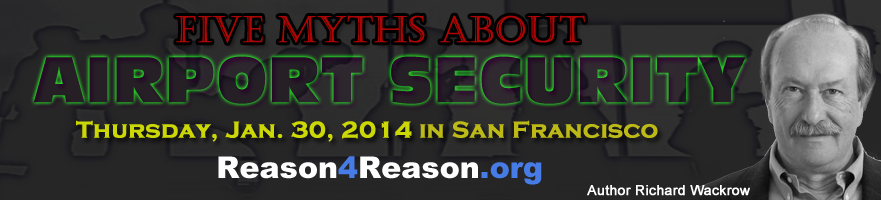
At some point in the past twelve years, the U.S. government's war on terror crossed a threshold -- from working to prevent another major terrorist attack on American soil to being a voracious counter-terrorism-industrial complex that to a large extent exists for its own sake.Nothing demonstrates this better than the ...
History of the DeltaLearn about the history of the delta - from the early 1800s up to 2012 - from framing, discovery of gold, railroad building, and levee building till the present time with Ranger Bill. 1,000 miles in scope, 60-80 man made islands, and a population that exceeds 500,000! Historical. Educational. Informative.
A premise of the lab-on-a-chip paradigm is the integration of several processing stages of a chemical or biochemical analytical procedure together with microfluidics and detection methods. This entails reliability, sensitivity and specificity of the analytical systems. Although electrochemical and mechanical approaches are common, optical detection remains predominant, mainly due to ...
Join us for a tantalizing preseason kick-off to our popular Future Fridays Community Conversations Series with author and renowned Astro-physicist, Ray Jayawardhana. In his latest book, Neutrino Hunters, RayJay takes us on a thrilling journey into the shadowy world of neutrinos and recounts a captivating detective story with a colorful ...
Where: OaklandCost: $23 + service
Saturday, 02/01/14
Run of the SalmonIf your students are engaged in Trout in the Classroom project the Bay Model is an excellent place to learn about the migration of the fish once they return from the wild. The fish run a gauntlet of obstacles as they try to find their way home. Let's recreate their ...
Where: SausalitoCost: Free
A Stick LandingSending a robot spacecraft to make a precision landing on a world far away from home is among the greatest space exploration challenges of all time. In this presentation, Faride will describe the steps taken to launch the Mars Science Lab on its journey of discovery to our planet next ...
Where: OaklandCost: Free with admission
Registration for Marine Science Camp OPENSMarine science camp is an exciting way for children to spark an interest in science and nature, or to deepen a budding biologist's enthusiasm and appreciation for learning. Our week-long day camps offer several grade-specific themes that focus on different aspects of the marine environment. Campers enjoy using scientific equipment ...