Big Hike with Fawn Lilies Join this Big Hike with the best views and a stop to visit the St. Helena Fawn Lilies - a rare species that only occurs on a few mountains in the mid-Mayacamas Mountains. This will be a fairly strenuous lollipop hike of about 7.5 miles, with an elevation gain of ...
Where: GeyservilleCost: $20 suggested donation
Birding at Lake MerrittDon't know a goose from a grebe? We're here to help! Whether you're a first time birder or seasoned pro, join two CCNH naturalists, Angela and Lo, for birding at Lake Merritt. We'll be talking about bird identification, ecology, and the latest efforts to bring night herons to roost at the Lake.Bring ...
Where: OaklandCost: $20 suggested donation
Shark DayMSI loves sharks! Our special Shark Day invites one and all to learn about these amazing creatures, from the great whites that swim just off our ocean shores, to the gentle Leopard sharks that are common in our Bay. We will be feeding and touching our local Leopard sharks in ...
Where: Redwood CityCost: $20
The Crucible's 2018 Spring Open HouseJoin us this Spring for a taste of what you can create in the fine and industrial arts! With inspiring and educational demonstrations in nineteen of our departments, including Neon, Ceramics, Glass Blowing, Blacksmithing, Welding, and more, you will walk away with greater knowledge of how to get started on ...
Where: OaklandCost: Free
Trekking the ModelJoin a Ranger or docent on a guided tour of the Bay Model, a 1.5-acre hydraulic model of the San Francisco Bay and Delta. Discover the stories of the two major operations that took place at this location between 1942 - 2000. Â
Join us on this fairly strenuous 5-mile hike to the top of a nearby ridge, where we will watch a Pacific sunset and then return to the trailhead by moon light. Along the way we will make several stops along our route to learn more about our stealthiest visitor - ...
Where: Mill ValleyCost: Free
Sunday, 04/01/18
Beginning BirdingExperience the birds of winter in the Marin Headlands by joining volunteer Jane Haley for an easy walk along Rodeo Lagoon. Bring field guides and binoculars. Meet at the Marin Headlands Visitor Center. For ages 8 and up; no pets allowed.Reservations required
Where: SausalitoCost: Free
Sunset/Full Moon Walk to the Point Bonita LighthouseJoin park staff and volunteer docents for a tour down through the history of Point Bonita while the sun sets over the Pacific. We will walk along the half-mile trail which is steep in places. Arrive early as parking is limited. Meet at the Point Bonita Lighthouse trailhead. Dress warming ...
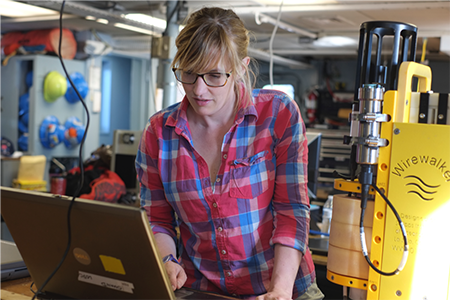
Rapid wave-powered profiling of bio-optical properties from an autonomous Wirewalker platform reveals a high variability (minutes to days) in phytoplankton physiological rates. Highly resolved diel cycles in beam attenuation (a proxy for particulate organic carbon) allow detailed quantification of phytoplankton growth and losses throughout the water column, and for the ...
This colloquium will be given by Associate Professor Leonardo Senatore of the Stanford Institute for Theoretical Physics.
Where: StanfordCost: Free
2D Magnets and HeterostructuresSince the discovery of graphene, the family of two-dimensional (2D) materials has grown to encompass a broad range of electronic properties. However, until recently 2D crystals with intrinsic magnetism were still lacking. Such crystals would enable new ways to study 2D magnetism by harnessing the unique features of atomically-thin materials, ...
We present four new findings regarding the state of knowledge and remaining uncertainties concerning the anthropogenic agents of climate change. These agents include the long-lived greenhouse gases such as carbon dioxide and the short-lived climate forcers including methane and aerosols.  First, using modern laboratory spectroscopy we show that we can ...
SUMMER AT CERNZachary Kurland is a graduating physics student at Sonoma State University. In the summer of 2017, he was awarded the NSF-IRES award to perform research at CERN on the ATLAS experiment of the Large Hadron Collider in Geneva Switzerland for eight weeks. He will be discussing his research, how he ...
Where: Rohnert ParkCost: Free
Droplet Microfluidics: Biology One Picoliter at a TimeThis talk will describe the use of microfluidic technology to control and manipulate drops whose volume is about one picoliter. These can serve as reaction vessels for performing biology experiments. These drops can be manipulated with very high precision using an inert carrier oil to control the fluidic. Small quantities ...
Solar energy, once a niche application for a limited market, has become the cheapest and fastest-growing power source on earth. What’s more, its potential is nearly limitlessâ€"every hour the sun beams down more energy than the world uses in a year. But in his new book, Taming the Sun: Innovations to ...
Where: StanfordCost: Free
Cosmic Collisions Reveal Einstein's Gravitational-Wave UniverseFor the first time, scientists have observed ripples in the fabric of spacetime called gravitational waves, arriving at the earth from a cataclysmic event in the distant universe. This confirms a major prediction of Albert Einstein’s 1915 general theory of relativity and opens an unprecedented new window onto the cosmos. Gravitational waves carry ...
Designer microbes that convert sugars into bioproducts provide a sustainable alternative to the synthesis of chemicals from petroleum. One of the major challenges in the engineering of microbes for the production of chemicals is the rapid identification of the highest chemical-producing microbe from a pool, akin to finding a needle ...
Once a year, the Ernest S. Kuh Distinguished Lecture Series presents an opportunity to hear from scientists and engineers who are tackling our world’s most pressing problems. The series is made possible by a generous gift from Professor Emeritus Ernest Kuh and his wife, Bettine. Professor Kuh was dean of ...
Soil Health Series: Physical Properties of SoilWhat is soil? Well, it's certainly not dirt! Join the knowledgeable and enthusiastic Stephen Andrews (UC Berkeley Professor, specializing in soils) in discovering the beauty and complexity of this essential natural resource by examining the physical properties that characterize what soil is. This class will also delve into the question ...
Where: SausalitoCost: Donations encouraged
Physics and Statistics of the Massive Halo Population New observations and simulations of the most massive cosmic halos that host groups and clusters of galaxies are providing details of the interlocking physical processes that drive astrophysical evolution across this population. In the first part of this talk I will use a few cherry-picked results from last week’s SNOWCLUSTER ...
Where: BerkeleyCost: Free
Lessons learned from the ISS: enabling future space flight collaboration for US and Russia The International Space Station (ISS) has seen Americans and Russians actively work hand in hand over the past decade. Scheduled to be deorbited in 2024, the future of spaceflight collaboration after its end remains uncertain. Lessons learned from collaboration on ISS are key to proposing areas for cooperation in similar ...
Where: StanfordCost: Free
Twenty years of SDSS spectra: lessons for DESI We have played with SDSS spectra for almost two decades and enjoyed performing all sorts of statistical analyses with them. In this talk we will take a critical look at these explorations and discuss what has worked well and what has not, what mistakes were made and some of the ...
Where: BerkeleyCost: Free
Printing Soft Matter in Three Dimensions3D printing enables one to rapidly design and fabricate materials in arbitrary shapes on demand. I will introduce the fundamental principles that underpin 3D printing methods pioneered by our group. I will then describe the design, composition, and rheological properties of functional, structural and biological inks that we have developed, ...
Atmospheric models that accurately describe the fate and transport of trace species for the right reasons aid in development of effective air quality management strategies that safeguard human health, in particular to mitigate the deleterious impacts of fine particulate matter (PM2.5). Controllable emissions from human activity facilitate formation of biogenic ...
Where: BerkeleyCost: Free
The three worst ideas in the world, and how they shape American educationJonathan Haidt is a social psychologist at New York University Stern School of Business and the director of Heterodox Academy. He is the coauthor of the forthcoming book, 'The Coddling of the American Mind: How Good Intentions and Bad Ideas Are Setting up a Generation for Failure'
Where: BerkeleyCost: Free
The Dawn of Gravitational-Wave AstrophysicsIn the past two years the gravitational-wave detections enabled by the LIGO detectors have launched a new field in observational astronomy allowing us to study compact object mergers involving pairs of black holes and neutron stars. I will discuss what current results reveal about compact object astrophysics, from binary black ...
Where: StanfordCost: Free
Developing Fully Automated Infrastructure Policy and Trust SystemsModern infrastructure management serves to run applications, but in many cases, all attention is spent on micromanagement of elemental details with no focus or understanding of the applications. This breaks down in two fundamental ways. First is the explosion of number of application service definitions, all hardwired for specific use ...
At a first glance, our galaxy appears to be made of stars separated by vast and empty space. However, we now know that this space is filled with things that are more difficult to see â€" gas, photons and the elusive dark matter. We do not know what kind of particle dark ...
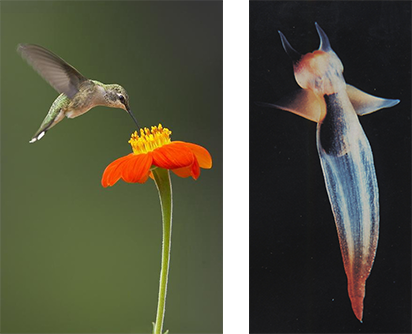
Animal locomotion requires modulation of force and power output in response to variable environmental demand. Through the use of experimental gas mixtures, I show how physiological and biomechanical limits to hovering performance in birds and insects can be decoupled to elucidate general physical constraints on flight. Such constraints are also ...
Overcoming learning obstacles while teaching is a major time and energy drain. In order to have a successful class requires being able to adapt to individual learning styles of the various students. This adaptation can also be a major drain of resources but I have discovered by recognizing and igniting ...
Modeling the Complex Impact of Genetic Variation on Gene ExpressionNon-coding and regulatory genetic variation plays a significant role in human health, but the impact of regulatory variants has proven difficult to predict from sequence alone. Further, genetic effects can be modulated by context, such as cell type and environmental factors. We have developed machine learning approaches to model the ...
A single ant colony from Argentina has now filled almost six hundred miles of California’s coastline creating something called a super colony. Learn about the surprising behavior of these ants and the research being done on them here at UC Berkeley. Also discover the unseen world of insects right below ...
Where: AlbanyCost: Free
Thursday, 04/05/18
Botany Series: Plant TerminologyTaught by the skilled team of Naomi LeBeau (Park Stewardship Restoration Specialist) and Eric Klein (former Park Stewardship Manager), this class will provide an introduction to terminology commonly used in identification of plants with a focus on leaf and flower parts. Illustrated examples and hands-on experience will be emphasized. This ...
Where: San FranciscoCost: Donations encouraged
Fire Ecology in CaliforniaThe UC Botanical Garden is pleased to host David Ackerly, PI of the Ackerly Lab at UC Berkeley and a leader of the Berkeley Initiative in Global Change Biology for a talk on fire ecology in California and the Bay Area. As our climate changes and we face more extreme ...
Where: BerkeleyCost: $20 General, $15 Members
Gaia and the Galactic haloIn this talk, the Gaia data is used to study the properties of the Milky Way stellar halo. I will present new constraints on the halo spin, the halo accretion history, measurements of the tangential motion of the largest halo substructures such as the Sgr stream and the Monoceros Ring, ...
Please join us for the CITRIS Silicon Valley Forum, a new monthly series from CITRIS and the Banatao Institute. Our second panel of the Spring 2018 series invites Ken Goldberg, Professor of Industrial Engineering and Operations Research and Juan Aparicio, Head of Research Group Advanced Manufacturing Automation at Siemens to discuss Robots on ...
Speaker: Horst D. Simon, Ph.D., Deputy Laboratory Director for Research and Chief Research Officer, Lawrence Berkeley National Laboratory
Where: San JoseCost: Free
Science at AI Speed: Towards a Biomedical Air Traffic Control SystemIt's nice to know what your specific calling is, and to be able to describe it in one short phrase. Mine is: Help scientists do science efficiently. Two years ago, in this very forum, I talked about helping oncologists individualize cancer treatments based upon individual patients' molecular profiles. Back then ...
From Silent Spring to Silent Night: A Tale of Toads and MenDr. Hayes is an advocate for critical review and regulation of pesticides and is best known for his research findings concluding that the herbicide atrazine is an endocrine disruptor that demasculinizes and feminizes male frogs. His findings conclude that herbicides can cause adverse health effects and contribute to health disparities ...
Where: San JoseCost: Free
Fundamental Physics from the Foreground-Obscured Microwave Sky: Inflation, Neutrino Masses, and BeyondThe cosmic microwave background (CMB) remains a key source from which to extract information about fundamental physics, due to its clean, well-understood origin and immense constraining power on many types of new physics. The next decade of CMB observations will yield answers to at least two fundamental questions: (1) did ...
Feeding 7 billion people -- a number likely to grow to 9 billion and perhaps more -- will require smarter agriculture. Knowing where crops grow, and how that’s changing amid global warming, is a crucial first step. Today, dumb technology prevails: on-the-ground surveys, which take too much time, require too ...
Where: StanfordCost: Free
A New Era of Open Invovation- CANCELEDToday, more than ever before, a sole approach to R&D has become obsolete. The collision of cyber plus the physical worlds is demanding innovation across a myriad of advanced technologies, from AI to sensors to data analytics. Ideas must stay agile, and organizations need to understand how to see around ...
John Harte investigates the effects of human actions on, and the linkages among, biogeochemical processes, ecosystem structure and function, biodiversity, and climate. His work spans a a range of scales from plot to landscape to global, and involves field investigations, mathematical modeling, and theory development. A long-term climate manipulation experiment ...
Where: BerkeleyCost: Free
Astronomy on Tap Santa Cruz - Black HolesJoin us for our inaugural Astronomy on Tap. We will begin mingling on the 2nd floor beginning at 6:00pm. Postdoctoral Scholar and Hubble Fellow Josiah Schwab, and Graduate Student Researcher Namrata Roy will give a joint presentation, "Black Holes!" The event is free of charge and open to all ...
Where: Santa CruzCost: Free
Cafe InquiryMeet up with rationalists, skeptics, and freethinkers south of San Francisco.Cafe Inquiry is a social event hosted by the Center for Inquiry|San Francisco.For more information or if you have questions please email sf@centerforinquiry.net
Evolution is often referred to as “the survival of the fittest.†And being fit can mean being clever, resourceful, or even downright sneaky. Explore the stealthy side of lock picking, card counting, magic tricks, biomimicry, and more.===Sneaky Strategies in Evolutionary Biology With Barry Sinervo |Why do sneaky strategies evolve so readily? ...
Where: San FranciscoCost: 17.95 advance, 19.95 door, AD members free
SpaceAge NightLifeThis week - Journey back in time as NightLife launches its very first Space Month with a celebration of the imagination, culture, and technological advances of the Space Age - from Sputnik to Apollo.Lectures presented by Computer History Museum & B612 Foundation -----> Forty years after its launch in 1977, ...
Where: San FranciscoCost: $15 General, $12 Members
Exoplanets, Habitability, and the Search for Earth-like PlanetsIn this talk I will discuss the discoveries made by the Kepler Space Telescope that have completely changed the way we look at planets beyond the solar system. While the first planets outside of our solar system were found only 23 years ago, we now know that planets are ubiquitous in the ...
Where: BerkeleyCost: Free
Friday, 04/06/18
Contact: Cultures of the Imagniation ConferenceCONTACT 2018 is our 30th conference! Come celebrate with a full line-up of speakers on a broad range of topics.CONTACT has evolved into a premier forum on the future. After 29 years of our multi-disciplinary conferences, CONTACT includes some of the brightest of the new generation at NASA and SETI, ...
Getting the Best of Nanomaterials: Intercalated Graphene/Quantum Dot Hybrid Photodetector: Nano Seminar SeriesRecently, hybrid graphene quantum dot (Gr/QD) systems have emerged as high responsivity photodetectors, taking advantage of the high charge carrier mobility of graphene and the high light absorption of PbS quantum dots. However the performance of this hybrid system is still limited by the charge carrier diffusion length of quantum ...
Where: BerkeleyCost: Free
First Friday Family Night at CuriOdysseyFamilies with small children can swing into the weekend with music, science, food and fun! On the first Friday of every month, from 5 p.m. until 8 p.m., parents and kids celebrate together at CuriOdyssey. Dance to live music including soul, funk and jazz of the 60’s and 70’s. Purchase ...
Where: San MateoCost: $12.50-9.50 / Free with Admission / Members Free