As wildfires grow more frequent and devastating, they expose vulnerabilities in infrastructure, governance, and community preparedness. Tackling this escalating threat demands interdisciplinary solutions that address not just the immediate risks but also the broader systemic changes driving extreme weather events.This UC Berkeley Social Science Matrix on Point discussion will feature ...
Christina Agapakis (UCLA) on "AI as feminist technology: biology, computation, and new paradigms for engineering" Tina Rivers Ryan (Artforum Magazine) on "Media Art and/as Contemporary Art" Jason Eshraghian (UC Santa Cruz) on "Larger Language Models on Smaller Budgets"On Zoom: Click here to register or here.
Delivery and loss of volatile elements and compounds (such as water, carbon, nitrogen and the noble gases) during Earth’s accretion set the stage for the rest of our planet's history. Volatiles were gained through delivery by accreting solids and magma ocean ingassing during the lifetime of the solar nebula, and lost from the Earth ...
Classical and quantum light sources play a fundamental role in science and technology from laser fusion, to communication, manufacturing, defense, sensing, medicine, or quantum computing. Fundamental challenges have prevented the “scaling” of light sources. For example, efficiently scaling the power of lasers has always come at the cost of single ...
We are moving towards a future where intelligence is embedded into everything around us, operating autonomously for years on harvested energy. However, realizing this vision faces fundamental challenges in overcoming physics bottlenecks of miniaturized sensing, scaling intelligence across large deployments, and doing so in a sustainable way. In this talk, ...
Electrons are indistinguishable particles - you cannot tell one electron from another by the color of its hair, or the shape of its ears, or the way it laughs. A basic tenet of quantum mechanics is that all elementary particles are either bosons or fermions, distinguished by their quantum statistics. ...
In this talk I review the phenomenological picture of tunneling defects in low-temperature glasses. Despite the successes of this model, it has been very difficult to verify its microscopic foundations. Leveraging the power of a novel Monte Carlo method, we have prepared in silico glasses annealed in a manner ...
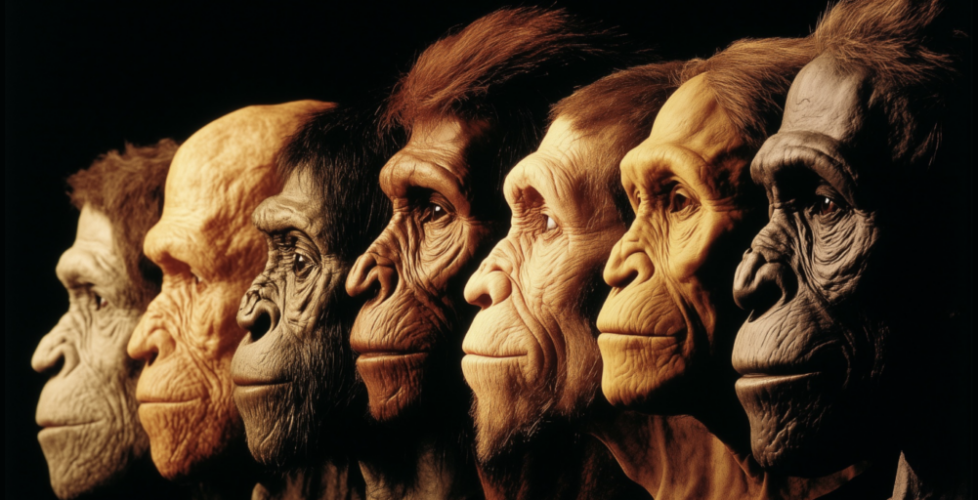
We are members of the genus Homo, distinguished from other primates as bipedal great apes. So far, we have found fossil evidence for several other members of our genus, i.e., several other humans. How does a fossil gain entry into this exclusive club? How many members are there? What do ...
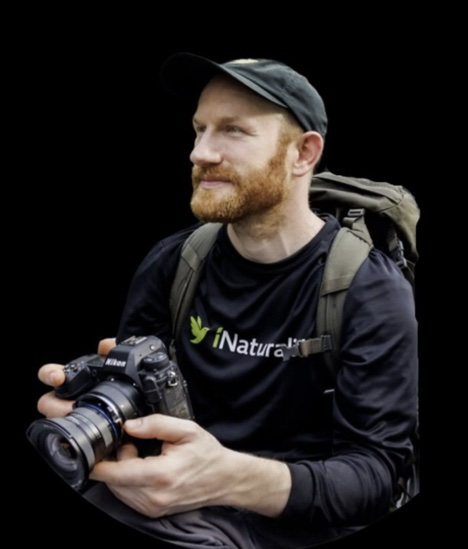
Ecuador, a country with roughly the same area as the state of Colorado is one of the most biodiverse countries in the world and is home to countless species yet to be discovered, particularly fungi. The fragility of these ecosystems and looming threats of destruction mean the clock is ...