
Cracks, Fluids, and Reactions: Flow and Transport in Fractured Media
The Earth’s subsurface is fractured and highly heterogeneous, and fractures often act as preferential pathways that dominate fluid flow and solute transport. This fracture-controlled behavior strongly influences a variety of subsurface technologies including carbon and hydrogen storage, natural or stimulated hydrogen production, geothermal energy, enhanced hydrocarbon recovery, and long-term geologic disposal of spent nuclear fuel. These technologies are critical for a sustainable energy transition, but predicting flow and transport in fractured media remains difficult because attributes such as fracture geometry, roughness, and connectivity are highly variable and are hard to measure and control.
In this talk, I connect processes from the single-fracture- to the reservoir-scale using complementary experiments and modeling. At the fracture-scale, I present controlled studies in rough fractures enabled by synthetic fracture generation and repeatable 3D-printed geometries, paired with high-fidelity pore-scale simulations. These results quantify how roughness, wettability, capillary number, and viscosity ratio govern invasion dynamics, breakthrough, and transitions between stable displacement and fingering regimes, extending classic porous media displacement phase diagrams for fractures. At the reservoir-scale, I discuss examples of reservoir heterogeneity and its impact on inter-well communication, along with ongoing work on natural hydrogen, describing its impact as a clean energy resource and a modeling approach for its generation via radiolysis as the key governing mechanism.
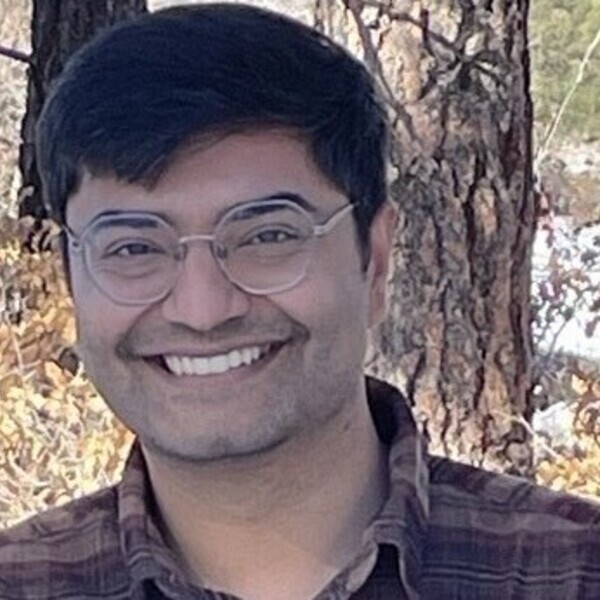
Speaker: Prakash Purswani, Los Alamos National Laboratory
Monday, 02/23/26
Contact:
Website: Click to VisitCost:
FreeSave this Event:
iCalendarGoogle Calendar
Yahoo! Calendar
Windows Live Calendar
Green Earth Sciences Building


Stanford University
Stanford, CA 94305
Website: Click to Visit