
Experimental constraints on the damp peridotite solidus and potential temperature of the oceanic mantle
Ocean crust is formed by magmatism along 65,000 km of divergent plate boundaries known as mid-ocean ridges. Decompression partial melting of mantle peridotite ascending beneath these ridges produces the basaltic magma that forms the crust. The depth at which partial melting begins is controlled by a combination of mantle potential temperature and the peridotite solidus. Knowledge of the solidus combined with geophysical observations indicating the presence of partial melt can be used to constrain mantle temperature. However, the peridotite solidus is sensitive to the presence of small amounts of hydrogen dissolved in the nominally anhydrous minerals that comprise upper mantle peridotite. At H2O-undersaturated (“damp”) conditions the melting point of peridotite is dramatically lower than the anhydrous solidus, increasing the depth at which partial melting begins for a given potential temperature. Partial melting that begins beneath a ridge at the “damp” solidus involves a larger volume of peridotite and produces a higher mean pressure of melting and lower mean extent of melting. The oceanic upper mantle is estimated to contain 50 to 200 ?g/g H2O, but its influence on the onset of peridotite melting has proven challenging to quantify experimentally. Despite meticulous drying protocols, an unknown amount of H2O is present in high-pressure melting experiments. Measuring the concentrations of H2O in nominally anhydrous minerals grow during partial melting experiments is hindered by the small grain size. We developed an experimental approach that leverages the rapid diffusivity of H+ in olivine to overcome this difficulty by using large (~300 µm in diameter) olivine spheres as hygrometers. We used this approach to quantify the solidus temperature for peridotite containing ~145 ?g/g dissolved H2O at 1.0 to 2.5 GPa. Our data reveal that the H2O-undersaturated peridotite solidus is hotter than previously thought. Reconciling our experimental results with geophysical observations of the melting regime beneath the East Pacific Rise requires that existing estimates for the oceanic upper mantle potential temperature be adjusted upward by ~60 °C.
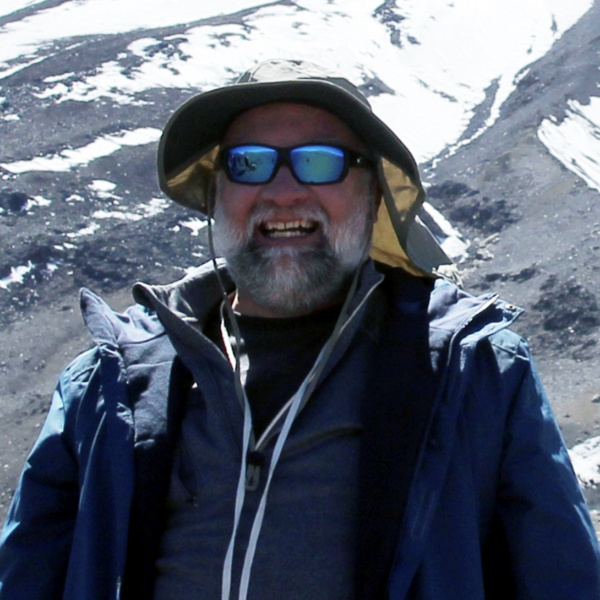
Speaker: Glenn Gaetani, Woods Hole Oceanographic Institution
Tuesday, 04/14/26
Contact:
Website: Click to VisitCost:
FreeSave this Event:
iCalendarGoogle Calendar
Yahoo! Calendar
Windows Live Calendar
Braun (Geology) Corner (Bldg 320), Rm 220


Stanford University
Stanford, CA 94305