
Multiscale Modeling of Battery Systems: A Unified Framework from Upscaling Theory to Symbolic - Numeric Computing and Control
Defense and energy applications ubiquitously involve multiscale and multiphysics systems. Their accurate modeling, critical to achieve superior performances and optimized designs and control strategies, has challenged generations of computational physicists due to the mathematical and numerical complexities involved in the development of their computable representations. One of the fundamental challenges associated with modeling multiscale processes is the development of rigorous models at the scale of interest (system-scale), which is typically much larger than the scale at which the physics is best understood (fine-scale). Coarse-graining techniques are a suite of mathematical strategies that allow one to perform rigorous scale translation, while bounding a priori upscaling errors. Yet, they require substantial time and mathematical expertise to use. This is due to the number of analytical manipulations and rigorous approximations (e.g., series expansions) involved during model development that quickly become analytically intractable for systems of realistic complexities (e.g., systems with large numbers of interacting physics, nested scales, and chemical species). In addition, their direct application and deployment in practical problems may sometime feel obscure to nonspecialists. These elements often lead practitioners to select simplified/heuristic models and representations whose accuracy cannot be established across a wide range of material parameters and operating conditions in favor of more advanced physics-based multiscale formulations.
Electrochemical and thermal modeling of battery systems share the abovementioned complexities. In this talk, I will present a unified framework, developed within the group and with collaborators over the past 10 years, that self-consistently integrates upscaling theory by multiple-scale expansions, numeric and automated deductive symbolic computing, and more recently control, for multiscale modeling of batteries. We will focus on two separate applications: (i) multiscale models of electrochemical transport in battery electrodes [1,2], their parametrization from microstructural information using ML [3,4], and their initial deployment in control algorithms [5]; (ii) thermal runaway in battery packs [6,7].
We will conclude with an outlook on how the integration of automated symbolic deduction and numeric computing to societally relevant applications allows to go beyond human-centered limitations and to accelerate model development in multiscale multiphysics processes without compromising model interpretability and accuracy.
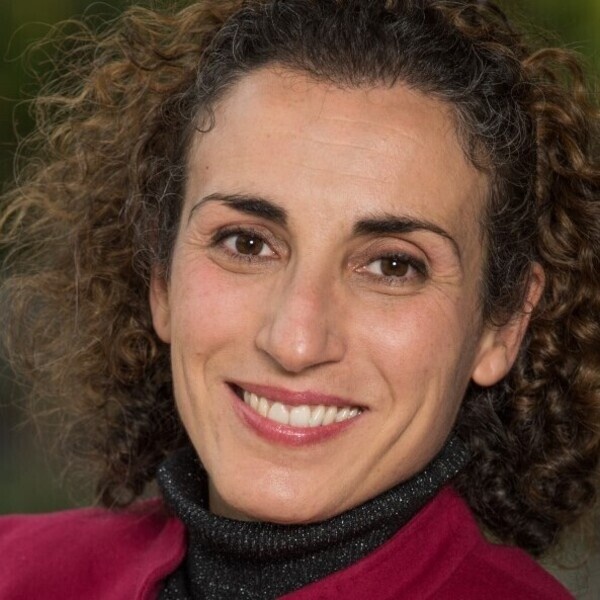
Speaker: IIlenia Battiato, Stanford University
Monday, 04/20/26
Contact:
Website: Click to VisitCost:
FreeSave this Event:
iCalendarGoogle Calendar
Yahoo! Calendar
Windows Live Calendar
Green Earth Sciences Building


Stanford University
Stanford, CA 94305
Website: Click to Visit