Artists, like scientists, are important storytellers that help people to see in new ways. Applying these talents to ocean science can create a new space for dialogue and understanding. Schmidt Ocean Institute is uniquely positioned to provide collaborations between artists and some of the world’s leading marine scientists, using the ...
Zipline designs, manufactures, and operates small robot aircraft to deliver lifesaving medical supplies. With Zipline, all citizens can have fast and reliable access to lifesaving medical products like blood, vaccines, and essential medicines, regardless of challenging terrain and road infrastructure. In October 2016, the company launched the world's first drone ...
President Obama made science, technology and innovation top priorities of his Administration. The White House launched initiatives in areas such as data science, robotics, materials by design, neurotechnology, open innovation, STEM education, and the Maker Movement. Where do these ideas come from? What role do "policy entrepreneurs" play in ...
Where: BerkeleyCost: Free
Applications of endocrinology to the management of commercially important crustaceans in AlaskaCommercially important crustaceans in Alaska include but are not limited to red king crab, snow crab, Dungeness crab, Tanner crab and Northern spot shrimp. Crab fisheries are size selected male only fisheries while all sexes of shrimp may be harvested. The Tanner crab (Chionoecetes bairdi) and northern spot shrimp (Pandalus ...
Planet Prescription: Health Sector Advocacy to Address Climate ChangeIn its 2015 report, the UCL-Lancet Commission on Health and Climate Change stated unequivocally that climate change poses “an unacceptably high and potentially catastrophic risk to human health.†That same year, the American Public Health Association noted “an urgent need for immediate and substantial action to mitigate climate change, together ...
Software-centric Visible Light Communication for the Internet of Things Visible Light Communication (VLC) based on LEDs for light emission and reception can be realized using simple components, delegating many of the "hard" problems to software. We present a software-centric approach that supports networking a wide range of devices -- devices that include only simple single LEDs (such as wearables, ...
Where: StanfordCost: Free
Marin's Climate Goals and Where We StandIs Marin on track to meet California's greenhouse gas reduction targets of 15% reductions by 2020, and 80% reductions by 2050? Learn about Marin's Climate Action Plans (CAPs) and where we stand compared to our goals. During the lecture, we will investigate each city/town and the County's CAP's as well ...
Where: Corte MaderaCost: $10 advance, $15 at door
More than Just One Word on PlasticsPlastics: we love them and hate them. Rebecca Braslau, organic chemistry professor at UC Santa Cruz, will discuss the history of plastics, what they are made of, health, environmental and societal issues, and exciting developments in emerging biosustainable and biodegradable plastics.  She will also very briefly discuss on-going work in her ...
Where: Santa CruzCost: Free
Native American Flint KnappingProgram: Donna Kelly will give a presentatin about Native American flint knapping using traditional methods and materials. We will learn about the local rocks and minerals they used. There will also be a door prize drawing and many rocks and related items available by silent auction.
Where: Los AltosCost: Free
Shrooms and AlcoholWe will build things with mushrooms, learn about a 5000-year-old beer recipe and hear our singing scientists -The Ten thousand Ways, all this while sipping Freewheel's beer!Ages 21+
If ye value critical thinking, and if ye scorn the flim-flam man, join us, your friends. We are a group who informally discuss the latest in science or pseudoscience over good eats & ale. HOW:  Presented free by the Bay Area Skeptics.WHY:  Because science is fascinating!       ...
Where: MillbraeCost: Free- Pub is open for business
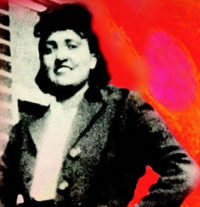
Her name was Henrietta Lacks, but scientists know her as HeLa. She was a poor black tobacco farmer whose cells - taken without her knowledge in 1951 - became one of the most important tools in medicine, vital for developing the polio vaccine, cloning, gene mapping, in vitro fertilization, and ...
Where: San FranciscoCost: $29
Neurosciences: Biology and Gene EditingPianoFight hosts Ashley Libby to discuss gene editing, and Georgia Panagiotakos to discuss the brain and neuron development.Ages 21+
Where: San FranciscoCost: $5 advance, $10 at door
Project DrawdownSpeaker: Paul HawkenEnvironmental Forum of Marin Lecture SeriesTickets on sale week of Jan 9