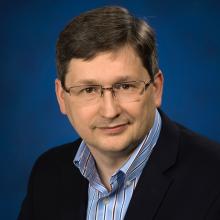
Dr. Smith is currently a Conservation Research Fellow at the Monterey Bay Aquarium:Â I am a community ecologist studying how species interactions shape the structure, functioning, and stability of nearshore marine ecosystems. I focus on temperate rocky reefs and am particularly interested in combining theory with observational and experimental approaches to ...
Where: Rohnert ParkCost: Free
Drivers of plankton communities and foodweb structure in a changing oceanZooplankton are essential components of marine pelagic ecosystems: as trophic intermediaries they play a key role in energy transfer up the food web, they mediate biogeochemical cycling and organic export, and their month-to-year life cycles and close species links to the physical environment make them important sentinels of climate change. ...
A large and growing share of the American public turns to social media for news. On these platforms, reports about crime increasingly come directly from law enforcement agencies, raising questions about content curation. We gathered all posts from almost 14,000 Facebook pages maintained by US law enforcement agencies, focusing on ...
Lake Tahoe is one of the longest studied lakes in North America. Yet, the processes that control its motions, health and clarity are still not fully understood. These processes are a complex interaction of physical, biological and biogeochemical processes, all of which are subject to large-scale changes associated with climate ...
Where: StanfordCost: Free
Shot noise in a strange metalStrange metal behavior has been observed in materials ranging from high-temperature superconductors to heavy fermion metals. In conventional metals, current is carried by quasiparticles; although it has been suggested that quasiparticles are absent in strange metals, direct experimental evidence is challenging to acquire. We measure shot noise to probe the ...
Muon colliders offer a unique path to multi-TeV, high-luminosity lepton collisions. Muon collisions with a center-of-mass energy of 10 TeV or above would offer significant discovery potential where the constituent collision energies exceed those of the LHC program by an order of magnitude.  Significant progress on the fundamental R&D and ...
Unprecedented development of renewable energy projects and infrastructure is expected across the U.S. to meet decarbonization goals by mid-century. How do Tribal Nations fit into this energy landscape? Tribal lands hold an estimated 6.5% of the utility-scale solar potential in the contiguous United States. Siting principles that support a just ...
Speaker: Jonas Cremer, Stanford UniversityAuditorium
Where: StanfordCost: Free
Flying robots: exploring hybrid locomotion and physical interactionAutonomous flying robots have become widespread in recent years, yet their capability to interact with the environment remains limited. Moving in multiple fluids is one of the great challenges of mobile robotics, and carries great potential for application in biological and environmental studies. In particular, hybrid locomotion provides the means ...
Where: BerkeleyCost: Free
The Many Frontiers of High Magnetic Field ResearchMagnetic fields represent a remarkably flexible research tool that has opened up new frontiers of research in physics, engineering, chemistry, geochemistry, environmental sciences, biology, and biomedicine. The National High Magnetic Field Laboratory (the National MagLab) in the United States exists to provide uniquely powerful magnetic fields to thousands of researchers ...
The United States is strategically disadvantaged in building its critical mineral supply, in particular in the upstream and downstream portion. In this presentation, I will report findings on a year-long conversation with government officials, academics, and international industry experts on the status of the US critical mineral supply chain, in ...