
Characterizing the dynamics of marine communities and their responses to disturbances
Marine ecological communities face numerous disturbances, some of which are becoming stronger and more frequent due to climate change. These range from chronic “press” disturbances, such as warming and pollution, to acute “pulse” disturbances, such as heatwaves and storms. Characterizing the population dynamic responses to these stressors has been a daunting task, given the dynamical complexity of multispecies communities and the limited mathematical and computational tools to address this complexity. I will present quantitative approaches that I have recently developed to overcome this challenge and will illustrate how they can be applied to natural communities. First, I will examine the issue of predicting species abundance fluctuations following a regime shift triggered by a press disturbance. I will show that by integrating abundance time series and the disturbance driver into a nonparametric model, we can reveal how abundances will fluctuate under unobserved conditions. Leveraging data from a lake plankton community and a California fishery, I will illustrate how this approach identifies disturbance thresholds that lead to abrupt population shifts. Next, I will address the problem of predicting species abundance amplification following a pulse disturbance. I will introduce a theory that quantifies this amplification when the undisturbed community exhibits complex population dynamics, such as transients or cycles. Using data from marine rocky intertidal and phytoplankton communities, I will show that the potential for abundance amplification can change over time, leading to seasonal windows of high vulnerability. Overall, this research creates new possibilities to explain and anticipate the responses of ecological communities to a changing ocean.
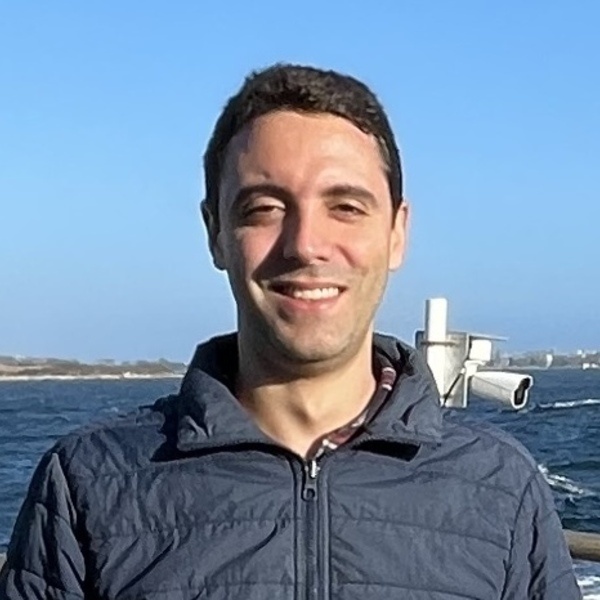
Speaker: Lucas Medeiros, Stanford University
Thursday, 02/12/26
Contact:
Website: Click to VisitCost:
FreeSave this Event:
iCalendarGoogle Calendar
Yahoo! Calendar
Windows Live Calendar
Environment and Energy Building (Y2E2)


Room 292A
Stanford, CA 94305