
Why Evolution Repeats: Reuse, Contingency, and Convergence from Genes to Phenotypes
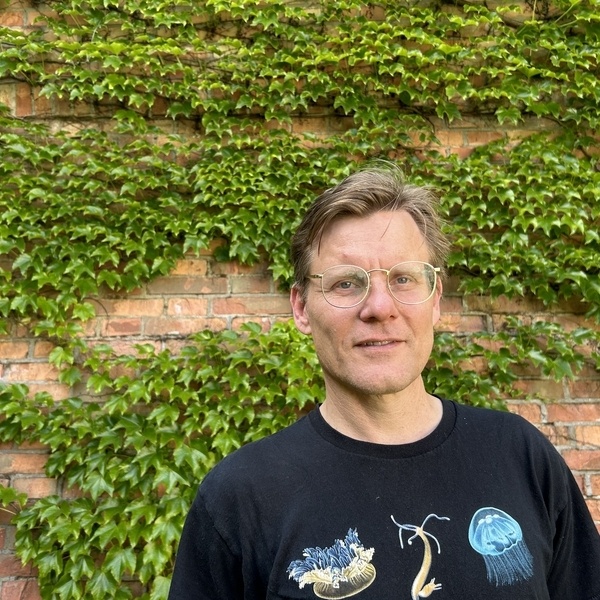
Predicting when evolution will repeat is a central challenge in biology, with implications for evolutionary rescue, biodiversity forecasting, and bioengineering. In this talk, I use examples from bioluminescence, chiton visual systems, and Medusozoa (~jellyfish) to explore three influences on evolutionary repeatability: reuse of existing components, historical contingency, and widespread molecular convergence. First, studies of bioluminescence show how new traits arise through the reuse of biochemical toolkits, with repeated evolution built from shared components. Second, work on chiton visual systems reveals strong path dependence: different eye types evolve in relation to distinct structural starting points, even in similar environments. Finally, analyses of adaptive molecular convergence across Medusozoa show that similar genetic solutions evolve far more widely than expected and are not tightly linked to convergent phenotypes, even across timescales approaching 700 million years. Together, these results illustrate how evolutionary repeatability??"and our ability to predict it??"emerges from the interplay of historical contingency and the adaptive reuse of available components.
Speaker: Todd Oakley, UC Santa Barbara
Friday, 05/08/26
Contact:
Website: Click to VisitCost:
FreeSave this Event:
iCalendarGoogle Calendar
Yahoo! Calendar
Windows Live Calendar


