Everything in motion: How our brains learn to control our bodies - LivestreamThe effortless ease with which we move our arms, our eyes, even our lips when we speak masks the true complexity of the control processes involved. This is evident when we try to build machines to perform human control tasks. What sets us apart is our ability to learn new ...
How do plants attract insects or keep them away? What composes the colors of insects or of plants, or how do insects communicate with each other?Specific organic compounds determine whether insects are keen on feeding on plants or avoid them altogether. Some insects have learned to use plant compounds as ...
The livestock industry is responsible for 55% of anthropogenic methane emissions and about 4% of total greenhouse gas emissions in the state. California is committed to reducing methane emissions by 40% by 2030 (Senate Bill 1383) and achieving carbon neutrality by 2045. In his talk, Dr. Kebreab will discuss the ...
Eric Schroeder will take you on a tour of this amazing island, home to 308 species of birds, 108 of which are endemic. Endemism isn’t limited to individual species but, remarkably, extends to the family level; Madagascar has six endemic avian families: the mesites, the asities, the vangas, the tetras, ...
Where: Cost: Free
After Dark Online: Get Up, Stand Up: Organizing for Environmental Justice in RichmondCurious how long you’ll live? Studies suggest that the most accurate predictor is your zip code. Richmond, California has more asthma-related emergency room visits and hospitalizations than anywhere else in its county. These hospital visits are not equal between demographics: time and again, data shows that Black, Indigenous, Latinx, Asian American ...
Where: Cost: Free
Micromitigation: Fighting Air Pollution with Activated Carbon - LivestreamWe would like to invite new members to join Counter Culture Labs' Micromitigation Meetup alternate Thursdays. We will be discussing ways to deploy existing adsorption technology using commodity granulated activated carbon for the mitigation of air pollution. We welcome those interested in both the environmental justice and technical engineering aspects of ...
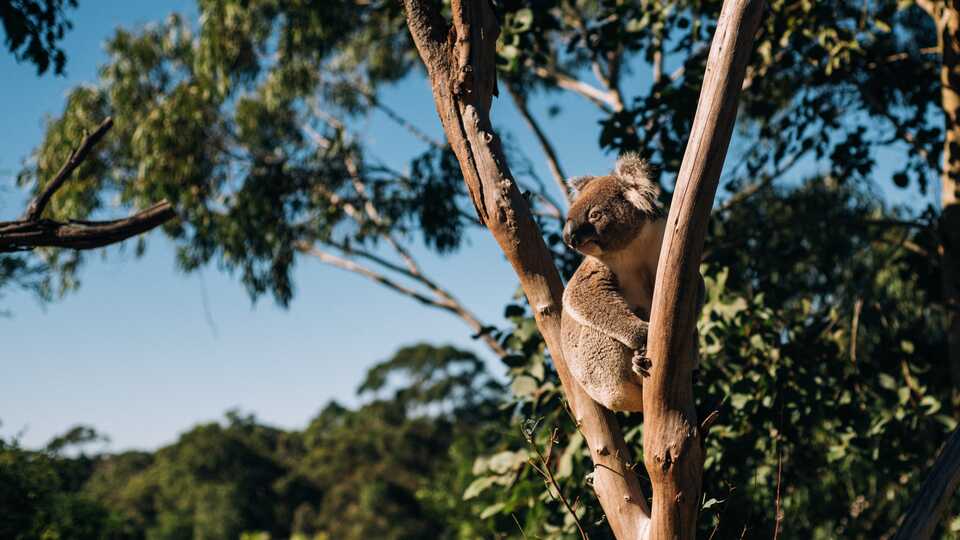
Join us for a session dedicated to the unique wildlife and ecosystems of Australia. Tune in for stories about platypuses, flying-foxes, koalas, and wombats, and how these populations are faring while facing climate change, wildfires, and urban development. Also: Find out how wombats produce cube-shaped poop.Wildlife photographer Doug Gimesy doesn’t ...
Join Professor of Entomology at UC Riverside, Chow-Yang Lee for a presentation on the many ways and reasons humans eat insects. He'll cover the beneficial roles of insects, why they make a good choice for food, where and which insects are eaten, how they taste, challenges, economic and ecological benefits ...
Where: Cost: Free
Power for Astronomy Away from Home - LivestreamTraveling to a secluded dark site gives us access to skies that we can only dream about at home. In addition to having to pack up and transport all of our equipment, we have to have a plan to provide the power needed to operate our mounts, cameras, computers, etc. ...
Scientific forecasts span a staggering breadth of time scales, and they range in precision from vague & qualitative to exact & quantitative. This presentation will provide an overview of predictability. We’ll look at examples drawn from trading, meteorology, celestial mechanics, and cosmology. Finally, we'll end with the latest research-based forecasts ...
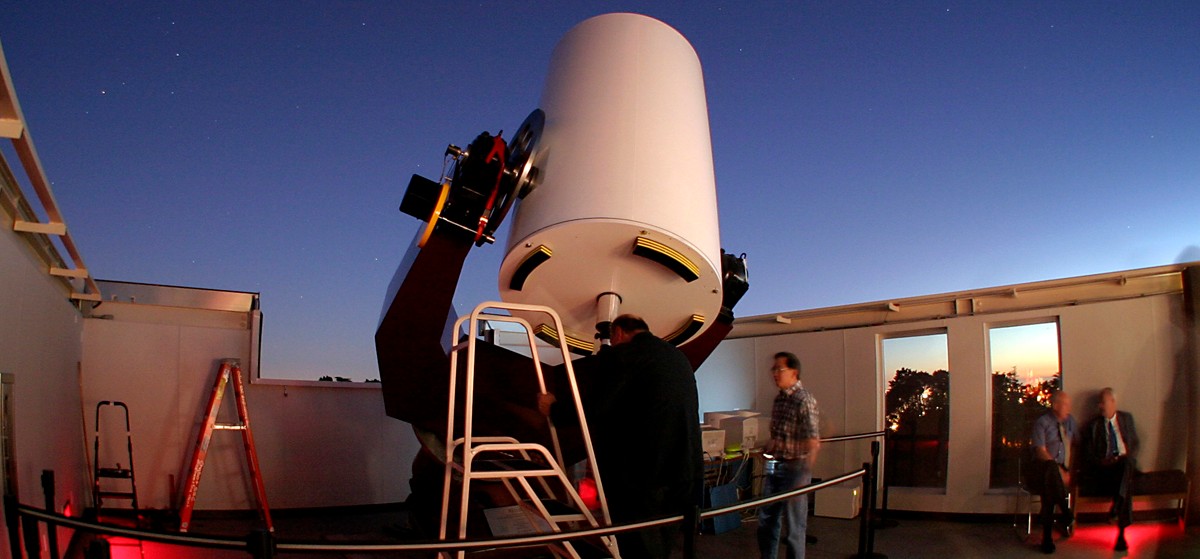
Join our resident astronomers on Facebook Live every Saturday evening live from Chabot’s Observation deck!Each week, our astronomers will guide us through spectacular night sky viewing through Nellie, Chabot‘s most powerful telescope. Weather permitting we will be able to view objects live through the telescopes and our astronomers will be ...
Where: Cost: Free
Sunday, 06/20/21
Science Sundays: Marine Mammals and Seabirds of the Southern Ocean - LivestreamThe Southern Ocean surrounding Antarctica is home to a unique array of marine mammal and seabird species. Because the Southern Ocean is big, remote, and inhospitable to humans, we often rely on “biologging†technologies, such as satellite tracking, to learn about the ecology of these marine predators. Despite its remoteness, ...
Where: Cost: $10 General, Free for Members.
Monday, 06/21/21
Ideas + Action 2021 - Opening Keynote with Dr. Robert Bullard - LivestreamClimate change is very real. In 2020, the United State alone faced 22 climate-driven disasters that each caused more than $1 billion in damages. California saw its worst fire season in modern history. The arctic experienced an unprecedented low in total sea ice. And the year capped off the hottest ...
Do you think spiders are creepy? Most people do, even though the vast majority of spiders (and their relatives like scorpions and mites) are actually beneficial; only a few of these creatures are harmful to humans. Spiders, for example, are the most abundant terrestrial predators on earth and help control ...
 From Miami to Lagos and London to Shanghai, some of the world’s most vibrant cities are situated on coastlines in jeopardy of being lost to sea level rise in the coming decades, putting hundreds of millions of people - many of whom live in vulnerable communities - at risk. What ...
Where: Cost: $10 General, Free for Members.
Ocean Trailblazers: Explorations, Discoveries, and Technologies of the Deep - LivestreamThe World Ocean is essential to life on Earth. It produces about half of the oxygen that sustains the planet, feeds and employs millions of people, and is pivotal to regulating the climate as it absorbs massive amounts of carbon dioxide. As important as the ocean is, much of it ...
Where: Cost: Free
Tuesday, 06/22/21
Circus of Science (Home Edition) - LivestreamA variety of fun, hands-on science (magic?) activities that can be done at home with materials you already have, meant to help you look at the world around you a little bit differently. The suggested list of materials will be sent before the session.Speaker: Alauna Wheeler, UC MercedRegister at weblink ...
 Climate-related disasters have astronomical economic impacts that are felt from Main St. to Wall St. With the globe continuing to warm, we are certain to experience a greater annual concentration of these calamities - as well as ballooning price tags associated with them. How can we integrate climate science and ...
Where: Cost: $10 General, Free for Members.
Tour of a Cell and Molecular Biology Lab - LivestreamThe session will consist of a tour of the Woo lab. We will start with a brief description of our research on embryonic development before walking through our lab space. Participants will see work benches typical of most cell and molecular labs as well as more specialized equipment such as ...
Where: Cost: Free
The Next Act for Cap and Trade - LivestreamCalifornia’s flagship program to reduce carbon pollution, cap and trade, has been successful at reducing greenhouse gas emissions, but it hasn’t reduced dangerous air pollution equally in all communities across the state. Can the cap and trade program become as equitable as it is efficient and be the tool that ...
Join Dr. Peter T. Oboyski for a behind-the-scenes look into UC Berkeley's Essig Museum of Entomology. Insects are the most diverse animals on the planet as a result of 400 million years of evolution and adaptation. From bugs to beetles to bees to butterflies, we will look at insects under ...
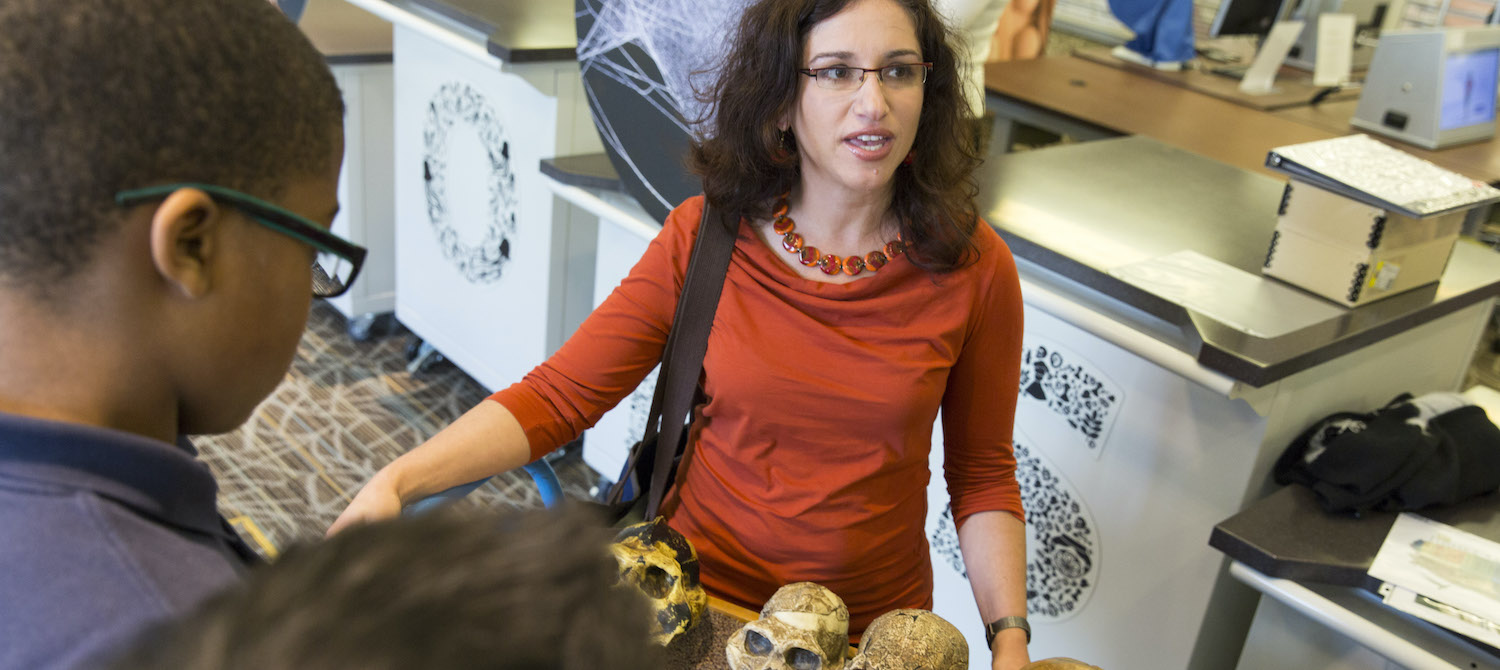
Why are we interested in learning about our evolution? What is the importance of communicating human evolution research?Join The Leakey Foundation and paleoanthropologist Dr. Briana Pobiner for a discussion on the importance of communicating human evolution science. Briana Pobiner discusses her outreach activities and research in science education, which are ...
Where: Cost: Free
San Francisco Bay and Increased Use by Cetaceans: Conservation Success Stories and Challenges - LivestreamJoin us for an engaging evening with Dr. Tim Markowitz, Field Research Coordinator at The Marine Mammal Center. In this webinar, Dr. Markowitz will share his experience as Field Research Coordinator and provide the latest findings of cetacean activity in San Francisco Bay: what the data tells us, implications, challenges, ...
 Until recently, the idea of pulling carbon directly from the air seemed to be a pipe dream, but new technologies and legislation are bringing it to reality. Can advances in carbon capture prove it to be a lynchpin in a framework for our cleaner future, or is it more prudent ...
Have you ever wondered where dragonflies come from? Before they take to the air, these and other aquatic insects spend months or even years living secretive lives underwater in the pools and streams of the Garden. How did they get there, how do they breathe underwater, and what do they ...
Many gardeners plant milkweed to attract and provide larval food for the iconic and endangered monarch butterfly, only to find their plants rapidly covered with large populations of oleander aphids! Documented through her photographs in an Oakland pollinator garden, May Chen has followed the fate of these aphids over the ...
Where: Cost: Free
Ideas + Action 2021 - Workshop: Using Climate Data to Plan for California’s Future - LivestreamWhile it is impossible to predict when and where the next wildfire might spark, climate data will make it easier to understand projected climate risk and identify climate adaptation needs. Cal-Adapt, a new online climate database developed by the State of California, offers tools, data and other resources to help ...
Where: Cost: $35
Building a Bacterial Carousel - LivestreamWhether a microbe can be "tamed" to perform desired tasks for humans seems not to have an obvious answer. Here, we will explore a few preliminary steps toward taming a bacterium, including using carefully built microstructures to turn freely swimming bacteria into micro carousels. We will also join together for ...
 Whether you envision the streets of our future cities as teeming with autonomous vehicles, electric cars, zero-emission transit, micro-mobility or a combination of all of the above, it’s become obvious that implementing affordable, accessible and clean transportation options for the first mile, last mile and everything in between is crucial ...
 More than thirty years ago, Bill McKibben released The End of Nature, widely regarded as the first book on climate change written for a general audience. In the decades since, humanity has taken bold steps forward in shaping a more sustainable future - as well as some regretful steps backward. ...
Where: Cost: $10 General, Free for Members.
June LASER EventAnastasia Raina and the Posthuman Mobility team (Rhode Island School of Design) on "Posthuman Polymythology"Cindy Cohn (Executive Director at the Electronic Frontier Foundation) on "Imagining A Future with Real Digital Privacy"Elizabeth Currid-Halkett (University of Southern California's Price School of Public Policy) on "Inconspicuous Consumption and Cultural Capital: the New Inequality"Register ...
SETI Talks: Is Oxygen Really a Biosignature? - LivestreamBiosignatures, the footprint of life on other planets, or exoplanets, could be the easiest way for astronomers to prove that we are not alone, and oxygen has been for decades the top contenders in proving that life exists elsewhere. But how truly useful is oxygen as a biosignature?In Earth’s history, ...