The ocean's midwaters below 200 m and above the seafloor, formerly thought to be entirely devoid of life, are now thought to be home to a biomass of animals larger than in the rest of the ocean combined. These organisms, many of which vertically migrate between the twilight or midnight ...
Where: StanfordCost: Free
Can we (yet) predict how fast Greenland is going to melt?The Greenland ice sheet has been losing mass in response to the rapid warming of the Arctic, and is contributing to sea level rise at an increasing rate. Fluctuations in ocean and atmosphere circulations are not only affecting the amount of melting and runoff at the ice sheet surface, they ...
The growing focus on hydrogen as a promising energy carrier has been pivotal in the pursuit of net-zero emissions within integrated energy systems. As part of this endeavor, extensive research has been conducted to delve into the reliability aspects of power-gas integrated energy systems. Additionally, our study looks at optimizing ...
Where: StanfordCost: Free
Doing a lot with a little: The molecular profile of a single sensory neuron links experience with behavioral plasticityThermosensation is a critical sensory modality for all organisms. C. elegans exhibits the remarkable ability to detect temperature changes of as little as 0.01C across a 10C temperature range, and exhibits experience-dependent thermosensory behaviors. Thermosensation in the innocuous temperature range is mediated primarily by the single AFD sensory neuron pair. ...
Where: BerkeleyCost: Free
The Science Behind Science Fiction: To Boldly GoJoin us for an exciting event where we explore the fascinating connection between science and fiction! Dive into the world of sci-fi as we unravel the mysteries behind "To Boldly Go: How Nichelle Nichols and Star Trek Helped Advance Civil Rights." Immerse yourself in a thought-provoking discussion led by renowned ...
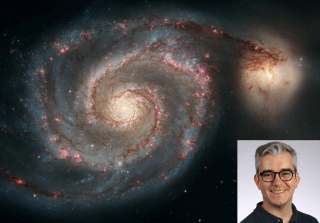
Join the NASA Night Sky Network along with Dr. Travis Fischer from Space Science Telescope Institute, where we will explore the nature of active galaxies, including their energetic processes and the role they play in shaping the universe we see today.Active galaxies are some of the most fascinating objects in ...
Where: San FranciscoCost: $19.95 General, Free for members
NightLifeCalling all creatures of the night: explore the nocturnal side of the Academy at NightLife and see what's revealed. With live DJs, outdoor bars, ambiance lighting, and nearly 60,000 live animals (including familiar faces like Claude, our alligator with albinism), the night is sure to be wild.Step inside the iconic ...
Where: San FranciscoCost: Varies
Six Eruptions at Two Volcanoes Over the Past Three Years - LivestreamHow the Hawaiian Volcano Observatory monitors some of Earth’s most active volcanoesby Katie Mulliken, Geologist, Research Corporation of the University of Hawai‘i and USGS Hawaiian Volcano ObservatoryThe Hawaiian Volcano Observatory (HVO) is the oldest volcano observatory in the United States, founded decades before Hawaii became a state!Hawaii’s volcanoes erupt frequently; during the ...
Where: Cost: Free
Faster! Catching up to Electrons on the MoveElectrons are tiny particles that hold together the atoms in molecules. When sunlight interacts with a molecule, it first transfers its energy to the electrons. Then, as the electrons move, the molecule changes form, reshaping itself or even breaking apart. We do not fully understand how electrons affect the molecules ...
The Milky Way’s hot stars generally form in open clusters within the thin disk. However, there are a small number of early-type stars that are observed at high altitudes above the disk and were likely ejected from their birth clusters within the past few million years. My student Brandon Schweers ...