Democratizing California’s water future: data, models, and tools for inclusive decision makingIncreasing drought, extreme floods, and environmental degradation are taxing California’s water system. Water shortages are borne inequitably and decisions over how water is allocated are constrained by poor water accounting, entrenched power imbalances, and limited public engagement. Building a resilient water future requires new water planning tools that advance sustainable, ...
Fingerprinting of mining environment involves identifying and characterising the unique environmental impacts associated with mining activities. To this end, this seminar highlights the use of smart sensing to "fingerprint" mining environment (land, vegetation and air), citing three examples:Automated characterisation of spoil piles: Using drone and mobile images, this method marks ...
Superconducting resonators are technological building blocks for quantum computing, cosmology, and particle physics. Yet, despite their prevalence, in some limits they can exhibit rich and poorly understood behavior. Resonators formed from an array of Josephson junctions are a prime example. I will present two studies exploring their physics. The first ...
Where: BerkeleyCost: Free
A Conversation: Governance Options for Generative AIThe Cyber Policy Center invites you to a dynamic panel discussion in celebration of the release of its latest report, Regulating under Uncertainty. Governance Options for Generative AI. This event will bring together leading voices to explore and debate various regulatory approaches to generative AI governance. Distinguished panelists include Professor Florence G’Sell, ...
David Veesler investigates infectious diseases with a focus on understanding, controlling, and combating cross-species transmission, or spillover, of pathogens to humans. Veesler and his team use structural and immunological approaches to study antibody responses to viruses in bats - known reservoirs for zoonotic transmission. Specifically, they pinpoint viruses with no ...
Where: StanfordCost: Free
Cosmic Alchemy: How Neutron Star Smash-Ups Forge Heavy AtomsThe source of about half of the heaviest elements in the Universe has been a mystery for a long time. The key may lie in the collision of neutron stars - violent, energetic, and unusual events that we are now beginning to observe. Dr. Enrico Ramirez Ruiz of UC Santa ...
Where: Rohnert ParkCost: Free
Quantifying the physical genomeMy lab aims to understand how a 2 meter long object, the human genome, encodes for molecules which, through physical interaction with the genome itself, evince the immense cellular diversity we observe in the human body. I will discuss efforts to catalog regulatory elements and transcription factor grammars that are ...
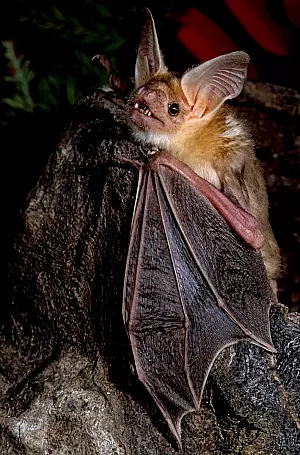
Come learn about our CA native bats with Director of NorCal Bats Corky Quirk. In her presentation, you will learn about the nature of bats and the importance of bats in our environment. We’ll also discuss the harmful myths that surround these animals. Live bats will be presented for viewing ...
Where: BerkeleyCost: $20 General, $18 Members, $8/$6 Age 5 - 17
The isolation 20 years ago of the first truly 2-dimensional, one atom-thick material, graphene, has revolutionized physics and materials science, and led to numerous applications. For example, it allowed the observation of deeply quantum relativistic phenomena directly at room temperature. Moreover, scientists quickly realized that new heterostructures sandwiching various 2D ...