
Artificial Intelligence in the Knowledge Economy - Livestream
The rise of Artificial Intelligence (AI) has the potential to reshape the knowledge economy by automating cognitive, non-codifiable work. This paper introduces a framework to analyze this transformation, incorporating AI into an economy where humans form hierarchical firms to use their time and knowledge efficiently: Less knowledgeable individuals become "workers" engaging in routine knowledge work, while more knowledgeable individuals become "solvers" assisting workers with exceptional problems. We model AI as a technology that transforms computing power into "AI agents," which can either operate autonomously (as co-workers or solvers/copilots) or non-autonomously (only as copilots).
We show that basic autonomous AI displaces humans towards complex problem solving, leading to smaller, less productive, and less decentralized firms. In contrast, advanced autonomous AI reallocates humans to routine knowledge work, resulting in larger, more productive, and more decentralized firms. While autonomous AI primarily benefits the most knowledgeable individuals, non-autonomous AI disproportionately benefits the least knowledgeable. However, autonomous AI achieves higher overall output. These findings reconcile seemingly contradictory empirical evidence and reveal key tradeoffs involved in regulating AI autonomy.
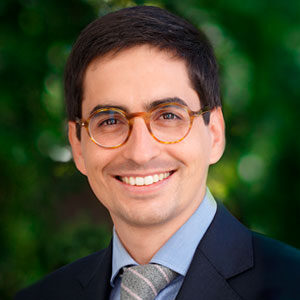
Speaker: Eduard Talamàs, IESE Business School in Barcelona, Spain
Register at weblink to attend. In person attendance limited to Stanford community
Monday, 03/03/25
Contact:
Website: Click to VisitCost:
FreeSave this Event:
iCalendarGoogle Calendar
Yahoo! Calendar
Windows Live Calendar
Gates Computer Science Building


Room 119
Stanford, CA 94305