
Cassini-Huygens Mission to Saturn, its Moons and Rings - RESCHEDULED
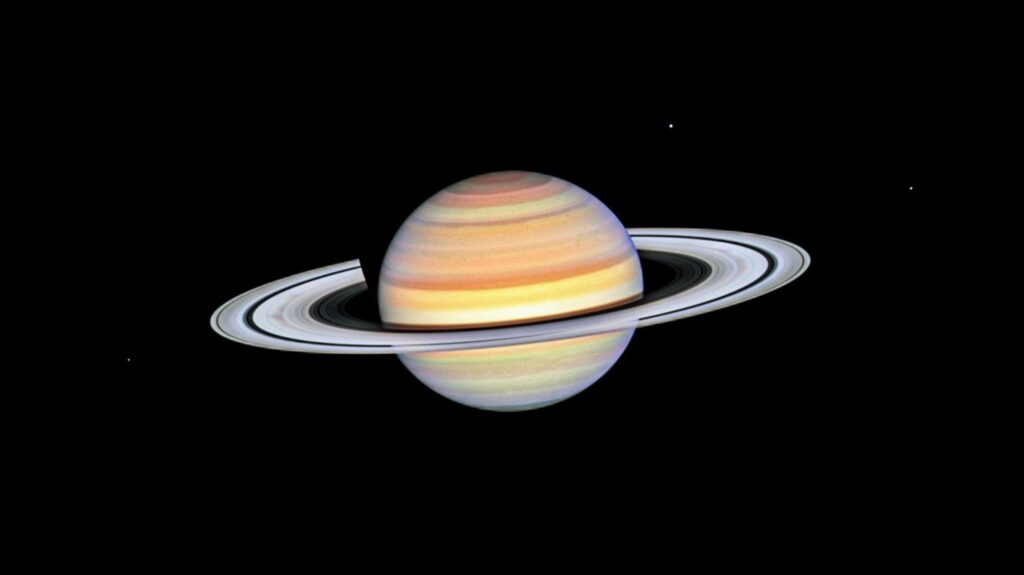
One of the most accessible, fascinating, and brighter planets in the night sky for amateur astronomers to view is Saturn. And Saturn was the destination of one of NASA’s most memorable space voyages: the Cassini mission. Cassini was one of the most ambitious efforts ever mounted in planetary exploration. Cassini was launched on Oct. 15, 1997, the mission entered orbit around Saturn on June 30, 2004 , carrying the European Huygens probe. After its four-year prime mission, Cassini’s tour was extended twice. After two decades in space, NASA’s Cassini spacecraft ended its remarkable journey of exploration with a grand finale on September 15, 2017, and it plunged directly into the planet. Its key discoveries included the global ocean with indications of hydrothermal activity within Enceladus, and liquid methane seas on Titan. Although the spacecraft may be gone, its enormous collection of data about Saturn - the giant planet itself, its magnetosphere, rings and moons - will continue to yield new discoveries for decades.
Dr. Jeff Cuzzi, who was an Interdisciplinary Scientist for Planetary Rings on the NASA-ESA Cassini-Huygens mission, will describe the highlights of the Cassini mission, emphasizing the rings of Saturn, which are increasingly believed to be much younger than the planet itself - maybe dating only to the age of fish on Earth (100-200Myr ago). He will discuss what we know about the complex ring structure, their composition, age, and origin, and their associated small mini-ring moons. His talk will also cover other Saturn system highlights such as its Mars-sized moon Titan, whose atmosphere is denser than ours, and its retinue of icy moons including at least one that harbors a subsurface ocean.
Editor's Note: This talk is now scheduled on October 2, 2026.
Friday, 09/04/26
Contact:
Website: Click to VisitCost:
FreeSave this Event:
iCalendarGoogle Calendar
Yahoo! Calendar
Windows Live Calendar
College of San Mateo Bldg 36


San Mateo, CA 94402
USA