Gardening with Nature in MindJoin renowned environmental educator Judy Adler in this in-depth tour of her half-acre Walnut Creek garden. Judy’s suburban garden, part farm, part classroom, part nursery, and part nature preserve, features happy chickens, a rainwater harvesting system, a pond, and many California native and/or pollinator-friendly plants. Judy’s was one of the first gardens ...
Where: Walnut CreekCost: $35
Science Saturday: Water WildWe're making a splash during this last Science Saturday of the school year, as we dive into the wonderful world of water. What is a watershed? Where can you find a steelhead? Find out while we explore all-things aquatic while completing a craft, activities, and more.
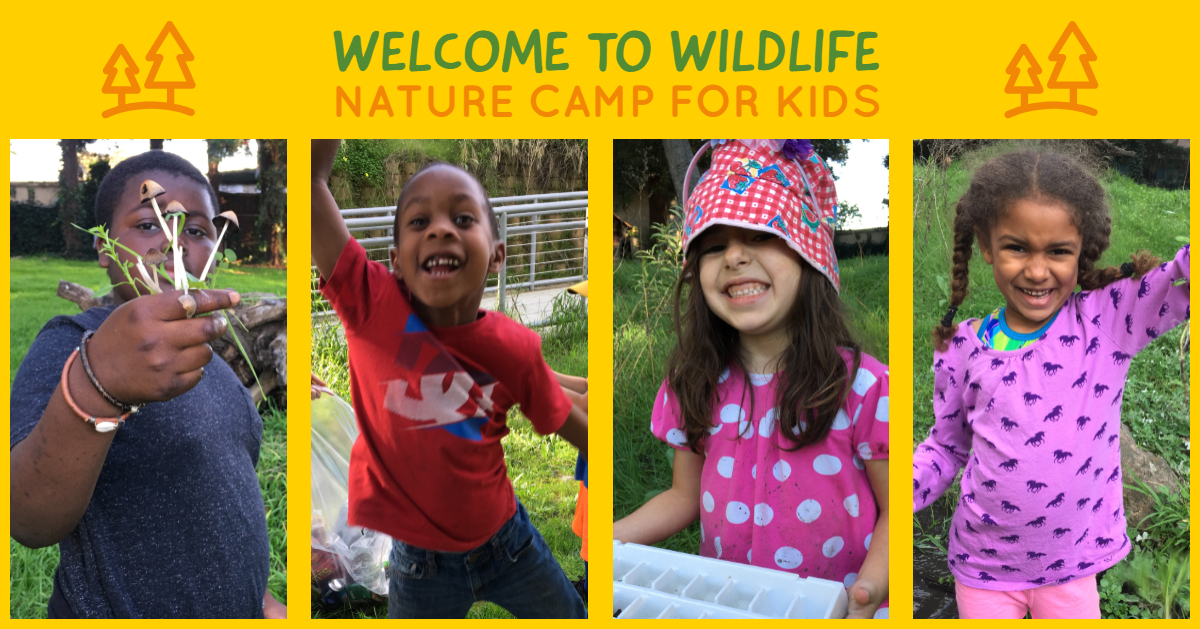
Calling All Eco-Explorers! Youth ages 5-15 will be up to their elbows in FREE, hands-on activities. Learning through fun interactive, nature science experiences and regional field trips, your kids will find out all about the Bay Area ecosystem and become the next generation of Citizen Scientists! We have extended Welcome ...
Learn what Treasure Island was planted on - and what was planted on Treasure Island for the Golden Gate International Exposition. Today, Treasure Island’s soil is being reinforced with fill from the Caldecott Tunnel’s fourth bore. Did you know that its perimeter was built in 1937 using boulders from the ...
Everything is made of elementary particles, the stars, our planet, our bodies… One of the most ghosty and sneaky of these particles is the so-called neutrino, a neutral tiny particle that can go through entire planets like light through glass. Even if they are the most abundant massive particle in ...
This month we celebrate the work taking place to help save endangered and threatened marine mammals found along the California coast and Pacific Ocean, including the threatened Guadalupe fur seals, Southern sea otter, the rarest seal in the United States, the Hawaiian monk seal. Docent-led tours will take you around the ...
Beginning in the 1960s, a handful of young scientists headed out into the wilderness, driven to understand how nature works. Immersed in some of the most remote and spectacular places on Earth - from the majestic Serengeti to the Amazon jungle, and from the Arctic Ocean to Pacific tide pools ...
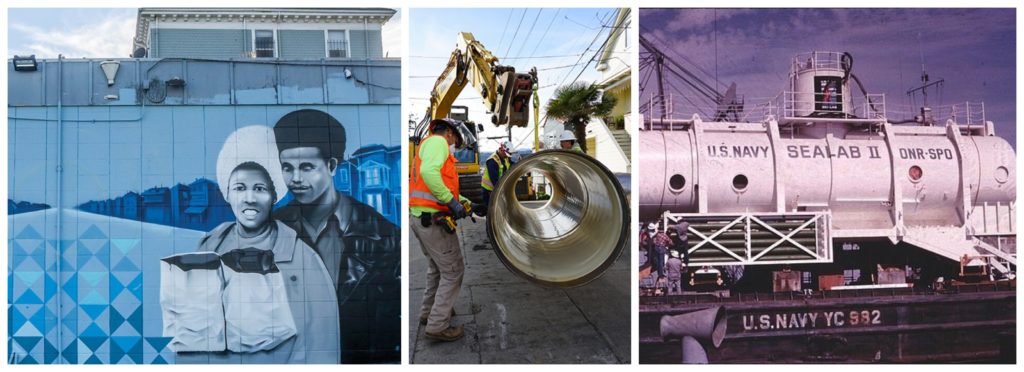
This month learn why humans don’t live underwater (and all the bad things that happened when we tried), see how the East Bay urban landscape was transformed by the Black Panther Party, and hear how EBMUD is using engineering to replace 4,200 miles of East Bay pipelines.Why Don't We Live ...
Where: OaklandCost: $8 web, $10 door
Tuesday, 05/28/19
Unsolved problems in digital geoscience... and how to solve themWhat are the most pressing problems in digital geoscience? David Hilbert's 23 problems in mathematics propelled generations of researchers; today the Clay Mathematical Institute's Millennium Problems are similarly motivating. As we enter a new era of computational discovery, Dr. Hall believes a similar list of unsolved problems in geoscience, and ...
Where: StanfordCost: Free
One Tam: Wildlife Picture Index ProjectCome contribute to the Marin Wildlife Picture Index Project! Volunteer community scientists assist with research by helping maintain motion-activated cameras and processing photos. At this event, we view the images on the computer, identify the mammals, and enter the results in a database. New and experienced catalogers welcome, as training is ...
Examining Southern Hemisphere Humpback Whale Migratory Routes from Foraging to Breeding GroundsSouthern hemisphere humpback whale populations spend a large portion of the year breeding in tropical waters and migrating between this region and their summer feeding grounds in the Antarctic. They travel great distances during their seasonal migration, the farthest migration of any mammal, with distances up to 11,706 miles recorded. Despite ...
There are 4 activities at each presentation after a show presentation. Parents work with their children to learn about science. Recommended for elementary age children. Families are encouraged to attend.  Limited seating.The Oceans have many organisms from tiny diatoms (one celled plant) to shells (invertebrates) to the largest animal that ...
Where: FremontCost: Free
Wonderfest: Vision in Mind & Modeling EvolutionWonderfest Science Envoys are early-career researchers with special communication skills and aspirations. Following short talks on provocative modern science topics, these two Science Envoys will answer questions with insight and enthusiasm:UC Berkeley neuroscientist Malak El-Quessny, in "Visualizing Neural Circuits: From Detection to Perception of our Sensory World," explores how neural circuits ...
Where: San FranciscoCost: Free
Wednesday, 05/29/19
Designing for Our Future: Solutions for Digital Well-Being Join Common Sense, the Stanford d.school and the Computer History Museum for a conference on technology and well-being. Featured speakers include Craig Newmark, Tristan Harris, and Dr. Jenny Radesky, who, along with other industry leaders and child health experts, will explore ethical design that creates a healthier digital ecosystem for all. ...
Where: Mountain ViewCost: $35 General, See weblink for free qualifications
In this talk, Angus Forbes will present recent projects that introduce current trends in the field of information visualization and explore opportunities for creating interfaces to facilitate the interactive analysis of complex scientific data. In addition to describing details about a range of data visualization projects that investigate bioinformatics data, ...
Join us for a special sneak preview of new documentary Once Was Water from director Christopher Beaver and producer Diana Fuller, the creative team behind Racing to Zero: In Pursuit of Zero Waste (SFGFF 2015). This event is a Summer Benefit for the 2019 San Francisco Green Film Festival! ONCE WAS WATERLas Vegas, Nevada: the thirstiest city ...
Astronomy on Tap South BayPutting the Science in Science FictionExplore the versions of reality presented by popular scifi films! Are they based more in science or fiction?Speaker: Nicholas Saunders, Kepler/2 Mission at NASA AmesUnderstanding Strange New Worlds: Super-Earth Exoplanets and their AtmospheresFind out how scientists perform meteorite experiments and atmospheric simulations to study exoplanets ...
Exploring Planetary Systems Orbiting Nearby StarsThe NASA Kepler mission revealed that our Galaxy is teeming with planetary systems and that Earth-sized planets are common, but most of the planets detected by Kepler orbit stars that are too faint to permit detailed study. Excitingly, the NASA Transiting Exoplanet Survey Satellite (TESS) launched in April 2018 and ...
Where: StanfordCost: Free
Quantifying Watershed Behavior using Geophysical MethodsQuantifying how terrestrial systems respond to climate change and other perturbations is challenging due to the complexity of associated processes that occur from bedrock-to-canopy and over a wide range of spatial and temporal scales. This presentation describe the development of several new approaches to help bridge these compartments and scales ...
Come for an evening of learning about how foods have changed over centuries and how they are being modified today. Â Use of modern tools of genetics allows researchers to make changes in the genetic makeup of some foods we use and eat in a than we have made such changes ...
Where: Palo AltoCost: Free
SuperSight: Spatial Computing and the Evolution of EyesThe human eye is amazing. It contains 120 million photoreceptors, discerns 10 million colors, blinks in less than a tenth of a second, and aside from the brain, is the body’s most complicated organ. But, for all of its sophistication, the human eye hasn’t evolved in thousands of years. That’s ...
Mirrors, arguably the first “virtual reality†technology, lie at the intersection of nature, culture, and self-recognition. Once small, rare, and owned only by the wealthy, today mirrors are everywhere and are key to many modern tools, from HDTVs to solar-power plants and space telescopes. Reflect on mirrors and the nature ...
Where: San FranciscoCost: 17.95 advance, 19.95 door, AD members free
NightLife Spotlight: FlightSoar with NightLife as we explore the wonderful world of flight.Get your late-night science wings while learning about the science of flying with birds, butterflies, and bats.Learn about the evolution of flight in a wide range of creatures with specimens from our scientific collections, from fossils to terrestrial arthropods and ...
Where: San FranciscoCost: $15 General, $12 Members
New Mapping of the Rodgers Creek Fault: It's longer and more complex than we thought+ Remote sensing technology reveals surface traces of the fault covered by trees and buildings+Greater fault length and linkages to neighboring faults make larger earthquakes possible+Fault complexity has implications for hazards from ground shaking and surface fault ruptureSpeaker: Suzanne Hecker, USGS
Where: Menlo ParkCost: Free
Friday, 05/31/19
Alcatraz Historic Garden TourBeginning in 2003, the Garden Conservancy formed a partnership with the Golden Gate National Parks Conservancy and the NPS to rehabilitate the Historic Gardens of Alcatraz. Join Shelagh Fritz (Project Manager of the Gardens), to learn about the preservation process of a cultural landscapes: through the planning stages, preparation of ...
Twilight HikeTake advantage of this rare opportunity to experience the beauty and rich natural history of this 535-acre preserve as dusk arrives and the animals start to appear. Our twilight hikes are on select Fridays throughout spring and fall. Participants are divided into small groups and paired with a trained Bouverie ...