
Exploring the Gravitational Wave Universe with LIGO
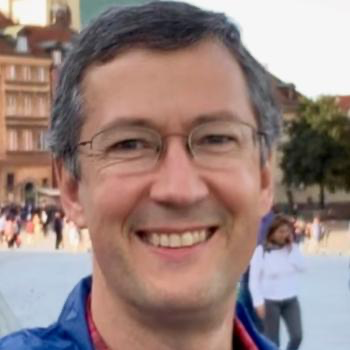
Measuring gravitational waves is a revolutionary new way to do astronomy. In 2015, LIGO (the Laser Interferometer Gravitational-wave Observatory) first detected one of these waves ??" a tiny ripple in space itself, generated by the collision of 2 black holes. Since then the cumulative number of detections that LIGO and its international partners have measured has exceeded 300, marking a transition from detecting rare events to daily detections. What can we learn from the mergers of black holes or the collision of two neutron stars? How is it possible to measure a wave which stretches our detector 1000 times less than the diameter of a proton? What’s coming next in our search for these tell-tale ripples in space, and what can we learn from these observations that could address a variety of questions such as how black holes form from the collapse of massive stars, the cosmological evolution of the universe and confirming the theory of general relativity? In this presentation, Prof Brian Lantz will cover the emerging astronomy of gravitational wave detection.
Speaker: Brian Lantz, Stanford University
Friday, 05/01/26
Contact:
Website: Click to VisitCost:
FreeSave this Event:
iCalendarGoogle Calendar
Yahoo! Calendar
Windows Live Calendar
College of San Mateo Bldg 36


San Mateo, CA 94402
USA