
Illuminating the seafloor with dark fiber seismology and the MARS cable
Our understanding of the planet suffers from a profound geophysical observation bias - seismometers and other sensors are sparse and clustered on dry land. A new seismic recording technology, called distributed fiber-optic acoustic sensing (DAS), transforms standard telecommunication fiber-optic cables into arrays of single-component ground motion sensors. The distance between any two sensing points can be as small as 0.25 meters, while the total array aperture can be as large as ~20 kilometers. The result is an opportunity to record continuous, dense, long-range seismic wavefield data in large volumes (one terabyte per day) wherever fiber-optic cables exist. We are exploring new methodologies that use this new form of seismic array data to quantify Earth structures and processes in space and time, specifically in offshore and urban areas where seismic instrumentation has historically posed a logistical challenge. During March 10-13, 2018, we used an existing fiber inside of the Monterey Accelerated Research System (MARS) cable, which traverses a marine shelf setting, to record 3.2 terabytes of DAS data with a two-meter sensor spacing over 20 kilometers in Monterey Bay, CA. Uniform coupling of the cable approximately one meter below the shelf seafloor surface enables observations that directly test hypotheses about seafloor structure and the dynamics of ocean-solid earth interaction in Monterey Bay, and motivates new opportunities in the fields of seafloor geophysics, marine biology, meteorology, offshore engineering, and subsea infrastructure monitoring.
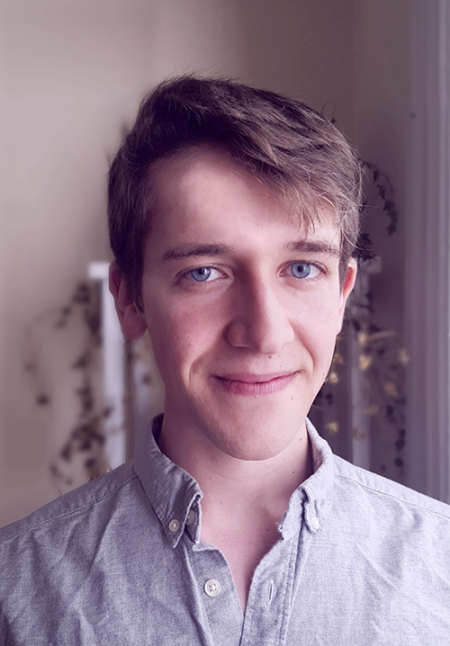
Speaker: Nate Lindsey, Lawrence Berkeley National Labs
Wednesday, 10/03/18
Contact:
Website: Click to VisitCost:
FreeSave this Event:
iCalendarGoogle Calendar
Yahoo! Calendar
Windows Live Calendar
Monterey Bay Aquarium Research Institute


Moss Landing, CA 95039
US