Bay Rocks for KidsJoin volunteer and geologist, Malcom Pringle, to learn about why rocks rock! What makes up the hills and habitats that surround San Francisco Bay? Bang, scratch, nick, view, (even chew?) rocks from the hills and crystals from the Bay! Ponder how and where they could have formed -- are those ...
Where: FremontCost: Free
Trekking the ModelJoin a Ranger or docent on a guided tour of the Bay Model, a 1.5-acre hydraulic model of the San Francisco Bay and Delta. Discover the stories of the two major operations that took place at this location between 1942 - 2000.
Where: SausalitoCost: Free
Low Tide WalkMSI takes to the tidepools for a treasure hunt of nature's beautiful intertidal secrets. We'll spend our time taking advantage of the low tide to reach the outer edges of Fiddler Cove, a super secret locals spot between Pescadero and Bean Hollow. This quiet piece of coast offers a wealth ...
Where: PescaderoCost: From $20
Twilight Marsh WalkExperience the salt marsh at twilight on an easy stroll along Tidelands (1.3 miles) Trail. At the setting of the sun we will observe the beginning of nature’s night shift. Come discover the sights, sounds, and smells of the refuge as night descends. Not suitable for young children. Call 510-792-0222 ...
As of today, only two objects have been observed, which can be definitively identified as of interstellar origin & destination: I1/‘Oumuamua & 2I/Borisov. ‘Oumuamua was an enigmatic object, visible only for about 2 weeks. While the high eccentricity of its orbit certainly makes it interstellar, it cannot be pinned down ...
Where: OaklandCost: Free
Shark DayOur special Shark Day invites one and all to learn about these amazing creatures, from the great whites that swim just off our ocean shores, to the gentle leopard sharks that are common in our Bay. We will be feeding and touching our local leopard sharks in our teaching aquarium, ...
Where: Redwood CityCost: From $20
Monday, 02/10/20
Simulating galaxy imaging surveysNumerical simulations of weak gravitational lensing play an important role in statistical analyses of modern galaxy imaging data.In this talk, I will introduce our recent developments to simulate galaxy imaging data. We developed a method to produce synthetic data by utilizing full-sky lensing simulations for a given galaxy catalog. We ...
Where: StanfordCost: Free
Welcome to the era of fast radio burst “cosmologyâ€! Fast radio bursts are frequent, bright millisecond bursts of radio emission that have fortunately turned out to not be from microwave ovens or alien light sails, but rather to be some new extragalactic phenomenon likely associated with neutron stars. Radio astronomers are beginning to localize these bursts to specific galaxies, ...
The evaluation of petroleum systems via basin modeling, mapping, geochemical analyses, etc., is now a mature field due to codification of the petroleum system concept coupled with the development of sophisticated basin modeling software. Even so, evaluating petroleum systems with numerical techniques remains primarily a deterministic process resulting in non-unique ...
Microscopic robotsOver fifty years ago, the Nobel Prize-winning physicist Richard Feynman claimed that a revolution was underway where information, computers, and machines would be shrunk to incredibly small dimensions. History has proven him mostly right: Moore’s law have given us microelectronics, the internet, and artificial intelligence. But the third leg of ...
The knowledge of the earliest time dynamics in molecular photophysics and photochemistry are critical because their role is to harness the energy from photons, initiating electronic and nuclear motion which is fundamental in many areas of science. Our ultimate goal is to understand the coupled electronic and nuclear dynamics induced ...
California is progressing toward the deployment of 5 million Zero-Emission Vehicles by 2030, a critical measure necessary to reduce greenhouse gas emissions 40% below 1990 levels by 2030. In addition, California has set targets to serve the state with 100% clean energy and achieve carbon neutrality by 2045. The California ...
Where: StanfordCost: Free
A Better Planet: 40 Big Ideas for a Sustainable FutureCan hip-hop help bridge the divide between communities of color and environmentalism? Are strong regulations making fracking safer and cleaner? Environmentalists probably nod at the first question and bristle at the second. But tackling climate means taking everyone outside their comfort zone.  In the new book A Better Planet: 40 Big Ideas ...
Where: San FranciscoCost: $20 General, $12 Members, $7 Students
February Prof & A Pint: Bioengineering for Social Good Our world and the unexplored worlds around us are bathed in nano-scale systems (living cells) that convert their molecular surroundings into useful energy stores, building blocks, information storage, sensors, and secreted drones that detect, manipulate, control and harvest. As BioEngineers, we work to understand and influence these nano systems to ...
Where: San JoseCost: Free
The Wuhan Novel Coronavirus of 2019: Applying the lessons of the past to protect us in the presentDr. Mark Finch, Sr., who received his medical degree from the University of California San Francisco, is an infectious disease specialist with Diablo Infectious Disease Group. Dr. Finch and Diablo Infectious Disease Group provide clinical infectious disease, infection control and antibiotic stewardship advice to several hospitals in Alameda County.
Our solar system teems with asteroids and comets, which range in size from tiny dust particles to gigantic mountains that are worlds in their own right. While most of these objects remain in stable orbits that whirl them around them Sun for billions of years, every now and again something ...
Where: San FranciscoCost: $15 General, $12 Members & Seniors
During the last few years we established the synthetic and analytic infrastructure required to develop a promising new class of materials that operate on the basis of their structurally programmed molecular motion. Having a combination of static and rapidly moving components, we refer to them as being amphidynamic. They can ...
Where: BerkeleyCost: Free
Cosmology from the diffuse baryons between galaxies The field of cosmology has to make do with a theory of structure that is incomplete in the ``ultraviolet'' -- we lack a precise understanding of the cosmologically minute scales on which galaxies form and affect their surroundings. I will review methods to circumvent this limitation, with a particular focus ...
The hydrothermal systems that form at mid-ocean ridge (MOR) spreading centers represent perhaps the largest and most impactful geochemical phenomenon on Earth. There is 65,000 km of MOR encircling the globe, and the flow of water through the hydrothermal systems amounts to the entire volume of the oceans every 600,000 ...
Advancing the Science: The Latest in Alzheimer’s ResearchAlzheimer’s disease is a global health problem with more than 5.8 million people living with the disease in the United States alone. The only way to solve that problem is through research, and this talk will focus on the scientific advancements and progress in the field. Tremendous gains have been ...
Where: San FranciscoCost: $20 General, $10 Members, $8 Students
Engram Preservation: Early work towards Mind UploadingIs it possible to preserve and read memories after someone has died? Robert McIntyre thinks it is, and that the technology is closer than most people realize. His company Nectome is working on documenting the physical properties of memory formation, and studying ways to preserve those physical properties after death. ...
Where: San FranciscoCost: $25 - $100
Data Science, Beer & SPORTSIn celebration of SF Beer Week, come enjoy Standard Deviant’s great beers and listen to a few talks with USF’s Data Institute. This is USF’s fourth annual Beer + Data Science event and this year our focus will be on Sports Analytics. Hear from practitioners, professors and students as they ...
Where: San FranciscoCost: Free
Stories of a Changing Planet -- Environmental Documentaries in Transformative TimesFriends of Five Creeks' free Bay Currents talks present author and filmmaker Stephen Most who has scripted and co-produced environmental documentaries including Oil on Ice, Green Fire, River of Renewal, and Wilder than Wild.  His book Stories Make the World reflects on storytelling and the art of the documentary. Showing trailers from his ...
Real time observations of particulate fluxes, their compositions, related biogeochemical cycles, and distribution patterns of trace metals in deep open ocean waters are extremely rare, and more so in the context of continuous, highly resolved records. The Gulf of Aqaba (GOA), northern Red Sea, is a deep oligotrophic water body ...
My work uses data science to characterize how humans interact with the built and natural environments, seeking to plan for more sustainable and livable cities. Given the increasing ubiquity of plug-in electric vehicles (PEVs) in the Bay Area, I present a study that aims to assist in planning decisions by ...
This session discusses the intersection of 5G, edge computing and AI/ML technologies for realizing IoT use cases. It discusses technology, architectural evolution and use cases.Speaker: Mallik Tatipamula, Ericsson
Where: BerkeleyCost: Free
Living on the Edge: Reproductive physiology, behavior, and recovery of southern sea ottersNearly hunted to extinction during the fur trade of the 18th and 19th centuries, the recovery of southern sea otters along the coast of California has been a slow and meandering journey. As a physiological oddball among marine mammals and a vital keystone species in coastal nearshore ecosystems, much can ...
In the U.S., the large-scale water infrastructure that radicalized safe drinking water access in the early 20th century is now beyond its design lifetime, compromising water quality and increasing costs. Safe drinking water is essential to our ability to thrive, but historically, efforts to ensure that households can afford drinking ...
In this talk, Stephen McCabe, Emeritus Director of Research of UCSC Arboretum, will focus on recent poaching of the native succulent Dudleya plants from the California coast, as well as mentioning other succulent poaching that is a side effect of the current succulent plant craze. In one bust alone, about ...
Where: Santa CruzCost: Free
Thursday, 02/13/20
Near-Field Cosmology with Stellar AbundancesThe first stars and galaxies fundamentally transformed the universe. They formed in the smallest dark matter halos, produced large amounts of ionizing photons, and polluted the universe with the first heavy elements. Near-field cosmology probes this early era through detailed study of nearby relic galaxies that have survived from ancient ...
Since Fall 2002, the Charles W. Davidson College of Engineering has hosted the Silicon Valley Leaders Symposium (SVLS). The Symposium hosts industry and technology leaders to talk about business and technology trends. It also features prominent leaders who discuss broader societal and political issues that shape our life and society.Speaker: ...
Where: San JoseCost: Free
The Hidden Life of Massive Elliptical GalaxiesThis talk will show the results of very high resolution simulations of massive systems that discovered formation in all of them of cold, dense central discs hosting star formation.Speaker: Jerry Ostriker, Princeton Univ.
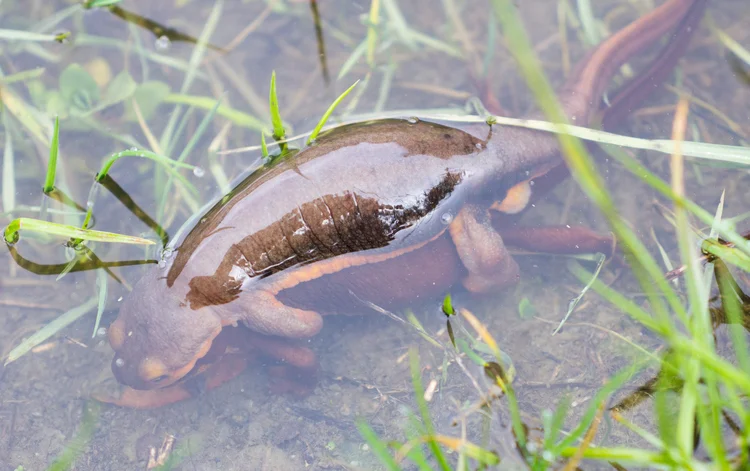
Join us for Newt Nite & Nature Trivia - it’s our fifth year hosting this event!Take a short walk to see mating newts, and join us after for nature-themed trivia with other nature nerds at the Grizzly Bar and Grill. Dress warmly and bring a headlamp or flashlight. Food and drink ...
Josiah will talk about advances in CRISPR technology for gene editing as well as current controversies over its use in medicine. Josiah is a well-known biohacker who believes that technologies like CRISPR should be in the hands of as many people as possible to allow scientific exploration and discovery to ...
Sex involves the transfer of genetic information that has resulted in evolution and specialization - and one of the hottest evenings in town, scientifically speaking. Discover some surprising ways that sperm and eggs come together. And, on this eve of Valentine's Day, taste the classic aphrodisiac - oysters - at ...
Where: San FranciscoCost: 17.95 advance, 19.95 door, AD members free
Farm to Table: 2030The planet is poised for a food revolution: concerns over the environmental costs of feeding our world are transforming what we eat, how we raise it, how we source our nutrition, and how we handle excess. How can we keep food delicious, sustainable, and healthy? For this event, we take ...
Prior to 1995, there were no known planets around sun-like stars beyond the solar system. Once the first discovery was announced, many others quickly followed. We now calculate that, on average, nearly every star has a planet. What if the discovery of intelligent life beyond the Earth follows a similar ...
Where: BerkeleyCost: Free
SF Beer Week NightLifeSip your way through the museum-turned-beer hall when NightLife celebrates SF Beer Week and our local craft brewing community.Get to know a dozen local breweries during an evening celebrating beers as diverse as the creatures at NightLife: Standard Deviant, Pond Farm, Barebottle, and Original Pattern make their Academy debut alongside ...
7:00-7:25: Krishna Shenoy(Stanford/ Neuroscience) on "Brain-machine Interfaces: From basic science and engineering to clinical trials"Brain-machine interfaces aim to restore lost functions due to brain disease or injury by converting neural activity from the brain into control signals...Read more7:25-7:50: Lars Steinmetz(Co-Director, Stanford Genome Technology Center) on "Emerging ...
The world-wide explosion in data is driven by three important trends: The increasing digitization of the world, in which people and the environment have been outfitted with sensors that generate digital data; enough inexpensive storage technology to keep vast amounts of information that was previously discarded; and large-scale computing systems ...
Where: BerkeleyCost: Free
Friday, 02/14/20
Elephant Seal WeekendThis Valentine’s Day weekend, explore the fascinating world and interesting adaptations of northern elephant seals during a special weekend celebration. Unique pop-up exhibits will reveal natural history, migration strategies, and allow visitors to become citizen scientists (helping out UC Santa Cruz researchers). As a citizen scientist, learn about elephant seals, ...
Where: Santa CruzCost: Free with Admission
Two KIPAC Tea TalksModeling the Radiogenic Background of the MAJORANA DEMONSTRATORSpeaker: Micah Buuck, KIPACHow to Count the Milky Way's Disrupted Dwarf GalaxiesSpeaker: Alexander Ji, Carnegie Institute
Exploits with Atomic Materials: from Flexible/Wearable Electronics to Memory DevicesThis talk will present our latest research adventures on 2D nanomaterials towards greater scientific understanding and advanced engineering applications. In particular, the talk will highlight our work on flexible electronics, zero-power devices, monolayer memory (atomristors), non-volatile RF switches, and wearable tattoo sensors. Non-volatile memory devices based on 2D ...
 Nickel catalysts exhibit unique properties. Open-shell configurations are relatively stable and readily accessible, which lead to radical pathways. Moreover, the reduction potential of Ni is considerably lower than that of Pd. These properties have been employed to functionalize alkenes. Enantioselective 1,2-dicarbofunctionalization of alkenes allows access to molecules with intricate substitution ...
Where: BerkeleyCost: Free
Green Friday: Bats and Their Role in Our Ecosystem Sierra Club Northern Alameda County Group's Green Friday meets on the second Friday of the month in the Sierra Clubs Bay Chapter Office, 2530 San Pablo Ave. Berkeley. Doors open at 7:00 p.m.; the program runs from 7:30 to 9:00 including questions and discussion. Refreshments are served. A $3 donation ...
Where: BerkeleyCost: $3
Touring Exotic Landforms Across the Solar System: Adventures in Planetary GeomorphologyBrian is an expert at Public Outreach featuring NASA web-portals of the Moon, Mercury, Mars, Ceres, Vesta and many other bodies in the Solar System. He will explore with us the most interesting features he has come across in his studies.Speaker: Brian Day, NASA Ames